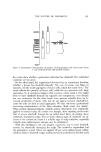
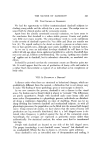
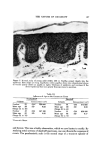
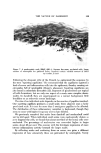
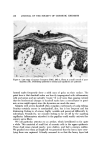
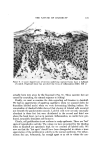
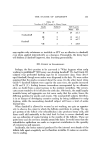
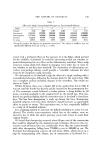
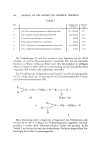
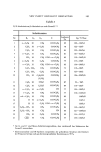
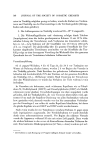
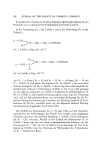
THE NATURE OF DANDRUFF 121 •-Rsr•e Figure 3. Quantitative determination of number of desquamating cells (corneocyte count) i•a 112 nondandruff and 126 dandruff subjects the count alone whether a particular individual has dandruff. The individual variations are too great. On the other hand, the experienced observer has no uncertainty deciding whether a person has dandruff clinically. The eye, of course, sees flakes or squames, not the small aggregates of horny cells, which the count "sees." The count reflects the quantity of horny cells, while the eye perceives only large aggregates. So, it sometimes happens that a person, whose count is low, might seem to have dandruff because his squames are conspicuous, even though not very numerous. On the other hand, some persons actually have an in- creased production of horny cells, but do not appear to have dandruff be- cause the cells are shed in small aggregates. We may cite here a particularly convincing demonstration of the latter situation (high count, low grade). When certain chemical irritants, notably anionic detergents, were repeatedly applied to normal scalps, the counts rose sharply, often reaching levels twice that of severe dandruff. Except for an initial brief flurry of scaling, these artificially stimulated scalps did not show clinical signs of dandruff. An in- crease in the corneocyte count is a reliable sign of scalp irritation, especially valuable since inflammatory changes may be subclinical. With this intelligence, one can imagine a perverse way to treat dandruff, namely, by chemically damaging the scalp. The method is impractical, but the principle is sound. When we applied 10 per cent sodium lauryl sulfate solutions daily to dandruff scalps, scaling increased markedly for the first week

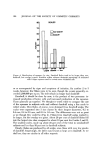
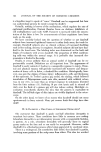
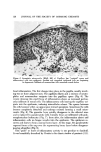
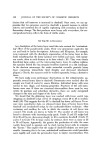
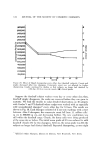
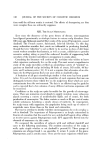
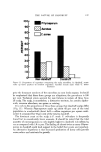
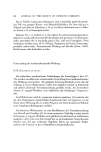
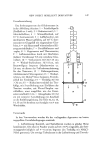
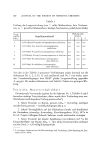
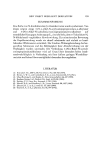
122 JOURNAL OF THE SOCIETY OF COSMETIC CHEMISTS 2C 10 SCALES [•1 Noa-dandruff E•'•iDandruff •.,-. O• Long#t diameter • mm Figure 4. Distribution of squames by size. Dandruff flakes tend to be larger than non- dandruff, but overlap is great. Numbers within columns designate percentage of nucleated cells. Larger squames tend to contain more nucleated cells or so accompanied by signs and symptoms of irritation. By another 2 to 3 weeks, however, few flakes were to be seen, though the counts generally ex- ceeded 2,000,000 per sq cm. The individuals no longer had dandruff! Dandruff, it should be clear by now, is the product of two processes: in- creased production of horny cells and increased production of the squames. These generally go together. We thought it worth while to compare the size of the squames in subjects with and without dandruff using a fine comb to collect scales. More flakes, of course, were obtained from dandruff scalps. The scales were separated into 3 size classes by their longest diameters, 0.2 to 0.4 mm, 0.4 to 0.8 mm, and 0.8 to 1.6 mm. The differences were not as great as we though they could be (Fig. 4). Flakes from dandruff scalps tended to be larger, but the overlap was great. About 20 per cent of dandruff flakes fell into the largest size class compared to about 10 per cent for Grades I and II. The smallest scales, made up about 25 per cent of the total in nondandruff subjects and less than 50 per cent in dandruff subjects. Clearly, flakes are produced by all scalps, even those with very low grades of dandruff. Surprisingly, the latter may be just as large as in dandruff. As we shall see, they are similar in all other respects.
Purchased for the exclusive use of nofirst nolast (unknown)
From: SCC Media Library & Resource Center (library.scconline.org)