J. Soc. Cosmet. Chem., 29, 59-64 (February 1978) Application of lower titanium oxide in cosmetics FUKUJI SUZUKI, SHOJI FUKUSHIMA, TAKEO MITSUI and SABURO OHTA Shiseido Laboratories, Nippa-Cho, Kohuku-Ku, Yokohama, Japan 223 Received March 7, 1977. Presented at Annual Meeting, Society of Cosmetic Chemists, December 7, 1976, New York. Synopsis Carbon black and iron black (FeaO4) are black pigments commonly used in the cosmetic industry. Due to its hydrophobic character, carbon black has poor dispersibility in water, and iron black, due to its ferro-mag- netic character, is not readily dispersible in any liquid. In order to solve these problems the authors investi- gated the possibility of synthesizing LOWER TITANIUM OXIDES and using them as a black pigment IN COSMETICS. The general formula of the lower titanium oxide is TinO•n-• in which n can be any positive in- teger. When n is small, the resultant compound is bluish-black. As n increases, the compound becomes gray. The lower titanium oxide most suitable for cosmetics was obtained by calcining a mixture of a titanium dioxide pigment and a metallic titanium powder in a vacuum electric furnace. While it has a tinting strength corresponding to that of carbon black and iron oxide black, it is superior in many other respects when used in cosmetics. INTRODUCTION Black pigments, commonly used in the cosmetic industry at the present time, are two in number: namely, carbon black and iron oxide black (FeaO4). However, both are pig- ments not easily formulated into make-up cosmetics of the dispersion type. Carbon black has a hydrophobic surface-and its surface area is extremely large (about ten times that of titanium dioxide pigment). Iron oxide black, though considered to have a hy- drophilic surface, tends to strongly coagulate in any medium due to its ferromagnetic character. This gives rise to poor dispersibility with considerable viscosity changes when the formulation calls for producing different shades of cosmetics and, further- more, color separation occurs on the surface of the cosmetics when this material is used along with other pigments such as titanium dioxide. In order to solve these problems, we explored many black pigments showing greater dispersibility and most obviously with a high safety factor when used in cosmetics. In the lower titanium oxides, we noted several pigments with great possibilities. It is well known that there are the three crystal forms of titanium dioxide: anatase, rutile and brookite. In the cosmetic or paint industry, pigments of the former two types are used. Titanium dioxide is a very stable compound. On the other hand, titanium can 59

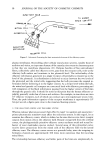
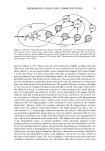
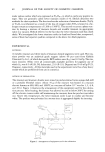
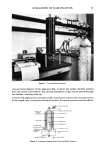
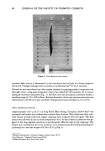
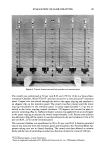
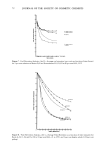
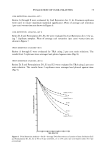
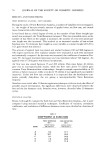
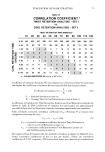
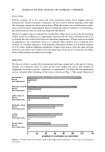
60 JOURNAL OF THE SOCIETY OF COSMETIC CHEMISTS make various oxides which are expressed as TinO2n_• in which n can be any positive in- teger. They are generally called lower titanium oxides (1-4). Ehrlich describes two methods for their synthesis. The first involves the reduction of titanium dioxide (Ti2Oa or TiaO5 is synthesized as a result of the loss of oxygen when TiO2 is heated in a hy- drogen stream at temperatures of 1200 to 1500øC). The second occurs as a phase reac- tion by heating a mixture of titanium dioxide and metallic titanium (in appropriate ratio) in a vacuum. Ehrlich referred to the fact that the lower titanium oxide has a dark shade. We investigated the lower titanium oxides in detail and found that, as expected, some of them had superior qualities compared to the above two black pigments. EXPERIMENTAL MATERIALS A metallic titanium and three kinds of titanium dioxide pigments were used. The tita- nium powder was an analytical grade reagent (above 99 per cent) from Kishida Chemical Co. Ltd., of which the specific BET surface area (SN•) was 0.24 m•/g. The tita- nium dioxides (TiO2) were all commercially available powders for pigment use of which SN2 was 8.5 (#328, NL Industries), 25.0 (P-110, Degussa) and 54.0 m•/g (P-25, Degussa), respectively. All the materials used in the experiment were free of any heavy metals which are prohibited from use in cosmetics. METHOD OF PREPARATION The titanium and titanium dioxide were mixed in predetermined ratios using a ball-mill or a portable Henshel mixer. About 70 g of the mixture was heated in a vacuum electric furnace at 600, 800, and 1000øC at a vacuum of below 10 -2 torr for 1, 2, 4, 8, and 20 hr. Figure 1 illustrates the arrangement of the equipment used for the calcina- tion process. After heating, the furnace was allowed to. cool to below 200øC by turning off the electric current while still maintaining the vacubm then the product was taken out. Above this temperature, the lower titanium oxide is apt to oxidize and become white. The product was pulverized in a mortar since it aggregated slightly by sintering. --- - -._ Temperature (q) %% ..... •olle• Dry,,2g r I[• qiartz5 i• •xFx•_• • Tubular Electric Furnace • • •c•od • Gau• Rotary Pump Figure 1. Arrangement of equipment used in the calcination
Purchased for the exclusive use of nofirst nolast (unknown)
From: SCC Media Library & Resource Center (library.scconline.org)