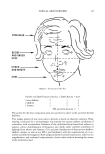
MOISTURIZERS AND FACIAL LINES 93 SUBJECTS Twelve females, from 30 to 65 years old, free of influencing diseases or allergies, and who regularly used various types of moisturizers, were chosen for the study after preliminary rating by two trained judges (not part of the later, evaluator panel) to de- termine that they had full-face scores for SFL's of 20 to 30 or moderately higher. As in our previous study (7), this age and score range includes individuals with a moderate number of SFL's and excludes those with so many lines as not to be representative of the average consumer, or those in whom lines would be so minimal as not to define treatment effects. The subjects were also selected for almost equal scores on the right and left sides of the face. The scoring system used to select subjects for this study has been described in our associated paper on quantification (7). In essence, it makes possible reproducible visual assessment of SFL's. The result is expressed as a numerical value that takes into account the frequency and depth of these lines. This score is a multiple of the frequency rating (graded from 0 to 4) times the depth rating (1 for very shallow, 2 for shallow, 3 for deeper). For greater accuracy, the component areas of the half-face (forehead, beside and under the eyes, cheek and mouth, chin) are rated individually and then summed for each half-face score. PROCEDURE The six-test series, completed at the rate of one weekly, consisted of five half-face com- parisons of individual moisturizers (code designations O, ML, EF, MF, and L) • against an active control (water), and a sixth comparison of water against no treatment. All comparisons were single-blind since the test agents could be coded and randomized but not made physically identical without altering their potential activity. For each weekly test period, the subjects were provided with two coded samples, one for each side of the face. The water was colored and faintly perfumed to mask its identity. Ap- plication of the samples was randomized for each side of the face, across subjects, and across the six weeks (i.e., any one weekly test series involved a mix of the six sets of study comparisons). Following an initial no-treatment day as a washout, the subjects applied the two sam- ples early in the morning and ten hours later. They had been carefully instructed in the technique of achieving complete and reproducible coverage of the half-faces without mix-up or a large excess. No other cosmetics were used on the test areas during the study. After three days of application in careful accordance with their instructions, the subjects returned on Day 4 for judging by each of 12 consumer evaluators 3 hr after a final application in the morning. Our prior research had suggested that 2 to 3 hr after an application is approximately the time of onset of maximum activity of these agents in reducing SFL's. aO is Oil of Olay © (Olay Company, Inc., Wilton, Conn. 06897), containing a blend of fatty alcohols (cetyl, myristyl, and stearyl), cetyl palmitate, sodium and potassium laurates, myristates, stearates, and palmitates, mineral and castor oils, and cholesterol, in a preserved and fragranced vehicle. EF is an experimental formulation containing lipids dispersed in a preserved aqueous vehicle. ML (moisture lotion), MF (moisture film), and L (lotion) are marketed oil-in-water emulsions.

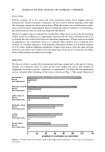
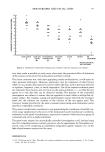
94 JOURNAL OF THE SOCIETY OF COSMETIC CHEMISTS EVALUATORS Twelve women, 20 to 65 years old, were randomly chosen from regular users of moisturizers. These consumer evaluators did not receive formal training, other than the necessary instruction about procedures. With this panel, the conditions for evalua- tion could be better standardized than if individual subjects reported on themselves, and individual user bias in such reporting was eliminated. These 12 judges were to evaluate for overall effect. They were to do so by determining if they could see a difference in appearance between the two sides of the face and, if so, to choose the side with fewer lines and smoother appearance. If both sides were equal in appearance, the evaluators were to so indicate. The subjects were evaluated indi- vidually in a random sequence, with separate observation forms, at a uniform distance of 2 ft, under uniform lighting conditions of light from above, with the same interval between test series (one week), and at the same time of day so as to minimize the effect of any daily variation on subjects or judges. RESULTS By the end of the 6 weeks, 864 evaluations had been completed, at the rate of 144 ap- praisals (12 evaluators times 12 subjects) for each weekly test series. The number of judgments favoring a specific treatment, as manifested 3 hr after the last application and as revealed after breaking of the code, is shown in Fig. 1. The major features of M01STURIZER 0 WATER BOTH SIDES EOUAL MOISTURE LOTION ML WATER BOTH SLOES EOUAL EXPER. FORM. EF WATER BOTH SIDES EQUAL MOISTURE FILM MF WATER BOTH SLOES EQUAL LOTION L WATER BOTH SlDES EOUAL NO TREATMENT WATER BOTH SIDES EQUAL 0 20 40 60 80 100 120 144 NUMBER OF FAVORABLE EVALUATIONS Figure 1. Overall results by treatment (total of 864 single-blind evaluations--144 in each of 6 randomized test series)
Purchased for the exclusive use of nofirst nolast (unknown)
From: SCC Media Library & Resource Center (library.scconline.org)