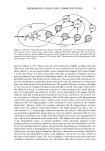
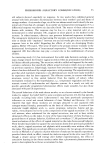
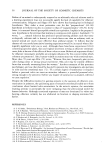
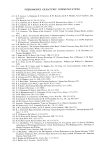
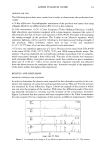
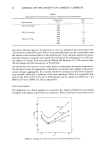
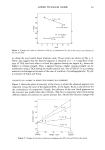
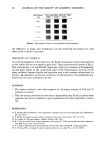
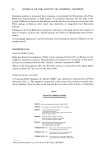
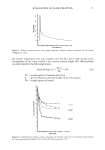
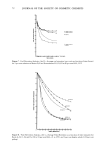
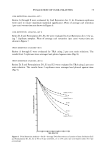
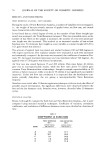
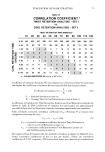
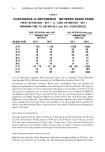
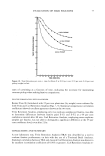
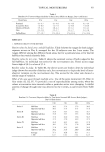
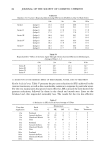
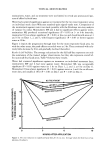
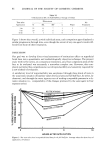
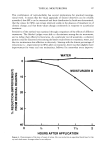
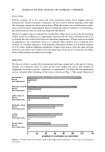
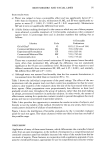
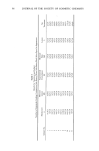
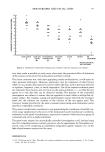
MOISTURIZERS AND FACIAL LINES 95 these results were: a) Water was judged to have a perceptible effect and was significantly better (P 0.01) than no treatment. In turn, moisturizers O, ML, and EF were significantly su- perior to water (P 0.001, P 0.001, and P 0.01 respectively). Moisturizers MF and L were not significantly different from water. b) A fairly distinct ranking developed in the extent to which any one of.these prepara- tions achieved a possible maximum of 144 favorable evaluations when compared against water. In percentage form and in absolute numbers this ranking was as follows: Identity Code Oil of Olay © O Commercial Moisture Lotion ML Experimental Formulation EF Commercial Moisture Film MF Commercial Lotion L % Favorable Evaluations 83% (119 out of 144) 76% (109/144) 64% (92/144) 55% (79/144) 53% (77/144) There was a numerical trend toward moisturizer O being assessed more favorably more often than moisturizer ML, although the difference was .not statistically significant at the 95 per cent confidence level. Moisturizer O was superior to and differed statistically from moisturizers EF, MF, and L (P 0.001), and similarly, ML differed from MF and L (P 0.01). c) Although water was assessed less favorably than the five cosmetic formulations, it was assessed more favorably than no treatment (89 vs. 51). Table I shows the individual components of the panel ratings. The effect of the two moisturizers with the greatest lead over their control was manifested in that for every subject a clear majority of the evaluators chose the side of the face treated with one of these agents. Other preparations were proportionately less effective as their lead gradually eroded away throughout the group of subjects, rather than this lead making an abrupt, pronounced transition in particular subjects. In other words, the extent of effectiveness existing for a particular cosmetic tended to prevail throughout the study group, and was not concentrated in particular subjects. Table I also provides the opportunity to examine the results in terms of subjects, and thereby to test the validity of the method. Overall, for the six-test series, there was no erratic pattern indicative of a failure of randomization. Figure 2 shows the distribution of favorable evaluations by the 12-member evaluator panel for each test agent. The values clustered within one-third to less than one-half of the possible range. DISCUSSION Application of many of those same features, which differentiate the controlled clinical study from an open investigation, to the method of evaluation by a nonprofessional and untrained consumer panel has similarly increased the value of the results from this lat- ter mode of inquiry. These features, in conjunction with a qualitative appraisal of com- parative overall performance, appropriate for use by nonprofessional consumer evalua-

96 JOURNAL OF THE SOCIETY OF COSMETIC CHEMISTS
Purchased for the exclusive use of nofirst nolast (unknown)
From: SCC Media Library & Resource Center (library.scconline.org)