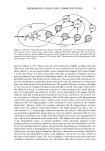
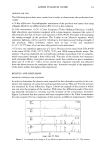
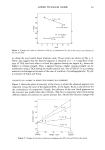
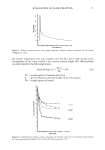
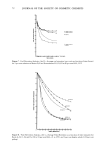
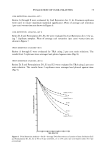
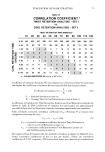
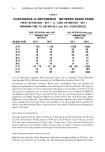
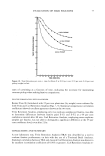
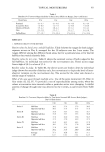
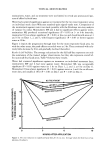
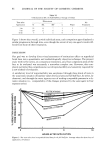
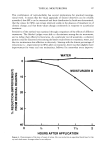
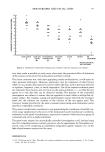
MOISTURIZERS AND FACIAL LINES 97 ß ß ßß ß *** *8* •** ßßß ß ß ßß ß ,:, I I I MOISTURIZER MOISTURE EXPERIMENTAL 0 LOTION FORMULATION ML EF I MOISTURE LOTION FILM L MF WATER* ß NO TREATMENT *AS EVALUATED VS. NO TREATMENT Figure 2. Distribution of favorable evaluations by treatment (each dot represents one subject) tors, have made it possible to study more objectively the perceived effect ofhydration of the stratum corneum by five moisturizers and their controls. The classic consumer test, with users appraising results on themselves, is well suited to elicit personal preference. However, preference may be composed of other factors which do not usually affect perceived action within the skin, such as previous attitudes or opinions, fragrance, color, or tactile impression. Use of the separate evaluator panel can eliminate these factors, and can focus on the action attribute, i.e., on what the test agents do to the skin that can be observed visually. The features of the controlled investigation are utilized to ensure that the appraisal is made within a setting that ex- cludes artifact. For example, coding and randomization ensure that both the evaluator panel and the subjects are unaware of the identity of the test agents used. The crossover design provides for the same consumer panel using each moisturizer under specified, comparable conditions. The present method also contributes to our approaching the conditions of real-life cos- metic usage (application by the users of the moisturizers under normal-use conditions, evaluation by the panel of performance as perceived outside of the home by a group of consumers and not by a single individual). The panel study adapted as a scientifically controlled investigation could, besides being used for comparing various cosmetic products, also be appropriate for formulation re- search, such as for comparing an established preparation against variants of it, in the light of performance as perceived by users. REFERENCES (1) D. H. Powers and C. Fox, The effect of cosmetic emulsions on the stratum corneum, J. Soc. Cosmet. Chem., 10, 109-16 (1959).

98 JOURNAL OF THE SOCIETY OF COSMETIC CHEMISTS (2) I. M. Gibson, The evaluation of hand-care preparations, J. Soc. Cosmet. Chem., 24, 31-41 (1973). (3) J. K. Prall, Instrumental evaluation of the effects of cosmetic products on skin surfaces with particular reference to smoothness, J. Soc. Cosmet. Chem., 24, 693-707 (1973). (4) M. S. Christensen, C. W. Hargens, S. Nacht, and E. H. Gans, Viscoelastic properties of intact human skin: instrumentation, hydration effects and the contribution of the stratum corneum, J. Invest. Derm., 69, 282-286 (1977). (5) E. R. Jolly and C. A. Sloughfy, Clinical evaluation of baby oil as a dermal moisturizer, J. Soc. Cosmet. Chem., 26, 227-234 (1975). (6) H.J. Spoor, Cosmetic dermatology, Cutis, 17,240-41 (1976). (7) E. W. Packman and E. H. Gans, Topical moisturizers: quantification of their effect on superficial facial lines, J. Soc. Cosmet. Chem., 29, add pages (1978).
Purchased for the exclusive use of nofirst nolast (unknown)
From: SCC Media Library & Resource Center (library.scconline.org)