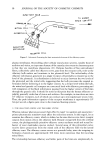
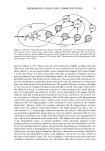
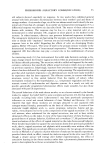
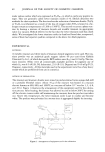
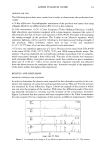
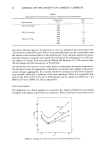
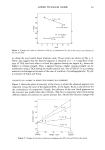
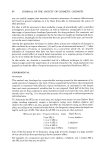
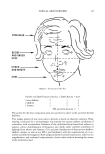
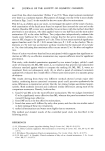
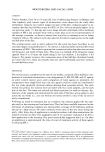
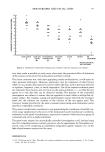
PHEROMONES (OLFACTORY COMMUNICATION) 51 OB Figure 3. Schematic relationship between olfactory and limbic systems (ref. 25). Olfactory Cortical Struc- tures (shaded circles), Limbic System (open circles), Olfactory Bulb (OB), Mitral Cell (M), Granular Cell (Gr), Glomerulus (Gl), Anterior Olfactory Nucleus (AON), Prepyriform Cortex (PP), Amygdala (AM), En- torhinal Cortex (ER), Olfactory Tubercle (OT), Septurn (SEP), Hypothalamus (HYP), Hippocampus (HIP), Lateral Olfactory Tract (LOT) picted in Figure 3 (25). These areas are interconnected in highly complex ways and only in the past few years has a number of new methods been acquired for studying them. Hence, it can be expected that a more sophisticated diagram will replace Figure 3 in the near future. It is fair to state that at this time a unanimity of opinion does not exist pertaining to the intricate relationships among the various parts of the olfactory and limbic systems. The limbic system is believed to be concerned with visceral and be- havioral mechanisms, particularly those associated with the expression of emotional states and with sensory and sexual functions. The anterior olfactory nucleus is thought to serve as part of a negative feedback loop that affects mitral cell output. Fibers from the olfactory tubercle (a rudimentary structure in man) passing to the septal area ap- pear to be principally non-olfactory. In fact, recent observations (26) suggest that the olfactory bulb has certain general modulatory functions in addition to its sensory role as a processor of olfactory information. One of the main inputs to the hippocampus comes from the entorhinal cortex, which in turn receives direct connections from the olfactory bulb. The hippocampus is well developed in such animals as the dolphin which lacks olfactory bulbs, but evidence indicates that the hippocampus receives inputs from the olfactory bulb, when present. The hippocampus may play a role in odor memory (27). Interestingly, olfactory memories are unique in that specific odors can be retained significantly longer than can visual or auditory memories (28). It is not uncommon for people to be vividly reminded of particular events, over long periods of time, which were associated with certain odors. The largest site in the olfactory cortex is the prepyriform cortex, or anterior pyriform cortex, generally regarded as the primary cortex in the olfactory pathway. Axons that leave this area distribute, inter alia, to the surrounding olfactory regions and parts of the hypothalamus. Consequently, the prepyriform cortex is strategically located to affect central brain structures that are cru- cially involved in many types of behavior. Recently it has been demonstrated that fibers project from the prepyriform cortex to the thalamus, one of the key relay centers of the brain to the frontal cortex (29). Such a thalamic connection to neocortex raises the possibility of greater sophistication and association with other stimulus events than

52 JOURNAL OF THE SOCIETY OF COSMETIC CHEMISTS older anatomical evidence would have implied. Among the connections leading into the amygdaloid complex, only olfactory fibers are well defined anatomatically nearly all parts receive either direct or indirect connections (30). The hypothalamus, the most important part of the limbic system as far as behavior is concerned, receives connec- tions from the amygdaloid complex. Hypothalamic activity regulates the secretion of the gonadotropins, follicle-stimulating hormone (FSH) and luteinizing hormone (LH), from the anterior pituitary. In man, the amygdala has been shown to activate olfactory hallucinations and also is implicated in differentiating and identifying odors (31). Electric stimulation of the amygdala and the pyriform cortex of human subjects has been reported to be followed by immediate and excessive incretion of adreno- corticotropic hormone (ACTH) together with a rise of plasma cortisol (32). Of even greater interest, significant increases were observed in plasma cortisol arising from electrical stimulation of the olfactory mucosa (33). No change in plasma cortisol occurred in individuals with post-operative anosmia. The phenomenon was interpreted as demonstrating that intact olfactory pathways allow the electric stimulus to reach hypothalamic structures, which in turn permit the release of ACTH-releasing factor and rise in cortisol level. This interpretation suggests that a specific odorant(s) can cause the same type of effect as observed with electrical stimulation. From the foregoing anatomical and clinical considerations, albeit sketchy, it is evident that an intimate relationship exists between the olfactory and limbic systems in hu- mans. Consequently, pheromonal effects could be involved in various aspects of re- productive physiology in man, similar to those known to occur in non-human animals. 2.3 THE PREOPTIC AREA AND OLFACTORY SENSITIVITY Pfaff (34) compared responses of the normal male rat to urine and non-urine odors by measuring signals from the olfactory bulb and preoptic area, which is an anterior exten- sion of the hypothalamus. A high proportion of preoptic region units responded dif- ferently to estrous female rat urine odor than to ovariectomized female urine, while only a low proportion of olfactory bulb units did so. A reversal was evident for non- urine odors. Approximately 75 per cent of all units, in both the olfactory bulb and the preoptic area, responded differently to urine odors than to non-urine odors. These data suggest that it is theoretically possible for receptor site information, coded by the olfactory bulb, to be "decoded" solely in the preoptic area. Therefore, a volatile chemical, not necessarily detected as an "odorant," might be physiologically active by virtue of the olfactory-preoptic-hypothalamic-pituitary relationship. Also, if the olfac- tory efficiency of the cells in the preoptic area is greater than those in the brain regions responsible for other aspects of odor perception, it is possible that certain odorants, i.e., pheromones, in sub-threshold concentrations for regions in the brain other than the preoptic area, can bring about a response in the preoptic area of mammals. 3. ENDOCRINE FUNCTION AND OLFACTORY SENSITIVITY IN WOMEN Biosynthesis of pheromones and scent gland secretion in mammals usually are influenced by the hormonal states of the body. Pheromones associated with reproduc- tion in lower animals display their effectiveness at or near estrus, the period of ovula- tion and maximum sexual receptivity in the female. Fluctuations in odor detection
Purchased for the exclusive use of nofirst nolast (unknown)
From: SCC Media Library & Resource Center (library.scconline.org)