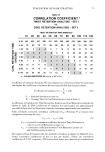
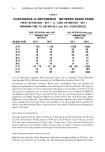
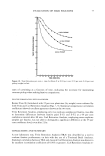
J. Soc. Cosmet. Chem., 29, 65-78 (February 1978) Evaluation of hair fixatives a new technic utilizing torsional measurements STUART H. GANSLAW and F. THEODORE KOEHLER, National Starch and Chemical Corporation, 10 Finderne Avenue, Bridgewater, NJ 08876. Received October 18, 1976. Presented at Ninth IFSCC Congress, June 1976, Boston, Massachusetts. Synopsis A new laboratory test, TWIST RETENTION ANALYSIS (TRA), utilizing a TORSIONAL BRAID ANALYZER, is described as a tool for EVALUATING HAIR FIXATIVE set holding ability under humid conditions. Excellent statistical correlation to traditional laboratory Curl Retention testing is demonstrated. Twist Retention Analysis is shown to give more precise measurements than earlier evaluation techniques and allows the use of smaller sample populations. This new test is shown to give statistical correlation (90 to 100 min), to long-term (5 to 21 hr) Curl Retention testing, allowing rapid evaluation of fixative performance. Conclusions about fixative differences can be made at a faster rate. Statistical differences between fixatives are determined that could not be established by Curl Retention testing. INTRODUCTION Laboratory measurements of fixative curl holding ability under humid conditions have been described in the literature (1-4) over the past decade. These techniques employ visual observations of vertically positioned hair swatches and measure percent drop as a function of time. These test procedures require multiple samples, usually 7 to 15, to give statistically significant measurements. Due mainly to physical handling of curls during preparation and reliance upon visual measurements to record results, substantial error factors can be introduced. Bogaty (5) has suggested that hair frequently assumes a helical coil configuration in the course of its being combed into style. Curl holding, previously described, has generally not taken these torsional configurations into consideration in analysis of test results. This paper will present a new performance test, Twist Retention Analysis (TRA), for evaluating hair fixatives, utilizing torsional measurements of hair/resin composites under humid conditions. Evaluation is automated with the use of a Torsional Braid Analyzer. It will be demonstrated that Twist Retention Analysis is a precise measurement of the set holding capacity of hair fixatives, permitting the use of a small sample size in order to obtain statistically significant conclusions. 65

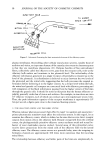
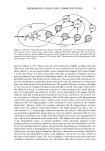
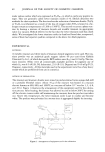
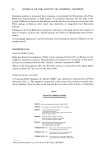
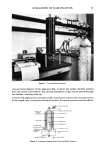
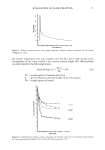
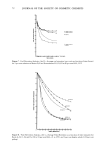
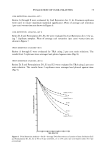
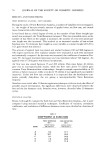
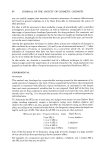
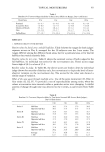
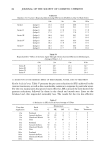
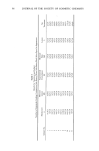
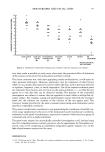
66 JOURNAL OF THE SOCIETY OF COSMETIC CHEMISTS Statistical analysis is presented that compares conventional Curl Retention with Twist Retention measurements. A high degree of correlation between the two tests is ob- served. Differences between hair fixatives will be shown to develop'at a faster rate with TRA, giving correlation after short time intervals, to long-term Curl Retention analysis. Parameters of Twist Retention testing are discussed, including swatch size, degree of twist of swatch, air flow rate, fixative pickup, and effect of shampooing upon perfor- mance. A strain gauge apparatus is used for precisely determining the amount of fixative on the sample swatch. EXPERIMENTAL FIXATIVE FORMULATIONS Eight hair fixative formulations (Table I) were prepared from 0.50 to 4.00 per cent by weight in andydrous ethanol. Neutralization was carried out, if needed, to the manu- facturer's recommended level with 2-amine 2-methyl 1-propanel (AMP). Three of the formulations (D1, El, E2) were resins in conjunction with typical plasti- cizers at a level of 15 per cent on the resin solids. TORSIONAL BRAID ANALYZER A Torsional Braid Analyzer (6), Model 100B 1 • was utilized for measurement of Twist Retention (Fig. 1). The sample is suspended in the center of an enclosed vertical cylin- drical chamber, fixed in place at the top and free to rotate at the bottom. A schematic TABLE I FIXATIVE FORMULATIONS RESIN A - poly-vinyl pyrrolidone (molecular weight 40,000) RESIN B - vinyl acetate (70)/vinyl pyrrolidone (30) copolymer RESIN C - (vinyl acetate/crotomc acid/vinyl neodecanoate terpolymer) neutrahzed 80% pf its avatlable acidity with 2.amine 2- methyl1. propanel (AMP) RESIN D - (butyl half ester of methyl vinyl ether/ malelc anhydride copolymer) neutralized 7% of •ts available acidity wtth AMP RESIN E - octylacrylamlde/acrylates/butyl amine ethyl methacrylate polymer neutralized 90% of its available acidity with AMP FORMULATION - D1 - Resm D plus 15% on the resin weight, of poly-propylene glycol (26) oleate FORMULATION - E1 - Resin E plus 15% on the resin weight, of poly-propylene glycol (26) oleate FORMULATION - E2 - Resin E plus 15% on the resin weight, of poly-ethylene oxide (molecular weight 1000) •Chemical Instruments Corp., P.O. Box 399, Woodbury, NJ 08096.
Purchased for the exclusive use of nofirst nolast (unknown)
From: SCC Media Library & Resource Center (library.scconline.org)