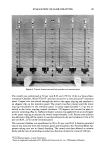
92 JOURNAL OF THE SOCIETY OF COSMETIC CHEMISTS patient. The cosmetic scientist seeks to confirm the existence of an objectively existing benefit, but it must be a benefit subjectively evident and relevant to consumers, and yet it is to be demonstrated in a scientifically viable manner. A variety of approaches contributing to resolution of this problem has been developed by previous investigators. For example, decreased moisture loss following the applica- tion of creams or lotions has been measured objectively with desiccator assembly strapped against the inner forearm and consisting of a capped glass cylinder containing silica gel (1). Changes in roughness and dryness of the hands after use of a lotion have been assessed by an expert observer with a subjective scoring system, supplemented by the opinions and preferences of panel members (2). The effects of emollients, soaps, and water on three components of smoothness have been evaluated instrumentally via measurement of friction with a dynamometer, of topography with stylus displacement, and of scratch hardness with a variable-load stylus (3). The dynamometer has also been used to measure viscoelastic properties of skin in vivo and in vitro, following applica- tion of water, water vapor, or an emollient, through the skin's response to shearing stress, as displayed in hysteresis loops on an oscilloscope screen (4). A single-blind study of baby oil as a moisturizer on subjects selected for rough or scaly skin of the el- bows, knees, heels, and tibia involved evaluation by a clinical investigator with a five- point rating scale, together with review of photographs for some subjects (5). Our particular objective was to investigate the hydrating effect of topical moisturizers on the stratum comeurn, as perceived via their action on superficial facial lines, the kind of shallow to very shallow "dry-lines," not affecting the dermis, that an effective moisturizer can be expected to minimize temporarily. The term "wrinkles" is broadly used by the general population to include these lines. In accordance with this usage, a recent article on cosmetic dermatology, categorizing surface changes in the facial skin by age, describes all such manifestations as "wrinkles" (6). However, in order to best delineate the area of performance of interest to us, we selected "superficial facial lines" (SFL's) as contrasted to the more pronounced wrinkles, with a deeper, dermal involve- ment. The solution described below, to the problem of defining subjectively perceived effect on such lines in objectively valid terms, consisted of designing and conducting a panel study as a controlled scientific study with its features of randomized treatment, a com- parison agent, and blinded evaluation. To provide relevance, this evaluation was performed by a nonprofessional and untrained consumer panel acting as the investiga- tors not ofefj•cts on themselves, as in the classic consumer test, but on a separate group of subjects who used the test materials. Our dual objectives were: 1. to ascertain the feasi- bility of a panel of consumers functioning effectively within the structured format of the scientific investigation, and 2. to determine the extent to which the effects of five moisturizers [previously observed as having differing degrees of performance by expert judges (7)], water, or no treatment were perceptible to these consumer-investi- gators. EXPERIMENTAL The central consideration in defining the investigational procedure was to keep it within the capabilities of nonprofessional evaluators, while adhering to the require- ments of a controlled study.

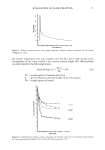
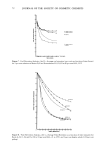
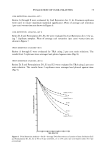
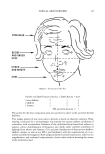
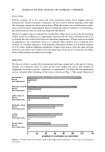
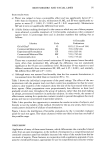
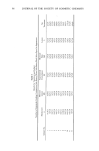
MOISTURIZERS AND FACIAL LINES 93 SUBJECTS Twelve females, from 30 to 65 years old, free of influencing diseases or allergies, and who regularly used various types of moisturizers, were chosen for the study after preliminary rating by two trained judges (not part of the later, evaluator panel) to de- termine that they had full-face scores for SFL's of 20 to 30 or moderately higher. As in our previous study (7), this age and score range includes individuals with a moderate number of SFL's and excludes those with so many lines as not to be representative of the average consumer, or those in whom lines would be so minimal as not to define treatment effects. The subjects were also selected for almost equal scores on the right and left sides of the face. The scoring system used to select subjects for this study has been described in our associated paper on quantification (7). In essence, it makes possible reproducible visual assessment of SFL's. The result is expressed as a numerical value that takes into account the frequency and depth of these lines. This score is a multiple of the frequency rating (graded from 0 to 4) times the depth rating (1 for very shallow, 2 for shallow, 3 for deeper). For greater accuracy, the component areas of the half-face (forehead, beside and under the eyes, cheek and mouth, chin) are rated individually and then summed for each half-face score. PROCEDURE The six-test series, completed at the rate of one weekly, consisted of five half-face com- parisons of individual moisturizers (code designations O, ML, EF, MF, and L) • against an active control (water), and a sixth comparison of water against no treatment. All comparisons were single-blind since the test agents could be coded and randomized but not made physically identical without altering their potential activity. For each weekly test period, the subjects were provided with two coded samples, one for each side of the face. The water was colored and faintly perfumed to mask its identity. Ap- plication of the samples was randomized for each side of the face, across subjects, and across the six weeks (i.e., any one weekly test series involved a mix of the six sets of study comparisons). Following an initial no-treatment day as a washout, the subjects applied the two sam- ples early in the morning and ten hours later. They had been carefully instructed in the technique of achieving complete and reproducible coverage of the half-faces without mix-up or a large excess. No other cosmetics were used on the test areas during the study. After three days of application in careful accordance with their instructions, the subjects returned on Day 4 for judging by each of 12 consumer evaluators 3 hr after a final application in the morning. Our prior research had suggested that 2 to 3 hr after an application is approximately the time of onset of maximum activity of these agents in reducing SFL's. aO is Oil of Olay © (Olay Company, Inc., Wilton, Conn. 06897), containing a blend of fatty alcohols (cetyl, myristyl, and stearyl), cetyl palmitate, sodium and potassium laurates, myristates, stearates, and palmitates, mineral and castor oils, and cholesterol, in a preserved and fragranced vehicle. EF is an experimental formulation containing lipids dispersed in a preserved aqueous vehicle. ML (moisture lotion), MF (moisture film), and L (lotion) are marketed oil-in-water emulsions.
Purchased for the exclusive use of nofirst nolast (unknown)
From: SCC Media Library & Resource Center (library.scconline.org)