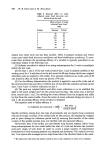
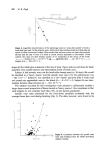
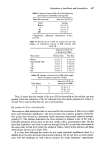
424 B. R. Pugh patterns that could give guidance in designing laboratory brushing machines for measur- ing the abrasivity of toothpastes. None were concerned with the effect of brushing forces on the wear of a brush. In the investigation to be described here, the importance of brush condition on cos- metic cleaning was examined. Brushing forces were also examined to establish their role in the process of brush senescence. Methods for measuring cosmetic cleaning in vivo are both time-consuming and tedious (3, 10). Simple laboratory tests using plastics, paints, metals, etc. are generally unsatis- factory owing to the difficulty of matching their tribological properties to those for naturally stained protein films in vivo. Alternatively, naturally stained extracted teeth can be used. The optical reflectances of such teeth change only slowly when they are brushed with a slurry of a toothpaste and there are wide variations between the individual rates of change. These problems can be overcome by (a) constructing mosaics containing ten to fifteen teeth, (b) comparing the rates of increase in reflectance for two treatments on each mosaic (whether a reference and a test toothpaste or a reference and worn tooth- brush) and (c) absorbing a black dye into the protein film in order to magnify the changes in reflectance. Several authors measured the forces applied during toothbrushing using brushes with specially constructed handles containing the transducer elements (9). A more direct approach of cementing strain gauges onto the handles of commercial brushes is preferred as the bulky handles used in the former approach could conceivably have inhibited subjects from brushing naturally. Bergstrom (8) assessed the condition of toothbrushes by measuring the angle of permanent deformation of individual filaments. This approach was rejected by us because it could not be correlated with the perceived amount of wear. Instead, a simple scale has been developed in which samples of worn commercial brushes were ranked in order of the severity of wear. EXPERIMENTAL BRUSH WEAR A large number of worn commercial brushes were obtained from people who had used them normally at home. These brushes were Wisdom, Oral B 40 and Gibbs short-head varieties. For each type of brush, six were selected to cover a wide range of senescence. Two new brushes of each type were added to the numbers, making twenty-four brushes in total. Fifteen judges were selected at random and each independently was asked to sort the brushes into groups which represented perceptually important differences in patterns of wear, without restriction on either the number of groups or the number of brushes within a group. In addition, the judges assigned percentage scores to the severity of wear for each group based on the arbitrary notation that 100•o represented a completely worn out brush (in their estimation). BRUSH WEAR AND BRUSHING FORCES il'l FiFo Forty-seven panellists were recruited from office and laboratory personnel. Each was given a Gibbs short-head medium brush and asked to use it normally at home. At intervals over an eight week period, panellists returned their brushes for inspection.

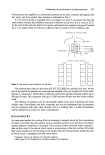
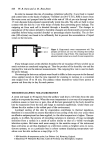
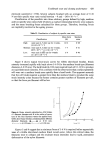
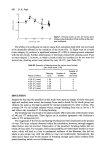
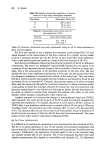
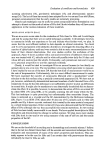
Toothbrush wear and cleaning performance 425 Subsequently each panellist attended a panel room for measurement of the forces applied during brushing. Each was given a Gibbs short-head medium brush fitted with a strain gauge, a supply of toothpaste, and then asked to brush normally. After the panel- list had been brushing for 5-10 sec the gauge recorder was switched on. The signals from the strain gauge were amplified before recording using a high speed UV galvanometer These traces were then used to measure the peak heights of the force pulses. The brushing rate was also measured by counting the number of pulses per unit time and converting this to pulses per minute. CLEANING in vitro Freshly extracted molars and pre-molars, which had at least one surface free from dental restorations or caries, were dyed black using a mixture of 4-methylcatechol and p- phenylenediamine. After cutting, these were mounted in plastic rings 4 cm in external diameter to form mosaics containing ten to twelve teeth closely packed together. A specially constructed reflectometer was used to measure the luminance of the mosaics. The light source was a ring fluorescent tube 12 inches in diameter mounted behind an hemispherical bowl made of white plastic. A mosaic placed in a circular hole in front of this bowl reflected light into an optical system, placed on the opposite side of the bowl. This condensed the light onto a photo-detector. The optics were designed so that extraneous light from surfaces other than the mosaic did not enter the detector. A digital voltmeter was used to record the output from the photo-detector. Samples of Gibbs brushes having various states of wear were obtained. Six mosaics were used to examine each brush in the following manner: a standard slurry of toothpaste was made containing 33•o w/w Pepsodent (Elida Gibbs) in distilled water. The reflectance of the first mosaic was taken, it was then placed in a laboratory brushing machine and brushed for twenty strokes using the worn brush. A further reflectance measurement was made. This procedure was repeated for four more successive increments of twenty strokes, reflectance measurements taken after each increment, to give a total of 100 strokes. The entire operation was then repeated with a new brush in place of the worn brush. This procedure was carried out on three mosaics. A further three mosaics were then tested but on these occasions the new brush was used first. Slopes for the regression of reflectance versus brush strokes were calculated. For each mosaic, the ratio of the slopes of the worn and new brushes was calculated using the arbitrary notation that the value for the new brush was 1.00. All six ratios were then used to calculate a mean cleaning score for that brush. MECHANICAL PROPERTIES Three types of Gibbs short-head brushes with filaments having diameters 0.20 mm, 0.25 mm and 0.33 mm were tested (these corresponded to soft, medium and hard brushes). In turn each new brush was mounted onto a pivoted arm so that the tips of the filaments rested on the surface of a flat, rigid table capable of being moved horizontally. Various weights (up to 2 kg) were placed on the arm above the head of the brush, the table moved through a distance of 2-3 cm then after 45 seconds the decrease in the height of a fixed mark on the head of the brush above the surface of the table was measured using a travel- ling microscope. Once the table had been moved, the filaments attained an equilibrium position and further movement of the table (within a few seconds) did not affect the curva- ture of the filaments.
Purchased for the exclusive use of nofirst nolast (unknown)
From: SCC Media Library & Resource Center (library.scconline.org)