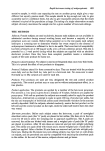
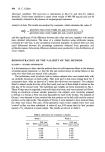
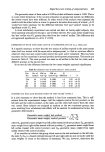
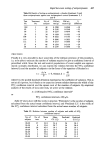
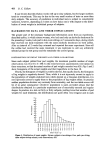
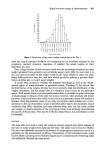
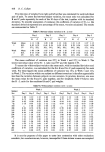
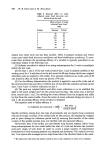
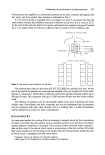
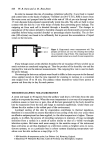
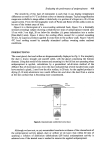
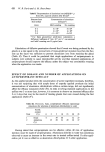
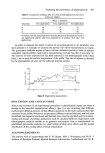
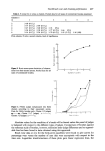
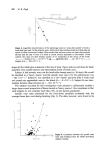
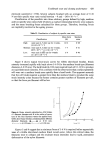
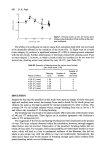
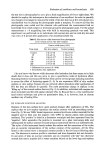
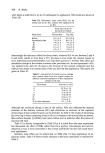
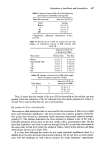
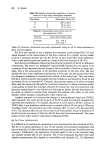
Mechanical stresses in lipstick 445 Table 1I. Subjects who exhibited significant differences (Mann-Whitney U-test, P 0-02) in maximum application forces between the two applied lipsticks Subjects Ultra Soft v. Silver Frost 3,4 c w 6 dw 8, 10, 11 b z 9 dz 13 c x 14 dx 16, 17 c v 21 a y 22,24 c y 23 d y 25 b y 28 a y Four independent volunteers ranked the applied lipsticks in order of colouring power: b a c e, z v, w y x d. The Kendall Rank Correlation Coefficient, x, for the ranking of applied load and subjectively assessed covering power was 0.683, indicating that individual subjects would use a lower application force to apply a lipstick with better colouring power. The subjects were divided into two age groups of approximately equal size (18-29 and 30-60 years old). Subjects over 30 years old used significantly higher application forces (Mann-Whitney U-test, P 0.025). A similar analysis of their choice of colours indicated at the P 0.025 level that the 18-29 years group were biased towards brown colours and the 30-60 years group towards the paler brown, pink or red colours. Subjects who applied lipstick frequently (daily or more often) used significantly higher application forces than those who applied lipstick less frequently. Other parameters possibly related to lipstick selection and application were also examined. The subjects' comments upon the applied lipstick was compared with the most common application force range. No overall trend was observed and subjects frequently described the same lipstick using antonyms and the reasons for lipstick selection seemed to have been many and varied. The lipstick choice combinations of a lipstick from each range revealed no bias towards particular colour combinations such as brown and dark brown, or red/pink and pale brown etc. The selection of lipstick was finally compared with subject hair colour but no trend towards any particular choice of lipstick was observed. DISCUSSION The main purpose of the work reported here was to assess the capability of the lipstick application equipment to achieve this an application trial was carried out. The equip- ment was shown to be capable of meaningful measurements and is a useful tool for assessing the force of application of lipstick. This trial was designed to assess the maximum application forces of two types of lipsticks. Subjects were expected to apply a lipstick of their own choice in a more typical

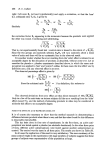
446 R. G. Drew manner than a lipstick selected by the investigator and hence only one lipstick of each type was tested by the subject. Although a difference was detected between the maximum application forces used in each lipstick range, an investigation of the data showed that this may be due to either the colouring ability of the lipstick, or the age of the subject. The colours applied with the greater force were predominantly pale brown or a clear gloss. The mainly dark colours, of better colouring ability, were applied with a smaller force. The application data implies that lipsticks with relatively low colouring power (usually pale colours) are more likely to fracture during use if the strengths of all lipsticks are equal. Differences in maximum application force were detected between frequent and occasional lipstick users, but not between users and non-users of lipstick. This may be explained by the selection of lipsticks, because non-users of lipstick more frequently selected glossy and paler lipsticks. REFERENCES 1 Elliott, T. J. Present and future trends in make-up. Cosmet. Perrum. 88 35 (1973). 2 Lauffer, P. G.I. Lipsticks. In: Balsam, M. S. and Sagarin, E. Cosmetics, Science and Technology Vol. 1 388 (1972). Wiley-Interscience, New York.
Purchased for the exclusive use of nofirst nolast (unknown)
From: SCC Media Library & Resource Center (library.scconline.org)