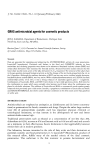
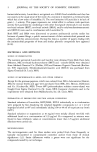
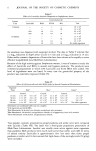
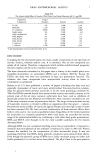
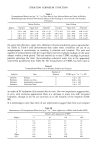
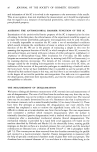
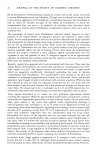
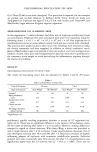
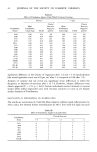
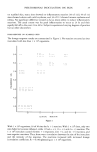
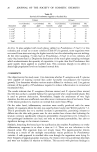
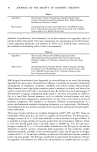
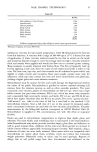
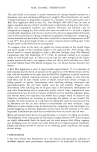
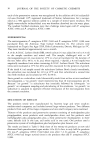
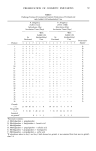
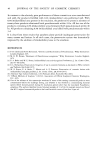
6 JOURNAL OF THE SOCIETY OF COSMETIC CHEMISTS Table V Effect of a Lauricidin Alcoholic Dispersion on Staphylococcus Aureus Concentration (%) Contact Time Lauricidin BHA EDTA IPA Titer 5 minutes .... 2.8 X 10 6 -- -- -- 30 2.3 X 10 6 10.0 1.0 1,0 -- 4.5 x 10⁵ 10.0 1.0 1.0 30 7.7 X 10 4 15 minutes .... 2.7 X 10 6 -- -- -- 30 2,2 X 10 6 10 1.0 1.0 -- 4.5 X 10 3 10 1.0 1.0 30 No viable organisms the emulsion was dispersed with isopropyl alcohol. The data in Table V indicate that a 2 1og•0 reduction in Staph aereus occurs in 5 min and a 6 log•0 reduction in 15 min. Other stable cosmetic dispersions of Lauricidin have been shown to be equally or more effective (unpublished data MedChem Laboratories). Because of the high activity against Streptococcus mutans, it was of interest to study the effect of Lauricidin and BHA in several oral hygiene products. The products were commercial preparations in which 0.5% Lauricidin and 0.01% BHA were added. The level of ingredients were not listed. In every case the germicidal property of the product was materially improved (Table VI). Table VI Effect of 0.5% Lauricidin and 0.01% BHA Added to Several Commercial Mouthwashes Exposure Time Red 2 Blue 3 Green 4 i i i Control Control Control 15 min. 1.4 X 10 6 5.3 x 10⁵ 5.7 x 10⁵ 1.3 x 10⁵ 1.8 x 10⁵ 7.5 X 10 4 30 min, 1.3 X 10 6 2.9 x 10⁵ 3.0 x 10⁵ 8.0 x 10⁴ 5.8 x 10⁴ 1.3 x 10⁴ 60 min. 1.3 X 10 6 8.6 X 10 4 1.2 x 10⁵ 2.1 X 10 4 6.1 X 10 3 5.0 X 10 2 120 min. 1.4 X 10 6 8.0 X 10 • 1.9 X 10 4 1.3 x 10³ 2.0 X 10 2 No viable organisms Information on mouthwash labels was not complete. •0.5% Lauricidin and 0.01% BHA. 2Red Mouthwash: 5% alcohol, zinc chloride, menthol and other aromatics. 3Blue Mouthwash: 15% alcohol, cetylpyridinium chloride, oil of peppermint, boric acid, menthol. 4Green Mouthwash: 18.5% alcohol, cetylpyridenium chloride. Two popular cosmetic preservatives propyl parabens and sorbic acid, were compared with Lauribic (Table VII). The latter was a food-grade proprietory preservative of Med-Chem Laboratories. Lauribic was usually more active against more organisms than parabens. Both products were much more active than sorbic acid itself. In terms of animal toxicity Lauricidin is approximately 10x less toxic than either propyl parabens or sorbic acid. In fact animals fed high doses of the monoglyceride (50 g/kg) were not killed.

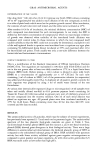
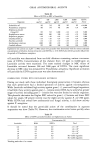
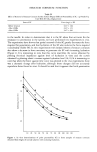
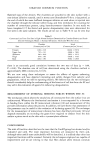
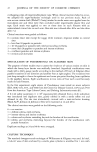
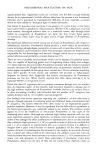
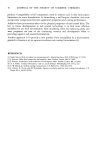
GRAS ANTIMICROBIAL AGENTS 7 Table VII The Antimicrobial Effect of Lauribic With Other Food-Grade Materials (pH 5.5,/•g/ML) Organism/ Propyl Compounds Parabens Sorbate Lauribic • E. Coli 625 5,000 1,250 Klebsiella 1,250 5,000 2,500 Ps. aeruginosa 10,000 10,000 5,000* Staph. aureus 313 5,000 62.5 Staph. epidermitidis 313 10,000 125 Strep. pyogenes 313 1,250 125 Strep. faecalis 625 10,000 250 Strep. mutans 625 5,000 250 S. cereviscae 313 10,000 125 C. albicans 1,250 10,000 1,250 •A special preparation of Lauricidin and Sorbic Acid. DISCUSSION In looking for the ideal preservation one must usually compromise on the spectrum of activity, toxicity, irritation and/or cost. It is axiomatic that no one compound can satisfy all of criteria. Therefore, compounds which exhibit multifunctional properties become of great interest to the cosmetic formulator. The three chemicals considered in this paper have a history in the market place as an emulsifier (Lauricidin), an antioxidant (BHA) and a chelator (EDTA). Except for EDTA, the other two were not considered to have any preservative function. The evidence that these compounds have antimicrobial activity alone or better in combination is substantial. Kabara et al. (1-7) have published a number of papers indicating that fatty acid and especially monoesters of lauric acid were antimicrobial. Structure-function relation- ships for glycerol esters showed Lauricidin to be the most promising candidate (6). That this GRAS material should have antimicrobial activity was totally contrary to the present state of the art since nonionic surfactants have been used as inhibitors of germicidal action (see our Materials and Methods). Also, nonionic emulsifiers are one of the most common causes of preservative failure. The range of antimicrobial activity of Lauricidin, however, is limited to effects on organisms other than gram (-) strains. Recently the antiviral effect of Lauricidin against Herpes and other lipid coated viruses has been reported (24). We have received confirmation of these antiviral effects from both in vitro and in vivo study (unpublished data). Regardless of the limited potential for Lauricidin as a cosmetic preservative when used alone, we extended the activity range of its antimicrobial affects by combining it with other food-grade preservatives. BHA and EDTA were thought to be the most suitable candidates for the reasons discussed below. Although BHA was not considered anything more than an antioxidant, it represents a chemical structure (phenol) of the antiseptic introduced by Lister in 1867 (25). Phenol remains the standard for the comparisons of other bactericidal drugs. It was not surprising therefore that BHA, being phenolic, produced some antimicrobial affects. Even though the phenolic group of BHA has a bulky tert-butyl group on either side (ortho positions), it is not less active than phenol. The alkyl chain in the para position
Purchased for the exclusive use of nofirst nolast (unknown)
From: SCC Media Library & Resource Center (library.scconline.org)