PERCUTANEOUS PENETRATION OF HAIR DYES 229 penetrate through the scalp. The regional variation in percutaneous penetration in man has been well established the scalp is often a preferred site of penetration for several materials (12,13). The low levels of absorption observed here are in contrast to the much higher penetration values (0.7-2.5% of the applied dose) obtained recently (14) for one of the hair dye components (2,4-diaminoanisole) applied to the forearm. A closer look at the hair dyeing process suggests an explanation for the observed differences. Hair coloring relies on the deposition of the dye moiety within the hair structure. This can be accomplished only by diffusion of the dye into the hair. Assuming a uniform distribution of the dye mixture (a justifiable assumption in view of satisfactory performance of hair coloring products), the latter is spread on the hair and the scalp in the form of a thin film. The ratio of the surface area of hair to scalp can be thus viewed as a partition coefficient, governing the distribution of the dye mixture. In the case of Rhesus monkey, we determined this ratio as close to 100 (average hair surface area of monkeys in this study was 3100 cm 2 and that of the scalp was 32 cm2), and it is of the same order of magnitude (between 75-100) for humans. With uniform distribution of the coloring mixture, one can expect that only a small fraction (•1%) of the applied dose will be in contact with the skin of the scalp. If this area correction factor is taken into account, a close correlation becomes apparent between results of this study and the data generated earlier (14). REFERENCES (1) E. P. Frenkel and F. Brody, Percutaneous absorbtion and elimination of an aromatic hair dye, Arch. Envir. Health, 27,401-404 (1973). (2) E. Hruby, The absorbtion p-toluenediamine by the skin of rats and dogs, Cosmet. ToxicoL, 15, 595-599 (1977). (3) M. Nakao and Y. Takeda, Body distribution, excretion and metabolism of p-phenylenediamine in rats, J. Pharmaceut. Soc. Japan, 99:1149-1153 (1979). (4) E. Hruby, et al., Cutaneous resorption of 2,4-diaminoanisole in the rat and dog, SGAE Report//A0037, March 1979. (5) M. Kiese and E. Rauscher, The absorption of p-toluenediamine through human skin in hair dyeing, Toxicol. Appl. PharmacoL, 13, 325-331 (1%8). (6) H. I. Maibach, M. S. Leaffer, and W. A. Skinner, Percutaneous penetration following use of hair dyes, Arch. DermatoL, 111, 1444-1445 (1975). (7) R. S. Yare and M. Garcia, percutaneous penetration following use of hair dyes, Arch. Dermatol., 113, 161 (1977). (8) R.J. Feldman and H. I. Maibach, Percutaneous penetration of steroids in man, J. Invest. Derm., 52, 89-94 (1%9). (9) R. C. Wester, P. Noonan, and H. I. Maibach, Recent advances in percutaneous absorbtion using the rhesus monkey model,J. Soc. Cosmet. Chem., 30, 297-307 (1979). (10) R.J. Feldman and H. I. Maibach, Absorption of some organic compounds through the skin of man, J. Invest. Dermatol., 54, 399-404 (1970). (11) H. I. Maibach. Unpublished data. (12) R.J. Feldman and H. I. Maibach, Regional variation in percutaneous penetration of •4C cortisol in man,J. Invest. Dermatol., 48, 181-183 (1%7). (13) H. I. Maibach, R.J. Feldman, T. Milby, and U. Serat, Regional variation in percutaneous penetration in man, Arch. Envir. Health, 23,208-211 (1971). (14) H. I. Maibach, Percutaneous Penetration of Hair Dyes. Investigation sponsored by the FDA at the Medical School, UCSF, August, 1977.

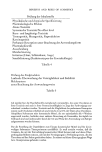
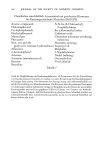
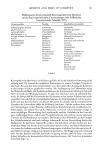
j. Soc. Cosmet. Chem., 32 231-245 (July/August 1981) BENEFIT UND RISK DER KOSMETISCHEN MITTEL yon Giinter Stiittgen SYNOPSIS As a rule, the utility of cosmetics cannot be evaluated by pharmacological methods as in the case of drugs. In order to assure their safety, cosmetic products must be programmatically investigated especially if absorption into the living cells of the skin and resorption into the organism may occur. Such a program is presented. The utility of cosmetics is related to prophylactic health care and to an improvement of the sense of well being with a positive influence on body functions. Finally, the deliberate presentation of another self through the use of cosmetics plays an important role in everyday life. Motivation for skin care is much deeper rooted than that for skin protection. Active substances in skin products are permitted if they influence only the above mentioned objectives of cosmetics. In this way, cosmetic products do not drift into the grey area in which they should be considered drugs. The problem of allergenicity has been minimized by avoiding the use of known sensitizing compounds. Since cosmetics are subjected to the same scrutiny as foods, i.e., food additives, their safety can be expected to be very high. The overall assessments of cosmetics today tends to be more positive than negative. Maximum safety is not merely a goal but must exist. This review is an attempt to present the requirements for achieving this objective. Man kiSnnte bei Gegeniiberstellung des Nutzens und des Risikos kosmetischer Mittel kurzerhand zu dem lapidaren Statement kommen: ,,Ein Risiko hat im Rahmen der Kosmetik nichts zu suchen." Der Begriff Risiko bedarf somit einer Definition und soll hier in seiner Gegeniiberstellung zu Benefit so verstanden sein, datt Sicherheit und Nutzen kosmetischer Mittel abwiigend miteinander verglichen werden. Die kosmeti- schen Produkte und ihre Inhaltstoffe sind in einer breitbasigen Programmierung auf ihre Sicherheit zu untersuchen, beyor sie in entsprechender Transparenz der Offentlichkeit darõeboten werden. Im weiten Bereich unserer Umwelt wird das Risiko bei Verbesserung der Lebens- qualit•it abgewogen. Risiken werden dann hingenommen, wenn es sich um lebensnot- wendige Situationen handelt. Ich erinnere an Energieversorgung und Arzneimittel. Kosmetika geh6ren sicher nicht zu den elementar lebensnotwendigen Ptodukten, zwei- felsohne aber sind sie geeignet, zur Verbesserung des Lebens, zur Verbesserung der Herrn Dr. Eugen Hieke, dem Direktor des Max von Pettenkofer-Institutes und Leiter der Kosmetik-Kom- mission im Bundesgesundheitsamt der BRD, gestorben am 17. 10. 1979, in ehrendem Gedenken gewidmet. Vortrag gehalten anl•ifflich des Kongresses der Deutschen Gesellschaft der Kosmetik,Chemiker vom 25.-26.4. 1980 in Baden-Baden 231
Purchased for the exclusive use of nofirst nolast (unknown)
From: SCC Media Library & Resource Center (library.scconline.org)