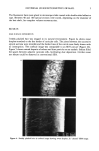
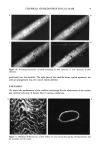
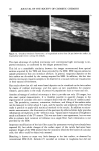
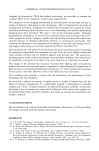
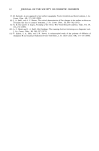
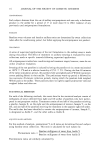
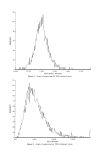
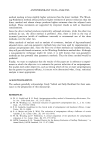
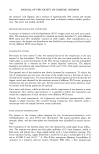
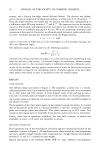
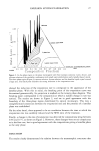
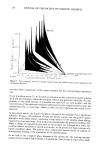
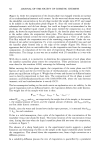
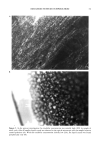
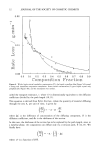
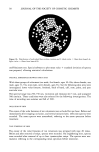
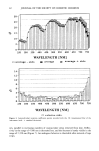
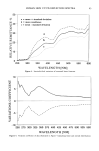
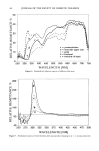
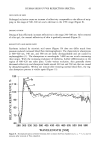
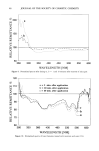
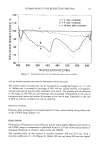
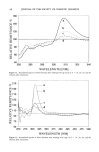
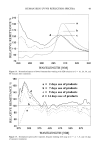
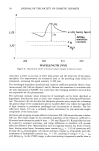
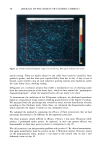
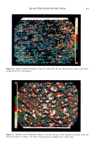
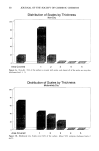
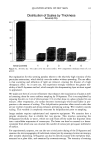
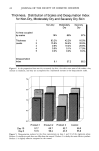
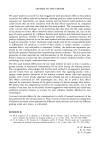
28 JOURNAL OF THE SOCIETY OF COSMETIC CHEMISTS DECANE 0.03 c•O 02 0 00 ---1 I --.I I I ISOSTEARIC ACID/TRIETHANOLAMINF. 0 0 0 I 0 2 0 3 0 4 0 5 0 G 0.7 0 8 O 9 ! 0 65/35 w^'ra Cornposi I.io lVrac[ion Figure 3. The evaporation rates were strongly reduced where the lameliar liquid crystal appeared in the composition (Figure 2). occurred when composition of the system changed and the corresponding evaporatio rate. In our preceding article (7), we focused our attention on the coalescence and flocculatio of oil and water droplets within the emulsion, when it was spread as a thin film. For that purpose, a very small amount of emulsifier was used (2% on total weight), and the concentration of the surfactant remained sufficiently low for a liquid crystal to enter the composition first at a late stage. Hence its effect on the evaporation rate could not be observed. In the present article, the liquid crystalline structure of the emulsifier has a significan influence, because, with reduction of water and decane content, the composition passes through a multi-phase system containing a large amount of the lameliar phase during evaporation at an early stage. Such results have already been discussed by Lochhead (8), where a change of evaporation rate from an initial rapid rate followed by a lower rate could be related, by means of optical microscopy, to the presence of large amounts of a liquid crystalline phase. The present more complicated system merits an analysis of developments leading to the appearance of the lameliar phase. As we look at the complete phase diagram of the system (9), the starting material consists of two isotropic liquid phases in equilibrium. One of these is water with a small

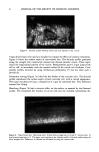
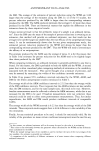
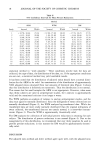
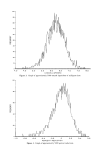
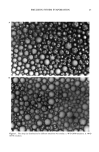
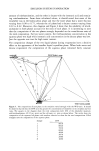
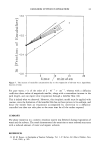
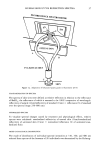
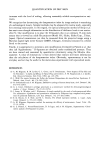
EMULSION SYSTEM EVAPORATION 29 amount of triethanolamine, and the other is decane with the isostearic acid and remain- ing triethanolamine. From these calculated values, it should noted that most of the emulsifier was in the hydrocarbon phase and that the water phase had a water fraction varying from 0.98 to 0.75, whereas the oil phase had a decane content varying from 0.92 to 0.42. Moreover, this diagram and Figure 4 show that the solubility of trieth- anolamine in both phases accounts for the ratio of each phase. It is interesting to note that the composition of the two phases strongly depended on the water/decane ratio of the total composition. For low water content, the triethanolamine concentration in the aqueous phase was high while isostearic acid concentration in the decane phase was low. Just the opposite was true for high water content. The composition changes of the two liquid phases during evaporation have a decisive effect on the appearance of the lameliar liquid crystalline phase. When both water and decane evaporated, the composition of the aqueous phase remained fairly constant DEC 1808TEARIC ACID 5 6 3• :R TRIETHANOLAMINE Figure 4. The composition of each phase in the emulsion varied strongly with the W/O ratio. It should be observed that the less the O/W ratio the greater the concentration of emulsifier in the oil phase and vice versa. The squares in the diagram show the total composition with 10% of the emulsifier (isostearic acid/triethanolamine, 65/35 wt. ratio) and the oil/water wt. ratio as shown below. The circles show the composition of the separated oil phase with numbers identical to those for the total compositions. Filled triangles note the composition of the aqueous phase. Sample 1 2 3 4 5 6 7 8 O/W 90/10 80/20 7O/3O 6O/4O 4O/6O 30/70 20/80 10/90
Purchased for the exclusive use of nofirst nolast (unknown)
From: SCC Media Library & Resource Center (library.scconline.org)