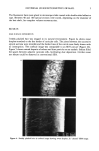
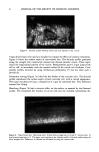
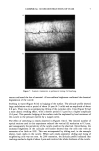
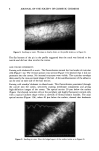
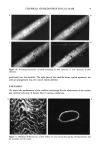
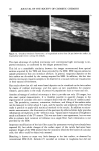
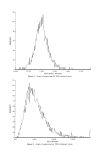
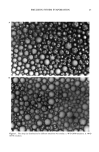
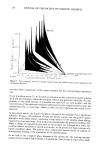
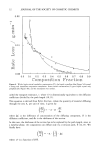
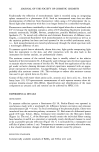
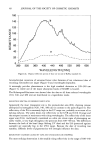
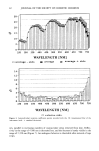
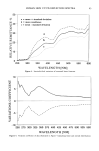
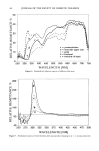
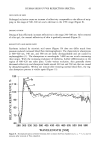
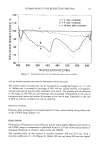
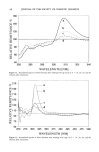
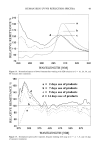
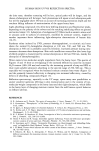
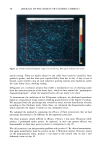
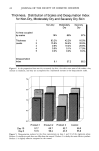
40 JOURNAL OF THE SOCIETY OF COSMETIC CHEMISTS 160 140 - 120 100 so 40 20 b 280 320 360 400 440 480 520 560 600 WAVELENGTH [NM] Figure 2a. Original reflection spectra of skin site (a) and of BaSO 4 standard (b). Interindividual variations of untanned lower volar forearms of ten volunteers (date of recording: December) are larger (Figure 4) and wavelength-dependent. A seemingly peculiar phenomenon is the high standard deviation at 320-340 nm (Figure 5), where one of the major absorption bands of NADH is located. The Kolmogoroff-Smirnow test showed that the data at all three selected wavelengths (310, 340, and 480 nm) are distributed in a logarithmic mode. REFLECTION SPECTRA OF DIFFERENT BODY SITES Apparently the most transparent site is the postauricular area (PA), showing intense absorption by hemoglobin (420, 540, 580 nm) in contrast to the palm (Figure 6). The reflectivity of the PA is extremely high in the UV range too, probably on account of its lacking melanin. The palm shows low reflectivity in the UVB and UVA II range and the steepest increase in remittance with rising wavelengths. The reflectivity of the inner upper arm (UA), traditionally considered as a skin site where signs of photoaging are rarely visible, is very high throughout the spectrum from 300-700 nm. The differences between the back of the hand (large lifelong UV dose) and the UA (protected against sunlight) are especially big in the UVA range. Because the date of recording was summer, different levels of pigmentation will strongly influence the data. REFLECTIVITY CHANGES CAUSED BY TAPE AND CYANOACRYLATE STRIPPING The most striking observation is the steadily rising reflectivity in the range of 300-340

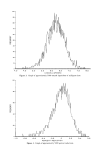
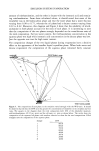
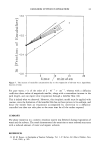
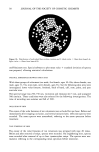
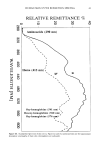
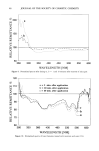
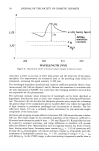
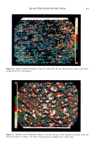
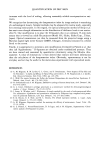
HUMAN SKIN UV/VIS REFLECTION SPECTRA 41 RELATIVE REMITTANCE % 0 0 0 0 ' Heme (415 nm)• k Oxy-hemoglobine (541 nm) ½x $ Desoxy-hemoglobine (560 am)t •' J Figure 2b. Standardized spectrum of skin site (a, Figure 2a) and of a sunburned skin site (b) (approximate absorption wavelengths of main skin chromophores are indicated).
Purchased for the exclusive use of nofirst nolast (unknown)
From: SCC Media Library & Resource Center (library.scconline.org)