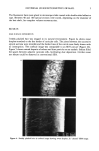
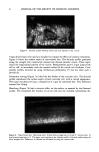
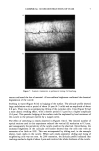
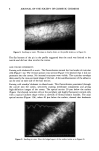
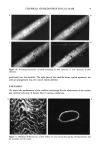
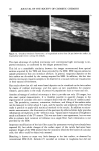
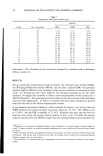
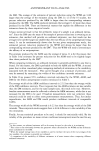
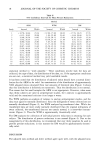
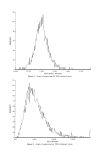
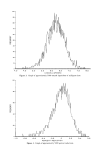
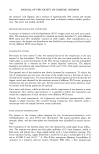
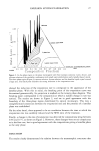
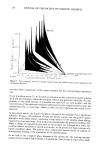
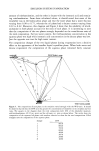
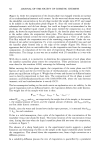
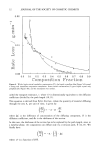
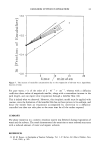
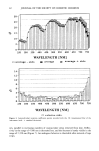
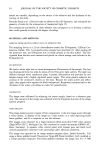
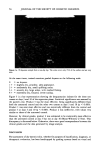
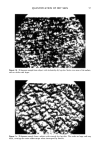
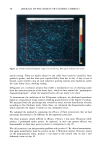
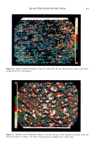
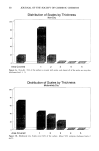
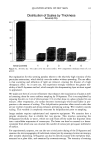
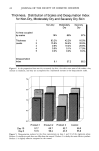
62 JOURNAL OF THE SOCIETY OF COSMETIC CHEMISTS Thickness, Distribution of Scales and Desqumation Index for Non-Dry, Moderately Dry and Severely Dry Skin Non-Dry Moderately Severely Dry Dry % Area occupied by scales 16% 69% 97% 1 83.2% 42.2% 16.0% 2 15.9% 34.4% 30.9% 3 0.9% 19.4% 28.8% 4 0.0% 0.1% 17.9% 5 0.0% 0.0% 6.4% Thickness Levels Desquamation Index 8.1 37.2 60.3 Figure 4. In the progression from non-dry to severely dry skin, the scales cover more of the surface, they increase in thickness, and they are accompanied by a substantial increase in the desquamation index. 70 Product 1 Product 2 Product 3 Control Day 10 57.7 60.7 52.7 59.0 Day 3 51.5 56.2 43.5 55.8 Figure 5. Desquamation indexes for the three moisturizers on days 3 and 10 of the regression phase. Product 2 is ineffective and does not differ from the control. Product 3 is clearly the most effective product. Product 1 is slightly effective compared to the control.

QUANTIFICATION OF DRY SKIN 63 increases with the level of scaling, allowing reasonably reliable semiquantitative esti- mates. We recognize that determining the desquamation index by image analysis is something of a technological luxury. Simpler methods may be adequate for routine work, especially for screening moisturizers. In this regard, the optical attenuation method of Serup et al. has merit even though information on the distribution of thickness levels is not retriev- able (5). Our modification is to place the D-Squames disc in an ordinary 35-mm slide mount that is viewed by a slide file projector (Model H-I, Slidex, Slidex Corp., Tokyo, Japan). Optical transmission can then be measured from the projected image using a Mavolux digital light meter (Gossen GMBH, Erlangen, Germany) mounted to a shield fitted to the screen. Finally, it is appropriate to mention a new modification developed by Pierard et al. that they call 'Squamometry." D-Squames are obtained under standardized pressure. They are then stained and examined by quantitative colorimetry using the Minolta chro- mameter. A value of chromaticity is then derived that extracts still more information than the calculation of the desquamation index. Obviously, squamometry is not for everyday use but may be useful to the meticulous experimenter with specialized needs. REFERENCES (1) A.M. Kligman, R. M. Lavker, G. L. Grove, and T. Stoudemayer, "Some Aspects of Dry Skin and Its Treatment," in Safety and Efficacy of Topical Drugs and Cosmetics, A.M. Kligman and J. J. Leyden, Eds. (Grune & Stratton, New York, 1982), pp. 221-238. (2) J. Wolf, Die innere Struktur der Zellen des Stratum Desquamans der menschlichen Epidermis, Z. Mikrosk. Anat. Forsch., 46, 170-202 (1939). (3) H. Goldschmidt and A.M. Kligman, Exfoliative cytology of human horny layer, Arch. Dermatol., 96, 572-576 (1967). (4) G. L. Grove, Exfoliative cytology procedures as a nonintrusive method for dermatogerontological studies, J. Invest. Dermatol., 73, 67-69 (1979). (5) J. Serup, A. Winther, and C. Blichmann, A simple method for the study of scale pattern and effect of a moisturizer•Qualitative and quantitative evaluation by D'Squame tape compared with param- eters of epidermal hydration, Clin. Exp. Dermatol., 14, 277-282 (1989). (6) E. K. Boisits, G. E. Nole, and M. C. Cheney, The refined regression method, J. Cutan. Aging Cosmet. Dermatol. 1, 155-163 (1980). (7) A.M. Kligman, Regression method for assessing the efficacy of moisturizers, Cosmet. Toilet., 93, 27-35 (1978). (8) G. L. Pierard, C. Pierard-Franchimont, D. St Leger, and A.M. Kligman, Squamometry: Colori- metric analysis of D'Squames (in press).
Purchased for the exclusive use of nofirst nolast (unknown)
From: SCC Media Library & Resource Center (library.scconline.org)