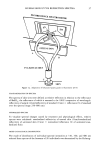
QUANTIFICATION OF DRY SKIN 63 increases with the level of scaling, allowing reasonably reliable semiquantitative esti- mates. We recognize that determining the desquamation index by image analysis is something of a technological luxury. Simpler methods may be adequate for routine work, especially for screening moisturizers. In this regard, the optical attenuation method of Serup et al. has merit even though information on the distribution of thickness levels is not retriev- able (5). Our modification is to place the D-Squames disc in an ordinary 35-mm slide mount that is viewed by a slide file projector (Model H-I, Slidex, Slidex Corp., Tokyo, Japan). Optical transmission can then be measured from the projected image using a Mavolux digital light meter (Gossen GMBH, Erlangen, Germany) mounted to a shield fitted to the screen. Finally, it is appropriate to mention a new modification developed by Pierard et al. that they call 'Squamometry." D-Squames are obtained under standardized pressure. They are then stained and examined by quantitative colorimetry using the Minolta chro- mameter. A value of chromaticity is then derived that extracts still more information than the calculation of the desquamation index. Obviously, squamometry is not for everyday use but may be useful to the meticulous experimenter with specialized needs. REFERENCES (1) A.M. Kligman, R. M. Lavker, G. L. Grove, and T. Stoudemayer, "Some Aspects of Dry Skin and Its Treatment," in Safety and Efficacy of Topical Drugs and Cosmetics, A.M. Kligman and J. J. Leyden, Eds. (Grune & Stratton, New York, 1982), pp. 221-238. (2) J. Wolf, Die innere Struktur der Zellen des Stratum Desquamans der menschlichen Epidermis, Z. Mikrosk. Anat. Forsch., 46, 170-202 (1939). (3) H. Goldschmidt and A.M. Kligman, Exfoliative cytology of human horny layer, Arch. Dermatol., 96, 572-576 (1967). (4) G. L. Grove, Exfoliative cytology procedures as a nonintrusive method for dermatogerontological studies, J. Invest. Dermatol., 73, 67-69 (1979). (5) J. Serup, A. Winther, and C. Blichmann, A simple method for the study of scale pattern and effect of a moisturizer•Qualitative and quantitative evaluation by D'Squame tape compared with param- eters of epidermal hydration, Clin. Exp. Dermatol., 14, 277-282 (1989). (6) E. K. Boisits, G. E. Nole, and M. C. Cheney, The refined regression method, J. Cutan. Aging Cosmet. Dermatol. 1, 155-163 (1980). (7) A.M. Kligman, Regression method for assessing the efficacy of moisturizers, Cosmet. Toilet., 93, 27-35 (1978). (8) G. L. Pierard, C. Pierard-Franchimont, D. St Leger, and A.M. Kligman, Squamometry: Colori- metric analysis of D'Squames (in press).

j. Soc. Cosmet. Chem., 44, 65-67 (January/February 1993) Letters to the Editor TO THE EDITOR: The article entitled "Comparison of exaggerated and normal use techniques for assessing the mildness of personal cleansers" by B. H. Keswick et al. (J. Soc. Cosmet. Chem., 43, 187-193, 1992) purports to demonstrate superior predictive ability and relevance of an arm wash protocol compared to a flex wash protocol. There are several pieces of data presented in the Keswick article that are contradicted by published data as well as being internally inconsistent. The lack of specific experimental details, such as the number of subjects, inclusion criteria, and description of grading scale(s) make comparison with the literature even more difficult. These deficiencies call into question the validity, not only of the conclusions, but of the actual data as well. In a previously published study by Sharko et al. (1), two products with very similar formulations to products A and B described in the Keswick article were tested using an arm wash test. In the Sharko article, well-established instrumental assessment tech- niques were used in addition to the standard expert clinical evaluation such as that reported in the Keswick article. The product A analogue was significantly (p 0.05) less irritating than the product B analogue and caused significantly less damage to the barrier as assessed by TEWL. There were directional differences (0.05 p 0.1) showing product B to cause a greater increase in blood flow when assessed by a Periflux Laser Doppler Velocimeter and greater redness when measured with a Minolta Chro- mameter. These results are self-supportive and consistent with our own flex wash tests and the flex wash reported in the Keswick article. However, in the Keswick article, the authors claim that their arm wash test actually had results opposite to those reported in the two flex wash tests and the arm wash test mentioned above. We have conducted dozens of flex wash tests as well as less aggressive arm wash and face wash tests over many years, and have never observed such a cross-over. The data from the in home-use test with the product pair reported in the Keswick article adds no value since there were no significant differences observed, except for a claimed significance for a very small difference in leg dryness. Even in this case, if any appro- priate nonparametric analysis of the data were conducted, it is unlikely that the small difference reported on legs would be significant. Since there is no question that the flex wash is the more aggressive procedure, it is quite surprising to observe that for products A, C, and D in the Keswick article, the "milder" arm wash protocol produced markedly greater erythema than the flex wash. This finding 65
Purchased for the exclusive use of nofirst nolast (unknown)
From: SCC Media Library & Resource Center (library.scconline.org)