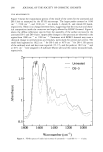
j. Soc. Cosmet. Chem., 46, 281-290 (November/December 1995) Mechanism of isolation of human hair cuticle with KOH/1-butanol solutions CHIKA ATSUTA and AKIO FUKUMASHI, ROD Department Hair Care, Home Product Business Headquarters, Sunstar, Inc., Kamihamuro, Takatsuki, Osaka, 569 Japan, and MITSUHIRO FUKUDA, Department of Practical Lij• Studies, Hyogo University of Teacher Education, Yashiro-cho, Hyogo, 673-I4 Japan Received July 2I, 1995. Synopsis The process of removing cuticle in human hair treated with potassium hydroxide solution in 1-butanol has been investigated. The morphological changes in the cuticle and surface of the cuticle-removed cortex were observed by means of scanning electron microscopy (SEM) and transmission electron microscopy (TEM). When human hair was treated with dehydrated 5% KOH/1-butanol at 50øC, the boundary between the exo- and endocuticles in a few outer layers became obscure at first, and the thickness of a layer decreased with the simultaneous dissolution of the outermost layer. The obscurity of boundary was also observed even in the inner layers with the thickness kept unchanged. The dissolution proceeded from the outer to inner cuticle layer successively, with the complete disappearance of the boundary between exo- and endocuticles in the inner layer. The surface of the untreated and descaled hair was examined by means of FT-IR in diffuse reflectance measurements. FT-IR microspectroscopy was also employed to measure inside the cortical cells. The appreciable changes in spectrum were observed for the surface of the descaled hair in the region from 1000 cm-• to 1100 cm-•. There was no change in the spectrum inside the cortex. These findings indicated that longer treatment with KOH/1-butanol led to some modification of disulfide and SH groups on the surface of the cortex, but that it did not penetrate deeply into the cortex. INTRODUCTION The removal of cuticle cells from wool has been intensively studied by several chemical and physical methods (1-6). The major difference in the morphology between wool and human hair is the number of cuticle layers only one or two layers are observed in wool, while there are at least seven layers in human hair (7). The thickness of one cuticle layer has been reported as 0.2-0.5 p•m for wool (8) and 0.3-0.5 p•m for human hair (7,9). Although there are still some differences in the fine morphological structures and in chemical compositions between wool and human hair, analogous methods of removing cuticle can be applied to human hair. However, only a few methods have been reported so far (6,7,9-13), and it is not sufficiently known whether the descale methods used for wool work successfully on human hair as well. Solutions of strong alkali in alcohols have been known to be effective in preventing 281

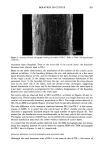
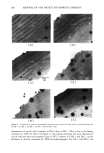
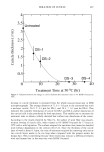
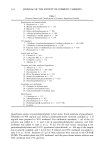
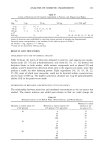
282 JOURNAL OF THE SOCIETY OF COSMETIC CHEMISTS felting of wool (14). In the case of the aliphatic alcohol of longer chain, the degradative reaction is confined to the surface of the wool. Taki et al. (3) and Taki (4) reported that descaled wool fibers were obtained without any damage to cortical cells when potassium hydroxide solution in dehydrated 1-butanol was used. This method, however, has not been applied to human hair, albeit it is one of the most significant methods for removing cuticle cells from human hair. The objective of the present study is to investigate the process of removing several layers of cuticle in human hair by applying Taki's methods using KOH/1-butanol (3). Detailed morphological changes in cuticle under the various conditions of chemical treatment are discussed by means of scanning electron microscopy (SEM) and transmission electron microscopy (TEM). We fhrther observe the change in the amino acid residues by the treatment based on Fourier transform infrared spectros- copy (FT-IR). MATERIALS AND METHODS SPECIMENS Human hair from a ten-year-old Japanese girl was used. The bundles of hair fibers were cut to a length of 80 mm. CHEMICAL ISOLATION OF CUTICLE CELLS About 3 g of the hair was washed in 100 cm 3 aqueous solution of 10% (w/v) sodium lauryl sulfate and then rinsed thoroughly in distilled water. Specimens were then washed in excess volume of acetone and dried. KOH/1-butanol solution was dehydrated by anhydrous K2CO 3 prior to use. Chemical isolation of the cuticle was carried out in the solution of 5.0 or 6.0% KOH/1-butanol (hair:liquor ratio was l:250 w/v) at 50øC for various treatment times. In Table I, five kinds of specimens with different degrees of chemical treatment are listed. After the chemical treatment, the specimens were ira- Table I Experimental Conditions for Removing Cuticle Cells From Human Hair KOH Descaled concentration hair (%) Treatment time and temperature Shaking condition DS-1 5 DS-2 5 DS-3 5 DS-4 5 DS-2' 6 50øC, 6 hr--• room temperature, 16 hr 50øC, 5 hr-• room temperature, 12 hr--- 50øC, 5 hr (50øC, 9 hr--- room temperature, 16 hr) 3 times repeat* (50øC, 9 hr--• room temperature, 16 hr) 3 times repeat --- 50øC, 9 hr* 50øC, 5 hr-• room temperature, 12 hr-• 50øC, 5 hr Manual stirring once every hour Rapid stirring (170 stroke/min) constantly Rapid stirring (170 stroke/min) constantly Rapid stirring (170 stroke/min) constantly Rapid stirring (170 stroke/min) constantly * The solution was renewed each day.
Purchased for the exclusive use of nofirst nolast (unknown)
From: SCC Media Library & Resource Center (library.scconline.org)