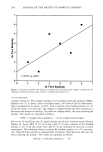
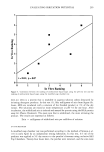
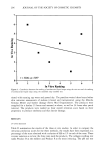
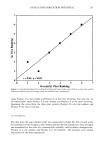
j. Soc. Cosmet. Chem., 46, 291-299 (November/December 1995) A comparison of three in vitro screening tests with an in vivo clinical test to evaluate the irritation potential of antibacterial liquid soaps BOYCE M. MORRISON, JR., and MARC PAYE, Colgate-Palmolive Company, 909 River Road, Piscataway, NJ 08855 (B. M. M. ), and Colgate-Palmolive Research & Development, Liege, Belgium (M.P.). Received July I, I994. Presented at the 18th IFSCC Congress, Venice, Italy, October I994. Synopsis A series of in vitro screening studies has been performed to determine the irritation potential of antibacterial liquid soaps. The results from these in vitro studies were compared to the results from an in vivo clinical study in an effort to determine their utility. Three in vitro techniques were employed to evaluate antibacterial liquid soaps: the collagen swelling test, the pH rise test, and the zein test. In order to compare the data from these three tests, a solution of 1% SLS was included as a positive control. This enabled the data for the antibacterial liquid soaps to be expressed as a percentage of the SLS score. The in vivo clinical test was the modified soap chamber test. The skin was evaluated for irritation using clinical parameters (such as erythema) and biophysical techniques (evaporimetry and chromametry), and the data from the test products were normalized to the data of a mild control product. The overall ranking of the antibacterial liquid soaps from the soap chamber test had a good correlation with the ranking from the collagen swelling test (r = 0.71) and the pH rise test (r = 0.81). The correlation with the zein test was not as good (r = -0.26). However, if the data from the three tests were averaged, the best correlation was achieved with the in vivo results (r = 0.94). In conclusion, each of these tests was used to predict product-induced irritation to the skin. These tests were used individually and collectively. The best correlation occurred when the antibacterial liquid soaps were ranked according to their total in vitro score and compared with the in vivo ranking. INTRODUCTION In vitro assays have been developed to predict the skin's response to surfactant-induced irritation (1-7). These assays are quite useful when a large number of surfactants need to be screened for their irritation potential. Three of these tests, collagen swelling, pH rise, and the zein test, had previously been evaluated by our group to determine their ability to predict surfactant-induced erythema from single-surfactant systems (8). The results showed that each of the methods was based on a similar principle of protein 291

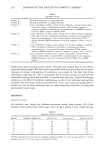
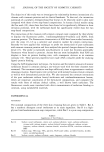
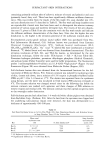
292 JOURNAL OF THE SOCIETY OF COSMETIC CHEMISTS Table I Ingredient Listing Product A Product B Product C Product D Product E Product F Formula is proprietary to Colgate-Palmolive Formula is proprietary to Colgate-Palmolive Active ingredients: triclosan, sodium cocoyl isethionate, sodium laureth sulfate, ammonium sulfate, cocamidopropyl betaine, glycol stearate, fragrance, potassium chloride, cyclomethicone, polyquaternium-10, DMDM hydantoin, trisodium EDTA, trisodium EHDP, BHT Active ingredients: triclosan, water, sodium C14-16 olefin sulfonate, lauramide DEA, glycol stearate, silk peptide, hydrolyzed silk protein, cocamidopropyl betaine, polyquaternium-7, aloe vera gel, glycerin, tetrasodium EDTA, sodium chloride, DMDM hydantoin, citric acid, fragrance, yellow 5, red 33, red 40 Active ingredients: triclosan, water, sodium C14-16 olefin sulfonate, lauramide DEA, silk peptide, hydrolyzed silk protein, cocamidopropyl betaine, polyquaternium-7, aloe vera gel, glycerin, tetrasodium EDTA, sodium chloride, DMDM hydantoin, citric acid, fragrance, yellow 5, red 33, red 40 Active ingredients: triclosan, water, sodium lauryl sulfate, sodium laureth sulfate, sodium sulfate, lauramide DEA, cocamidopropyl betaine, fragrance, DMDM hydantoin, citric acid, tetrasodium EDTA, FD&C red 4, FD&C yellow 5 denaturation and produced similar results, although each method had its own advan- tages and disadvantages. We know from other work within our group that the irritation potential of certain combinations of surfactants can actually be less than that of the individuals surfactants (9). This is presumably due to mutual interactions between the surfactants making them less available to interact with the skin. Limited knowledge existed as to the effect of surfactant combinations on the in vitro screening tests and was available only for binary surfactant systems (10). Thus, this study was undertaken to extend the use of these screening tests to fully formulated products, in particular antibacterial liquid soaps. METHODS PRODUCTS TESTED Six products were chosen for mildness evaluation during these studies. All of the products were antibacterial liquid soaps. Four of these products were chosen because Table II Summary of In Vitro Results Product Collagen swelling (%) pH rise (%) Zein test (%) Total in vitro (%) A 34 23 31 88 B 29 29 25 83 C 39 48 17 104 D 38 42 30 110 E 36 42 34 112 F 61 5O 16 127 The SLS scores for the in vitro tests are as follows: collagen swelling: 9.44 unit increase pH rise: 1.70 unit increase zein test: 21.0 mg increase in solubilized zein/ml
Purchased for the exclusive use of nofirst nolast (unknown)
From: SCC Media Library & Resource Center (library.scconline.org)