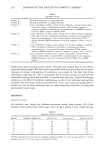
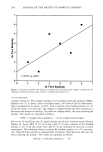
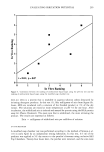
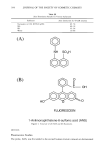
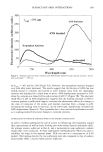
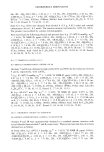
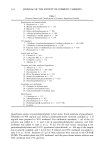
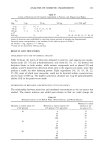
304 JOURNAL OF THE SOCIETY OF COSMETIC CHEMISTS Table III Zein Dissolution Results for Various Surfactants Surfactant Zein dissolution by 40-mM solution Na-laurate in 0.04 M TEA (pH9) 85.7% SLS 80.1% SLI 62.2% Water 10.0% (A) so aH (B) i OH FLUORESCEIN 1-Anilinonaphthalene-8-sulfonic acid (ANS) Figure l. Structure of (A) ANS and (B) fluorescein. METHODS Fluorescence Studies The probe, ANS, was first added to the excised human stratum corneum or dermatomed

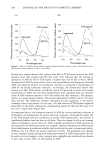
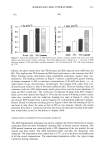
SURFACTANT-SKIN INTERACTIONS 305 porcine skins, and the fluorescence of ANS and tryptophan were measured using the ISS-K2 multifrequency cross-correlation phase and modulation fluorometer (ISS Inc., Champaign, Illinois) with a 300-watt Xenon light source. The corneum or the skin was then treated with the test solutions. The changes in the measured fluorescence properties were related to the corneum protein binding ability of the test product. The experi- mental details are as follows. Stratum corneum. A rectangular piece (2 cm x 1 cm) of stratum corneum was clamped between nylon mesh and immersed in an aqueous solution of ANS (1.6 x 10- 4 moles/l) for one hour at the experimental temperature. This was followed by a thirty-second rinse in distilled water with agitation. The mesh was then removed, and the stratum corneum was placed on spectra mesh to dry under atmospheric condition. The treatment protocol involved clamping the corneum between nylon meshes and immersing them in test solutions at the experimental temperature for a given length of time. After treatment, the corneum was rinsed in distilled water with agitation for thirty seconds. The mesh was then removed, and the corneum was placed on spectra mesh to dry under atmospheric humidity. Corneum soaked in water at the experimental conditions was used as the control. Steady-state fluorescence experiments with isolated corneum were performed in the front surface mode in a blackened triangular cuvette holder. Stratum corneum was placed between the black aluminum surface and a glass slide. The illuminated surface was oriented about 30 ø to the incident beam. The fluorescence was observed at a 90 ø angle from the exciting light. The contribution from scattered light was eliminated by using a cross-polarization condition (vertically polarized excitation with the emission polarizer oriented in a horizontal position) and an appropriate emission high pass cut-off filter. The glass slide attenuated the emission but otherwise did not change the spectral characteristics. As we were interested in the relative change in the emission before and after treatment and not in the absolute magnitude of the intensity, the presence of the glass slide did not affect the results. The excitation and emission monochrometer slits were set at 16 and 4 nm, respectively. The excitation wavelength for tryptophan was at 295 nm, and the corresponding emission was monitored in the 320 to 400 nm region. For ANS, the excitation was done at 370 nm, and the emission spectra were monitored in the 400-550 nm region. Dermatomed skin. Dermatomed porcine skin was cut into 1-cm-diameter discs and placed in a water vapor transmission cell (TEWL) adapted from that described by Blank et al. (16), with a nylon screen underneath the skin for support. The top (epidermal) surface of the skin was sprayed with 200 !xl of an ANS in ethanol solution (5.3 x 10⁻⁴ moles/l) and then washed with 1 ml of distilled water at 37øC. The epidermal side of the skin was then contacted with 1% production solution for one minute, followed by a one-minute rinse with distilled water. The treatment and the rinse were carried out at 37øC. Steady-state fluorescence. Steady-state ANS fluorescence from dermatomed skin was mea- sured with a bifurcated quartz fiber optics probe (C Technologies, Verona, NJ) bundle connected to the ISS K2 fluorometer. The fiber optic bundles in the inner core were used to transmit the excitation light, and the fibers in the surrounding outer core were connected to an emission monochrometer. The open end of the fiber optics bundle was placed vertically on the top surface of the skin. To overcome the problem of total
Purchased for the exclusive use of nofirst nolast (unknown)
From: SCC Media Library & Resource Center (library.scconline.org)