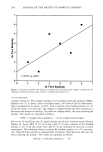
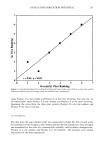
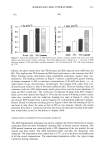
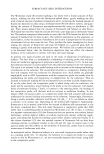
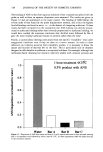
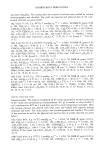
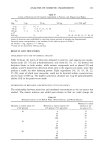
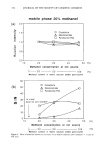
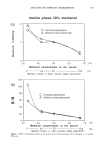
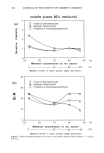
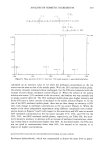
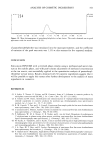
EVALUATING IRRITATION POTENTIAL 297 I ß r = 0.94 p = 0.035 0 I 2 3 4 5 6 7 Overall In Vitro Ranking Figure 5. Correlation between the ranking of antibacterial liquid soaps using all three in vitro tests and the ranking of antibacterial liquid soaps using the modified soap chamber test. ranks Product A as the mildest and Product F as the most irritating. The zein test, on the other hand, ranks Product F as the mildest and Product E as the most irritating. Summing the scores from the three tests predicts Product B to be the mildest and Product F the most irritating. IN VIVO RESULTS The data from the soap chamber study are summarized in Table III. The clinical scores for erythema and the changes in skin redness and skin barrier damage have been averaged and normalized to the score of a commercially available, mild synthetic detergent bar. Product A is the mildest and Product F is the harshest. The products were ranked identically for the three parameters.

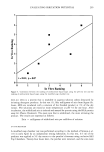
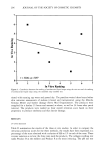
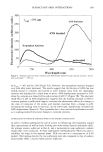
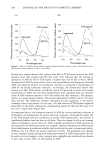
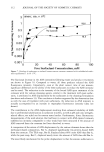
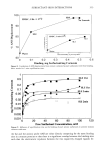
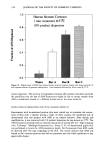
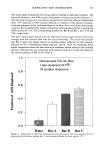
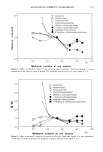
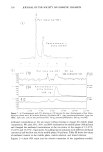
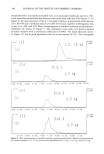
298 JOURNAL OF THE SOCIETY OF COSMETIC CHEMISTS DISCUSSION Figure 1 shows the correlation between the results of the collagen swelling and the in vivo results. Overall, an excellent correlation results (r = 0.92, p = 0.01) however, it was felt that the harshness of Product F may be weighted too heavily in this type of regression analysis. In addition, the results are dependent upon having instrumental measures of skin redness and skin barrier damage. Furthermore, it is well known that in vivo results are very dependent upon the weather. In the winter and early spring, the skin is more susceptible to surfactant-induced irritation and dryness than in the sum- mer. In the summer, the skin is better conditioned and it is more difficult to induce damage, and thus the levels of irritation would be less than observed in the winter and spring and could affect the overall scores of the different parameters. Therefore, it is not important that the in vitro results predict the actual values. It is important that they predict the rank ordering of the products. Thus, the antibacterial liquid soaps were ranked by the three in vitro tests and compared to the ranking from the in vivo test. As one can see, there was a fair correlation as determined by Spearman's rank correlation between the ranking from the collagen swelling test (Figure 2) and the in vivo ranking (r = 0.71, p = 0.11). The correlation was better with the pH rise test as seen in Figure 3 (r = 0.75, p = 0.07). These two tests reasonably predict the mildness of Products A and B as well as the harshness of Product F. However, the products that are intermediate in irritation potential are not so reliably predicted. On the other hand, the zein test (Figure 4) did not correlate with the in vivo results (r = -0.26, p = 0.57). As can be seen from the zein test results in Table II, Products C and F seem to have low values compared to other products. From our previous work (8), we know that in the presence of the ammonium ion, the zein test underestimates the irritation. Product C contains ammonium sulfate. Furthermore, we know that the zein test underestimates the irritation of SLS and that Product F contains this ingredient.* Thus, the best correlation can be seen when the products are ranked according to the sum of the three in vitro tests and compared to the in vivo ranking (Figure 5). In this case, a significant correlation (r = 0.94, p = 0.035) is observed. *Note: In studies with different products, the zein test proved to be a good predictor of skin irritation (Unpublished data). CONCLUSIONS Three in vitro screening tests have been used to predict product-induced irritation to the skin from antibacterial liquid soaps. The collagen swelling test and the pH rise test offer the best individual correlations between the in vitro and in vivo rankings. The results from the zein test did not correlate with the in vivo ranking for this series of products. The best correlation occurred when the antibacterial liquid soaps were ranked according to their total in vitro score and compared with the in vivo ranking. Thus, if one wants to use in vitro tests to screen for the irritation potential of surfactant-containing prod- ucts, including antibacterial liquid soaps, then one should use a combination of in vitro tests. REFERENCES (1) J. Blake-Haskins, D. Scala, L. D. Rhein, and C. R. Robbins, Predicting surfactant irritation from the swelling response of a collagen film, J. Soc. Cosmet. Chem., 37, 199-210 (1986).
Purchased for the exclusive use of nofirst nolast (unknown)
From: SCC Media Library & Resource Center (library.scconline.org)