EVALUATING IRRITATION POTENTIAL 299 (2) E. A. Tavss, E. Eigen, and A.M. Kligman, Anionic detergent-induced skin irritation and anionic detergent-induced pH rise of bovine serum albumin, J. Soc. Cosmet. Chem., 39, 267-272 (1988). (3) E. Gotte et al., Synthetische Tenside in medizinisch-kosmetischen Biiden, Aest. Medizin., 15, 313- 32O (1966). (4) G. E. Pi•rard, V. Goffin, and C. Pi6rard-Franchimont, Corneosurfametry: A predictive assessment of the interaction of personal-care cleansing products with human stratum corneum, Dermatology 189, 152-156 (1994). (5) W. E. Parish, Relevance of in vitro tests to in vivo acute skin inflammation, FoodChem. Toxicol., 23(2), 275 (1985). (6) W. J. W. Pape, U. Pfannenbacker, and U. Hoppe, Validation of the red blood cell test system as in vitro assay for the rapid screening of irritation potential of surfactants, Mol. Toxicol., 1(4), 525-536 (1987). (7) V. C. Gordon, C. P. Kelly, and H. D. Bergman, SKINTEX, an in vitro method for determining dermal irritation, Fifth International Congress of Toxicology, Brighton, England, July 1989. (8) M. Paye, F. A. Simion, S. W. Babulak, and L. D. Rhein, Ability of four in vitro assays to predict surfactant induced erythema, First International Symposium on Irritant Contact Dermatitis, Gron- ingen, The Netherlands (1991). (9) A. Dillarstone and M. Paye, Antagonism in concentrated surfactant systems, Contact Dermatitis, 28, 198 (1993). (10) L. D. Rhein, C. R. Robbins, K. Fernee, and R. Cantore, Surfactant structure effects on swelling of isolated human stratum corneum, J. Soc. Cosmet. Chem., 37, 125-139 (1986). (11) F. A. Simion, L. D. Rhein, G. L. Grove, J. M. Wojtkowski, R. H. Cagan, and D. D. Scala, Sequential order of skin responses to surfactants during a soap chamber test, Contact Dermatitis, 25, 242-249 (1991).

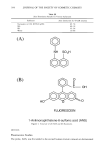
j. Soc. Cosmet. Chem., 46, 301-320 (November/December 1995) Interactions of cleansing bars with stratum corneum proteins: An in vitro fluorescence spectroscopic study S. MUKHERJEE, M. MARGOSIAK, K. ANANTHAPADMANABHAN, K. YU, and M. ARONSON, Unilever Research, 45 River Road, Edgewater, NJ 07020. Received May 15, 1995. Synopsis The interactions of stratum corneum proteins with formulated cleansing bar compositions as well as with several of their constituent surfactants were studied by a steady-state fluorescence probe technique. The binding of anionic surfactants to corneum proteins was monitored by their displacement of the well known protein-binding fluorescence probe ANS (1-anilinonaphthalene-8-sulfonic acid). The changes in fluores- cence generally correlated with direct measurements of surfactant binding to the corneum using radiolabeled pure surfactants. The results indicate that both a high-glycerol triethanolammonium soap based cleansing bar composition and a pure-alkali metal soap composition appear to have higher binding affinity for corneum proteins and leave more residue bound to these proteins after rinsing than cleansing bars based on the synthetic detergent, sodium fatty acyl isethionate. The extent of surfactant binding to the corneum proteins in a realistic washing situation correlates well with clinical measurements of the in vivo harshness potential of these cleansers. The pitfalls in using other probe molecules, such as fluorescein, that possess hydrlyzable groups to quantify surfactant binding and the correct interpretation of the data are also discussed. INTRODUCTION Repeated use of personal cleansing bars can damage the skin, drying out the stratum corneum and eventually causing irritation, e.g., erythema. It is believed that these cutaneous effects are a consequence of damage to the stratum corneum barrier by the anionic surfactants in the cleanser. It has also been suggested that the residual surfactant present in skin after washing with a harsh soap might be the primary cause for skin roughness (1,2) and tightness (3). The ability of surfactants to bind to and denature stratum corneum proteins is also believed to make a significant contribution to surfactant-induced barrier damage (4,5). However, these correlations have been based primarily on studies of interactions of pure surfactants with soluble proteins such as bovine serum albumin (6) or with the insoluble corn protein, zein (7). There have been relatively few studies (8,9) probing the details of the interactions of formulated cleansing products with stratum corneum, particularly the site(s) of interaction with this com- posite multiphase structure. 301
Purchased for the exclusive use of nofirst nolast (unknown)
From: SCC Media Library & Resource Center (library.scconline.org)