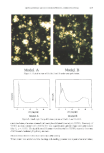
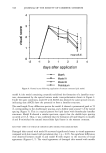
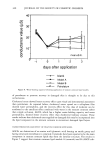
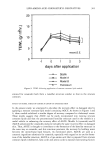
352 JOURNAL OF THE SOCIETY OF COSMETIC CHEMISTS ponents in stratum comeurn lipids, they are difficult to incorporate into cosmetic products due to their poor solubility and high cost as raw materials. Acylglutamic acid cholesteryl esters (AGCEs) are cholesteryl derivatives synthesized from cholesterol and lipo-amino acid (lauroyl glutamic acid) they have a cholesterol group and exhibit a structural resemblance to ceramide. Therefore, the present study investigated the possibility of using cholesteryl derivatives including AGCEs as an alternative to ceramides. AGCEs and other cholesteryl derivatives were examined with respect to their ability to promote the recovery effect in skin damage induced by sodium lauryl sulfate (SLS). Recovery was evaluated in damaged skin using dermal scores, water-holding capacity (conductance), and transepidermal water loss (TEWL). The util- ity of these measures has already been demonstrated with subjective clinical assessment of the skin surface (9,10), the skin surface hygrometer (11), and the evaporimeter (12,13), respectively. Since AGCE is hypothesized to play a role similar to ceramide in the stratum corneum, we examined whether AGCE would be incorporated into the lameliar structure and thereby exert a water-holding capacity. In order to clarify this point, we composed an artificial stratum corneum lipid model containing either cer- amide (Model A) or AGCE (Model B) and examined the formation and arrangement of the resulting lameliar structure. The efficacy of models A and B in promoting the recovery of damaged skin was then verified in order to assess the possibility of using AGCE as a substitute for ceramide. EXPERIMENTAL MATERIALS SLS was obtained from Nikko Chemicals Company, Tokyo, Japan. Cholesteryl hydroxy stearate was obtained from Nisshin Oil Mills, Ltd., Tokyo, Japan. AGCEs were products of Ajinomoto Co., Inc., Tokyo, Japan. AGCE-202 is a mixed ester of cholesteryl/ octyldodecyl lauroyl glutamate. AGCE-301 is a mixed ester of cholesteryl/behenyl/ octyldodecyl lauroyl glutamate. Phosphatidyl ethanol amine, cholesterol sulfate, and ceramide (type III) were obtained from Sigma Chemical Co., St. Louis, MO. Petrolatum, pristane (2,6,10,14-tetramethyl pentadecane), squalene, myristic acid, oleic acid, pal- mitic acid, stearic acid, linoleic acid, and cholesterol were obtained from Junsei Chemi- cal Co., Ltd., Tokyo, Japan. Triolein was obtained from Tokyo Chemical Industries Co., Ltd., Tokyo, Japan. All materials were used without further purification. SUBJECTS Eight healthy male volunteers ranging in age from 24 to 29 years served as subjects. METHOD Induction of skin damage by 1% sodium lauryl sulfate (14,15) Skin damage was induced by applying 1 5 •1 of sodium lauryl sulfate (SLS) (1.0 wt % solution in deionized water) to the volar side of the forearm in a closed patch for 24 hours, using occlusive aluminum chambers (Finn-Chamber, Epitest, Helsinki, Finland)

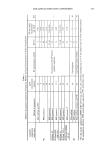
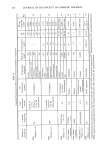
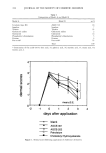
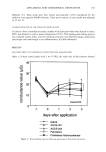
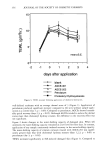
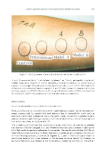
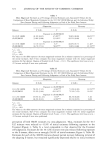
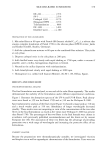
LIPO-AMINO ACID CHOLESTERYL DERIVATIVES 353 held in place by plastic tape (Tegaderm, 3M, Minnesota, USA). Prior to application of 1% SLS, the site was washed with a mild detergent (Minon Body Shampoo, Yamanouchi Pharmaceuticals Co., Ltd., Tokyo, Japan). Derreal scoring and application of samples. After 24-hour occlusive patch removal and rins- ing with water, TEWL and conductance were measured and each area was graded according to dermal scores. After induction of skin damage (after day 0), 2pl/cm 2 of cholesteryl derivatives were applied three times per day after the instrumental measure- ments and dermal scores gradings. The dermal scores were as follows: 0: No visible skin reaction 1: Barely perceptible erythema 2: Mild erythema 3: Well-defined erythema 4: Erythema and edema 5: Erythema and edema with vesiculation Experimental days were designated as follows: Day -1: dermal scores prior to induction of skin damage Day 0: dermal scores 30 minutes after patch removal Day 1: dermal scores 24 hours after induction of skin damage Day 2: dermal scores 48 hours after induction of skin damage Day 3: dermal scores 72 hours after induction of skin damage Conductance measurements and TEWL. The water-holding capacity of the stratum corneum was measured quantitatively using a skin surface hygrometer (11) (model Skicon 200, IBS Inc., Hamamatsu, Japan), which reads the conductance (pS) of the skin. Conduc- tance was measured five times at the same site, and the values were averaged to obtain individual values. TEWL was measured quantitatively with an evaporimeter (EP-1, ServoMed, Stockholm, Sweden). This instrument measures the vapor pressure gradient and is described in detail by Nilsson (13). The probe was held in place for each measurement until a stable TEWL value was established (approximately 30 seconds). TEWL values were then measured every 10 seconds for 50 seconds and were averaged to obtain individual values. APPLICATION OF CHOLESTERYL TEST MATERIALS ON DAMAGED SKIN (CHOLESTERYL DERIVATIVES AND ARTIFICIAL STRATUM CORNEUM LIPID MODELS)(11) 2pl/cm 2 of samples were applied to each patch site. Each sample was applied on the damaged skin daily for three days. Differences in measured values between samples were tested for significance using a Student t-test for paired samples. PREPARATION OF STRATUM CORNEUM LIPID The compositions of stratum corneum lipid model A (including ceramide) and model B (AGCE-301) are listed in Table I, based on Elias' analysis of the mammalian stratum comeurn (16). Models were prepared according to the method described by Friberg and
Purchased for the exclusive use of nofirst nolast (unknown)
From: SCC Media Library & Resource Center (library.scconline.org)