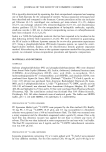
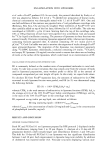
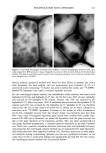
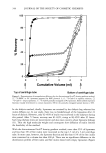
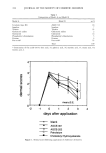
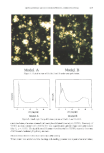
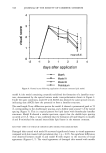
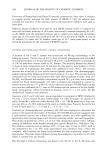
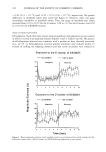
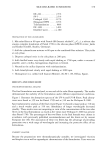
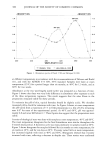
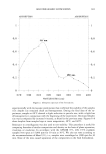
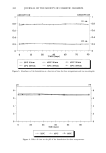
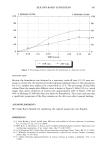
360 JOURNAL OF THE SOCIETY OF COSMETIC CHEMISTS O 40 30 20' 10' mean+S.E. ! ! ! ! ß i -1 0 1 2 3 days after application = blank • Model A o Model B [] Petrolatum Figure 8. Water-holding capacity following application of stratum comeurn lipid models. of petrolatum to promote recovery in damaged skin is thought to be due to this occlusiveness. Cholesteryl esters showed better recovery effect upon visual and instrumental assessment than petrolatum. As reported before, cholesteryl esters spread on a cellophane film showed water permeability, and the recovery effect for this class of molecule can be attributed to the emollient effect combined with water in the stratum corneum rather than simple occlusion. AGCE, which has a higher water-holding capacity and water permeability, showed better recovery effect than cholesteryl hydroxy stearate. These results indicate that cholesterol esters applied on damaged skin may be incorporated into the lipid component in the stratum corneum to reconstruct damaged lipid layers. CHARACTERIZATION AND EFFECT OF STRATUM CORNEUM LIPID MODEL AGCEs are derivatives of an amino acid (glutamic acid) bearing an amide group and having structural resemblance to ceramide. Ceramides have been reported to be the main component in stratum corneum lipids that form the lameliar structure. The results in Figure 5 suggest that stratum corneum lipid models A (ceramide) and B (AGCE sub-

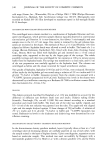
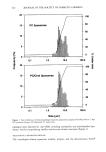
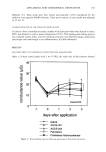
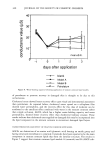
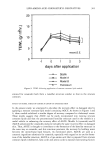
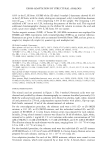
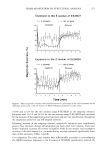
LIPO-AMINO ACID CHOLESTERYL DERIVATIVES 361 2O 10 mean+S.E. i i i i -1 0 1 2 3 days after application = blank -- Model A o Model B []-- Petrolatum Figure 9. TEWL following application of stratum corneum lipid models. stituted for ceramide) both form a lameliar structure similar tO that in the stratum corneum. EFFECT OF MODEL STRATUM CORNEUM LIPIDS ON DAMAGED SKIN In the present study, we attempted tO elucidate the recovery effect in damaged skin by applying a stratum corneum lipid model containing AGCE. As shown in Figures 1 and 6, these models exhibited a similar degree of recovery compared to cholesteryl esters. These results suggest that AGCE can be easily incorporated into existing stratum corneum lipids and that the preconstituted lameliar structure used in the models is a useful vehicle in enhancing the recovery effect of AGCE. Models A (ceramide) and B (AGCE substituted for ceramide) produced virtually the same recovery effect in damaged skin. Thus, AGCE is thought to contribute to the formation of the lameliar structure in the same way as ceramide, and this structure promotes the recovery by holding water between the intercellular lipid bilayers. As mentioned above, AGCEs are used as a cosmetic ingredient substitute for ceramide, especially with regard to its use for forma- tion of the lameliar structure. AGCE is a lipo-amino acid that is prepared from stratum corneum lipids (cholesterol, fatty acid) and amino acids (a natural moisturizing factor).
Purchased for the exclusive use of nofirst nolast (unknown)
From: SCC Media Library & Resource Center (library.scconline.org)