364 JOURNAL OF THE SOCIETY OF COSMETIC CHEMISTS compounds with similar odors, but which may have dissimilar chemical structures, cross-adapt (1-5), although the precise relationship between perceptual similarity and cross-adaptation remains obscure. Compounds with similar chemical structures, which have different odors (structural analogs), may also cross-adapt. Cain (6) as well as Cain and Engen (7) have shown cross-adaptation between the structurally similar odorants ,-propanol and ,-pentanol. Engen and Lindstrom (8) reported significant cross-adaptation among a homologous series of aliphatic alcohols that differed in carbon-chain length, although the degree of cross-adaptation did not vary in relation to the degree of physical similarity of the alcohols. More recently, Pierce et •l. (9) demonstrated a significant reduction in the perceived intensity of androstanone (5ot-androstan-3-one) following exposure to an odor- less structural analog, 3-methylidene-5ot-androstane (3MSA). This observation suggests that receptor-level interactions may underlie this phenomenon. We have recently provided further demonstration that structurally similar compounds can cross-adapt (10). The compounds employed were an isomeric mixture of (E)- and (Z)-3-methyl-2-hexenoic acid (3M2H). The E-isomer is a major component (analyti- cally) in male underarm sweat (11,12), which is a biologically and commercially im- portant secretion (13-15). A 10:1 ratio for the E:Z isomers was reported in males (11,12). Axillary extracts from females are qualitatively similar to those from males and also contain E-3M2H however, it is not the major component in females, and the E:Z ratio is different (approximately 16:1) (16). In our previous study, a synthetic mixture of the two 3M2H isomers was formulated in the 10:1 E:Z ratio found in the male secretions (10) and tested for cross-adaptation with three homologous ethyl esters: the ethyl esters of 3-methyl-2-hexenoic acid (EE3M2H), 3-methyl-2-octenoic acid (EE3M20), and 3-methyl-2-pentenoic acid (EE3M2P). The esters, in contrast to the sweaty-smelling organic acids, are pleasant and fruity smelling. Initially, we synthesized and used a purified 3:1 ratio of (E)- to (Z)-ethyl ester isomers for each homologue (10). Each ethyl ester mixture was tested separately for its ability to cross-adapt 3M2H. Significant cross-adaptation between the ethyl esters and 3M2H was noted only for EE3M2H. Following exposure to EE3M2H, 3M2H cross-adapted quickly (estimates were reduced to 65.0% of initial estimates within 30 seconds) and remained cross- adapted for the duration of the adaptation period (overall reduction of 35.1%). Cross- adaptation was asymmetric adaptation to 3M2H did not significantly affect the per- ceived intensity of EE3M2H. Further, there was no significant cross-adaptation noted between 3M2H and the ethyl esters of the lower (EE3M2P) and higher (EE3M20) molecular weight homologues (10). It is unlikely that the differences among the ethyl esters in their efficacy in cross- adapting 3M2H were attributable to perceptual differences. Similarity ratings between the ethyl esters and 3M2H revealed no significant differences among the ethyl esters in their mean similarity rating with 3M2H, i.e., each was rated equally dissimilar to 3M2H (10). A more likely explanation for the pattern of cross-adaptation observed is the greater structural similarity between EE3M2H and 3M2H as revealed by molecular modeling studies (10). Differences in the shape and size of the hydrophobic part of the molecule may determine the extent of cross-adaptation these parameters are identical for

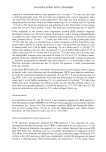
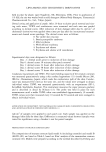
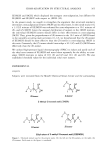
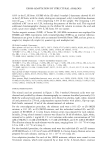
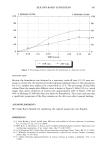
CROSS-ADAPTATION BY STRUCTURAL ANALOGS 365 EE3M2H and 3M2H, which displayed the strongest cross-adaptation, but different for EE3M20 and EE3M2P with respect to 3M2H (10). In the present study, we sought to strengthen the argument that structural similarity determines cross-adaptation between 3M2H and its ethyl esters. In the initial study (10), a 3:1 E:Z mixture of EE3M2H was evaluated for cross-adaptation to a 10:1 mixture of (E)- and (Z)-3M2H. Given the unequal distribution of isomers in the 3M2H mixture, the individual EE3M2H isomers should differ in their effectiveness in cross-adapting 3M2H. Thus, given the preponderance of (E)-isomers in the 10:1 ratio of 3M2H found in the naturally occurring male secretions (11,12), we hypothesized that the (E)-isomer of EE3M2H should be more effective than the (Z)-isomer in cross-adapting 3M2H in this ratio. Conversely, the (Z)-isomer should cross-adapt a 10:1 (Z)- and (E)-3M2H more effectively than the (E)-isomer. We utilized high-pressure liquid chromatography (HPLC) to isolate and purify each of the ethyl ester isomers of EE3M2H and tested them separately for the ability to cross- adapt 3M2H mixtures in ratios of 10:1 (E) and (Z) and 10:1 (Z) and (E). We also established threshold values for the individual ethyl ester isomers. EXPERIMENTAL SUBJECTS Subjects were recruited from the Monell Chemical Senses Center and the surrounding 5 ,7 Oa 0 5 • E- Lsomer Z-lsomer 3-Methyl-2-hexenoic add (3M2H) 5 5•"•4 0 8 Ethyl esters of 3-methyt-2-hexenoie acid (EE3M2H) Figure 1. Chemical stimuli used in the present study. On the left are the (E)-isomers, on the right, the (Z)-isomers. Each atom in the figure is numbered.
Purchased for the exclusive use of nofirst nolast (unknown)
From: SCC Media Library & Resource Center (library.scconline.org)