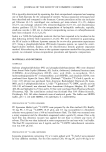
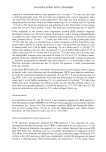
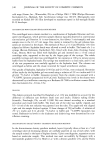
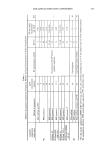
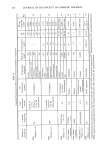
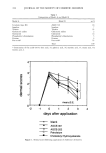
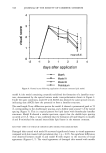
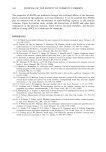
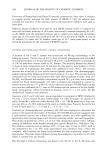
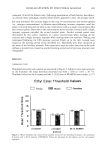
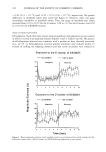
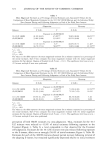
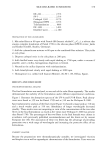
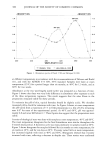
354 JOURNAL OF THE SOCIETY OF COSMETIC CHEMISTS Table I Composition of Model A and Model B Model A Model B wt.% Ceramide (type III) AGCE-301 18 Squalene Squalene 7 Triolein Triolein 25 Cholesterol sulfate Cholesterol sulfate 2 Cholesterol Cholesterol 14 Phosphatidyl ethanolamine Phosphatidyl ethanolamine 5 Pristane Pristane 4 Free acids* Free acids* 25 Total 100 * Constitution of free acids (wt%): oleic acid, 35 palmitic acid, 36 myristic acid, 15 stearic acid, 10 linoleic acid, 4. 4 t mean_+S.E. ' [ ' I ' I ' I ' -2 -1 0 1 2 3 4 days after application --' blank & AGCE-301 '" AGCE-202 []m Petrolatum - Cholesteryl Hydroxystearate Figure 1. Dermal scores following application of cholesteryl derivatives.

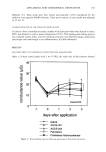
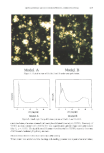
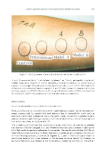
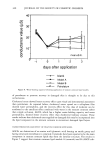
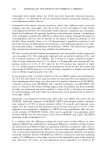
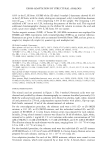
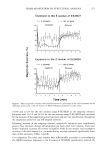
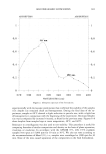
LIPO-AMINO ACID CHOLESTERYL DERIVATIVES 355 Osborne (17). Fatty acids were first mixed and partially (41%) neutralized by the addition of an aqueous NaOH solution. Total water content in each model was adjusted to 25 wt. %. CHARACTERIZATION OF THE STRATUM CORNEUM LIPID In order to form a lamellar structure, models with deionized water were heated to about 80øC and allowed to cool to room temperature (25øC). This heating and cooling process was repeated several times, and the resulting structure was observed using a polarizing microscope and small-angle x-ray diffractometry (Cu-Kot radiation). RESULTS RECOVERY EFFECT OF CHOLESTERYL DERIVATIVES FOR DAMAGED SKIN After a 24-hour closed patch with 1 wt % SLS, the volar side of the forearm showed O o o 40 30' 20' 10' mean_+S.E. O I I I ' I ' I -1 0 1 2 3 days after application = blank ,i, AGCE-301 ß *, AGCE-202 [] Petrolatum - Cholesteryl Hydroxystearate Figure 2. Water-holding capacity following application of cholesteryl derivatives.
Purchased for the exclusive use of nofirst nolast (unknown)
From: SCC Media Library & Resource Center (library.scconline.org)