j. Soc. Cosmet. Chem., 47, 377-386 (November/December 1996) Stability and optimization of silicone-based sunscreen formulations A. HERNANDEZ, V. GALLARDO, A. PARERA, and MaA. RUIZ, Pharmacy and Pharmaceutical Technology Department, Faculty of Pharmacy, University of Granada, E-18071 Granada, Spain. Accepted for publication February 1, 1997. Synopsis Advances in silicone chemistry have led in recent years to the development of a wide variety of compounds derived from the basic structure of siloxane bond polymers, with properties such as chemical inertia, heat resistance, and lack of systemic toxicity. Because these compounds do not cause sensitization or irritation of the skin or eyes, they are excipients of choice in skin-care products and drugs. The advantages of silicone emulsions are that they can be prepared at room temperature, have adequate extensibility, and do not leave a greasy, sticky, or unctuous film on the skin. Physical stability assays (centrifugation and aging at 25øC, 40øC, and 60øC) yielded similar results. Rheological assays, tests at different pH values, and droplet size studies were also done. Stability of the preparation was adequate: droplets remained small and homogeneous, and did not increase in size because of coalescence during the assay. pH showed minimal variations, and remained within the range of 6.5-7. Different centrifugation assays were used, none of which led to breakdown of the emulsion. Because of their hydrophobic nature, silicones impart substantiveness to the preparation. This was confirmed experimentally in washing-off tests, used because the final product was intended for use by swimmers exposed to natural sunlight. After 24 h of testing, an acceptable percentage of the initial concentration of solar filter remained present in the formulation. INTRODUCTION Among cosmetic preparations, emulsions have evolved quickly in recent years because of technological advances and research on the properties of raw materials. Emulsions are distinguished on the basis of their chemical composition and fluidity, and are generally homogeneous in appearance. To develop effective and stable formulations, complete analysis of an emulsion requires the determination of several general characteristics and the individual study of each component. The current development of silicones has led to new approaches in the preparation of emulsions moreover, the versatile siloxane derivatives also provide a number of advantages (1). 377

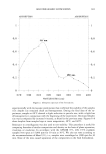
378 JOURNAL OF THE SOCIETY OF COSMETIC CHEMISTS The present study was designed to optimize a photoprotector formulation in which silicone was a major component. We selected formulations that were most readily incorporated into emulsions (i.e., those that had low surface tension), that imparted the best dry emollient characteristics (i.e., that gave the formulation a smooth, but not oily or greasy feel), and that yielded optimum evaporation/freezing characteristics, which made the formulations suitable for sunscreens to be used in the mountains as well as on the beach. Earlier studies (2) showed that the most suitable formulation was 1:1 mixture of V-5 (pentameric cyclomethicone, Rh6ne Poulenc) and DC-244 (tetrameric cyclo- methicone, Dow Corning). The incorporation of solar filters against UV-A (Parsol 1789) and UV-B (Hellopan Eusolex 1000) radiation presented no technological problems. MATERIALS AND METHODS SOLAR FILTERS Parsol 1789 (butylmethoxydibenzoyl methane), supplied by Givaudan Roure, is an oily UV-A filter with maximum absorption at 359 nm. Hellopan E-1000 (isoamyl p-methoxycinnamate), supplied by Haarman & Raimer, is an oily UV-B filter with maximum absorption at 310 nm. Dimethylconol DC-1401 and tetrameric cyclomethicone DC-244 were supplied by Dow Corning. Pentameric cyclomethicone V-5 was supplied by Rhbne-Poulenc, and was used at a proportion of 1:1 in accordance with previously reported findings. Carbopol 1382 was from BF Goodrich. Triethanolamine was from Panreac. Distilled water was used in all formulations. The galenical formula was developed according to recent technologies for preparing emulsions at room temperature (3-6), based on their low surface tension and the emul- sifying capacity of new carbopol resins. The formulation investigated here was developed from a formula for makeup remover, which includes cyclomethicones and carbopol 1382 (7). The resulting gel emulsion conserves the two desirable characteristics noted above. The new formula contained almost no greasy or oily components. When UV-A and UV-B filters were incorporated, a non-greasy photoprotective gel-emulsion was ob- tained, which was of potential use as a sunscreen by persons with oily or mixed skin. The UV-B filter (cinnamate derivative) had an ideal absorption spectrum for protection against radiation (8). Moreover, of all the filters compared, it showed the best solubility in cyclomethicones, and displayed good limits of solubility in the UV-A filter chosen (Parsol 1789, Givaudan) (9). COMPOSITION OF THE GEL EMULSION The formulation tested is: Heliopan E-1000 ...... 7% Parsol 1789 ......... 1.5% Finsolv SB ............ c.s.
Purchased for the exclusive use of nofirst nolast (unknown)
From: SCC Media Library & Resource Center (library.scconline.org)