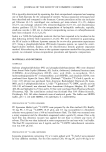
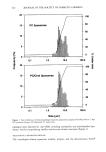
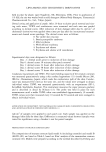
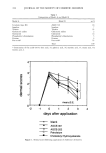
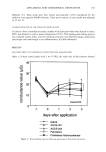
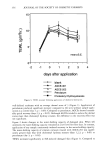
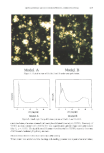
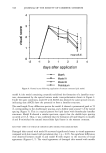
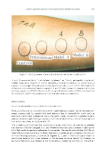
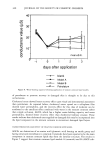
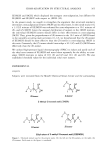
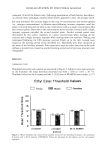
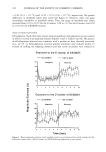
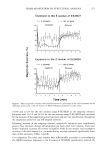
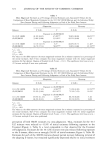
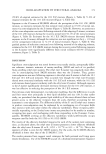
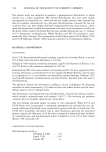
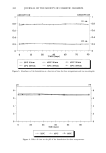
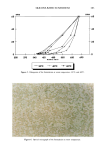
CROSS-ADAPTATION BY STRUCTURAL ANALOGS 365 EE3M2H and 3M2H, which displayed the strongest cross-adaptation, but different for EE3M20 and EE3M2P with respect to 3M2H (10). In the present study, we sought to strengthen the argument that structural similarity determines cross-adaptation between 3M2H and its ethyl esters. In the initial study (10), a 3:1 E:Z mixture of EE3M2H was evaluated for cross-adaptation to a 10:1 mixture of (E)- and (Z)-3M2H. Given the unequal distribution of isomers in the 3M2H mixture, the individual EE3M2H isomers should differ in their effectiveness in cross-adapting 3M2H. Thus, given the preponderance of (E)-isomers in the 10:1 ratio of 3M2H found in the naturally occurring male secretions (11,12), we hypothesized that the (E)-isomer of EE3M2H should be more effective than the (Z)-isomer in cross-adapting 3M2H in this ratio. Conversely, the (Z)-isomer should cross-adapt a 10:1 (Z)- and (E)-3M2H more effectively than the (E)-isomer. We utilized high-pressure liquid chromatography (HPLC) to isolate and purify each of the ethyl ester isomers of EE3M2H and tested them separately for the ability to cross- adapt 3M2H mixtures in ratios of 10:1 (E) and (Z) and 10:1 (Z) and (E). We also established threshold values for the individual ethyl ester isomers. EXPERIMENTAL SUBJECTS Subjects were recruited from the Monell Chemical Senses Center and the surrounding 5 ,7 Oa 0 5 • E- Lsomer Z-lsomer 3-Methyl-2-hexenoic add (3M2H) 5 5•"•4 0 8 Ethyl esters of 3-methyt-2-hexenoie acid (EE3M2H) Figure 1. Chemical stimuli used in the present study. On the left are the (E)-isomers, on the right, the (Z)-isomers. Each atom in the figure is numbered.

366 JOURNAL OF THE SOCIETY OF COSMETIC CHEMISTS University of Pennsylvania and Drexel University communities. Since there is evidence to suggest specific anosmias for both isomers of 3M2H (17,18), all subjects were screened for sensitivity to the odorants used in the experiment. Subjects were paid to participate. Different groups of subjects were used for each 3M2H mixture tested: 12 subjects (six male and six female mean age of 30.0 years) were tested in sessions comparing 10:1 (E)- to (Z)-3M2H with the individual isomers, and 12 subjects (six males and six females mean age of 25.8 years) were tested with the 10:1 (Z) to (E) ratio of 3M2H. A total of 20 subjects (10 males and 10 females mean age of 30.7 years) participated in the threshold procedures for the individual EE3M2H isomers. SYNTHESIS AND PURIFICATION OF ETHYL-3-METHYL-2-HEXENOATES A mixture of the E and Z isomers was synthesized via Wittig methodology in the following manner. Twenty-two ml (0.111 mol) of triethyl phosphonoacetate was added in a dropwise fashion to a stirred slurry of 4.48 g (0.112 mol) Nail (60% in mineral oil) in 100 ml anhydrous toluene under an N 2 blanket. The resulting betaine was allowed to form at room temperature over 30 minutes. To this reactive intermediate, 11.8 ml (0.111 mol) of 2-pentanone was added with addition of heat (40øC). The reaction mixture was stirred for 16 h to yield a viscous biphasic product. Gas chromatographic analysis indicated the formation of the E and Z esters in a 3:1 ratio. The reaction mixture was poured into ice water and extracted with three 100-ml portions of ether, dried over Na2SO4, and filtered and carefully concentrated to yield 20.3 g of clear, fruity-smelling volatile oil. Flash chromatography (1% ether in hexane) was employed to remove re- sidual toluene, leaving 15.5 g (89.6%) of the ethyl ester mixture. GC/MS analysis of the ester mixture confirmed the 1:3 ratio of Z:E isomers and the presence of an exo double- bond rearrangement (ethyl-3-methylidine-hexanoic ester) in a 1.1% yield. No [•/ double-bond migration was observed. Separation of the E and Z ethyl esters was accomplished via preparative HPLC {Zorbax Sil 9.4-mm x 25-cm column (8 pro) mobile phase: 1% ether in hexane 10 ml/min (15 mPa) Varian RI-3 refractive index detector (500 x 10 6 RI/FS sensitivity)}. Injection size was 400 pl of a 20% solution of the esters in mobile phase. Capacity factors for the Z and E esters were: k'x = 3.33 and k' E = 4.33 (o• = 1.3). Combined gas chromatography/mass spectrometry (GC/MS) was employed to determine the purity of the separated ethyl esters. A Finnigan 4510 GC/MS data system equipped with a split/splitless injector and a fused silica capillary column, and with capabilities for operation in both electron impact and chemical ionization modes, was used for analyses. The column employed was a 30-m x 0.32-mm (I.D.) fused silica column with a 1.00-pm coating of Stabilwax (cross-bonded polyethylene glycol, Restek Inc., Bellefonte, PA). The analysis conditions were as follows: 60øC, 10 rain, then 4ø/min to 220øC, held at top temperature for 1 hr. The mass spectrometer was interfaced with a Nova 4X computer, which utilizes the Super Incos software for data acquisition, analysis, and quantitation. The mass range employed during these analyses is typically m/z 40-400, which is scanned once per second. The (E)-ethyl-3-methyl-2-hexenoate was found to be 99.4% in the E, SZ form, and
Purchased for the exclusive use of nofirst nolast (unknown)
From: SCC Media Library & Resource Center (library.scconline.org)