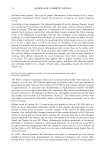
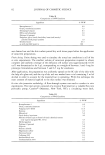
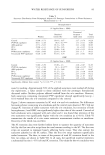
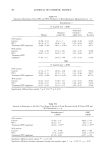
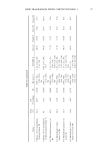
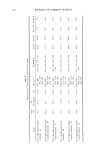
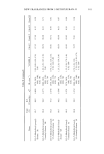
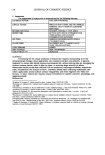
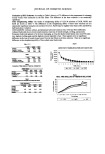
88 JOURNAL OF COSMETIC SCIENCE Table VI Sunscreen Distribution From O/W and W/O Emulsions in Water-Resistance Measurements (n = 4) Benzophenone-3 (% Applied dose _+ SEM) Penetrated Retained (receptor + Total Washes (inside SC) viable skin) Recovery O/W emMsio. Control PP-2 Tricontanyl PVP copolymer W/O emulsion Control PP-2 Tricontanyl PVP copolymer O/W emuhion Control PP-2 Tricontanyl PVP copolymer W/O emulsion Control PP-2 Tricontanyl PVP copolymer 45.88 _+ 2.54 42.2 _+ 2 6.28 + 0.48 94.36 46.76 + 4.77 38.46 + 3.16 5.25 + 0.64 90.47 33.86 -+ 5.99* 58.15 + 5.58** 4.71 + 0.73 96.72 50.8 _+ 3.68 27.34 + 2.61 4.92 -+ 0.76 83.06 56.87 + 2.13 29.93 + 1.33 3.91 + 0.08 90.71 57.49 -+ 3.3 30.44 _+ 3.69 3.25 -+ 0.45 91.18 OMC (% Applied dose _+ SEM) 47.39 -+ 2.77 48.38 + 2.28 3.69 -+ 0.55 99.46 50.09 + 5.31 45.35 + 3.73 3.33 ñ 0.58 98.77 34.23 _+ 6.58* 64.54 _+ 6.39* 2.99 -+ 0.56 101.76 55.62 + 4.02 31.88 _+ 3.27 2.14 _+ 0.52 89.64 58.29 _+ 2.91 32.43 _+ 1.36 1.84 + 0.05 92.56 62.67 _+ 3.63 33.14 _+ 4.12 2.04 _+ 0.47 97.85 Significantly different from control: * p -- 0.10 ** p -- 0.05. Table VII Amount of Sunscreens in the First Two Strips as Percent of Total Retained Inside SC From O/W and W/O Emulsions (n = 4) Benzophenone-3 OMC (+SEM) (+SEM) O/W emulsion Control 47.82 _+ 3.71 48.02 _+ 3.54 PP-2 46.13 _+ 1.5 46.3 + 1.42 Tricontanyl PVP copolymer 62.02 + 1.93'* 61.36 _+ 1.85'* W/O emulsion Control 61 + 4.44? 58.55 -+ 4.89 PP-2 57.8 _+ 3.62't" • 55.92 -+ 3.27•'? Tricontanyl PVP copolymer 67.45 _+ 2.09 61.57 + 2.56 Significant differences from control: ** = p -- 0.05. Significant differences between treatments among two emulsion types: •' = p 0.10 ?'• = p 0.05.

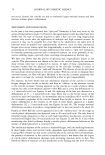
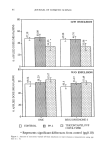
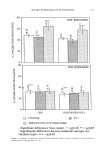
WATER RESISTANCE OF SUNSCREENS 89 higher than those for the o/w emulsion. For benzophenone-3 the differences were sig- nificant in controls (p -- 0.10), and PP-2 containing the w/o emulsion had higher amounts of both sunscreens in the superficial two layers of SC compared to the o/w emulsion (p -- 0.05). The o/w emulsion containing tricontanyl PVP showed higher superficial retention than the control (p • 0.05). The emulsions, hydroalcoholic and diisopropyl adipate oil formulations of sunscreens, gave qualitatively similar results in terms of their behavior towards resistance to water washoff. For such a type of in vitro procedure to have meaningful implications, the results must be related in some manner to the already-accepted standards for measuring efficacy of sunscreens, and one of them is SPF value. In vivo tests for measuring substantivity of sunscreens recommended by the FDA involve measurement of the SPF value before and after participation in water activity by a human subject. The total duration of water exposure for a claim of water resistance is 40 minutes. It was reported by Kaidbey (9) that post-washoff SPF of sunscreens containing a mixture of octyldimethyl PABA, and benzophenone-3 was 50% of the original SPF. If the amount of sunscreen on the skin surface is assumed to be directly proportional to the SPF value, then its 50% reduction should decrease the SPF value proportionately by 50%. Treffel and Gabard (10) found in in vivo studies that after removal of non- penetrated sunscreen product, the SC retained approximately 50% of the applied dose of benzophenone-3 and OMC after 0.5 hours exposure to an emulsion-gel formulation. The resultant SPF was reduced approximately in half. This suggests that sunscreens can still function when they are removed from the skin surface but retained inside SC. In our experiments performed to develop an in vitro procedure for measuring water resistance of sunscreens, approximately 50% of the applied dose was retained inside SC, which could mean that half of the original SPF is retained. The amount of sunscreens inside SC could be directly related to SPF value. Therefore, the in vitro procedures developed in these studies may be used to screen the sunscreens before running in vivo SPF measurements to assess their water-resistance performance. Future studies will address the role of dosage (quantity applied to the skin surface) and washing time. We anticipate that these data will be useful in refining the technique, which should reflect product behavior under use conditions. CONCLUSIONS The in vivo tests performed on sunscreens to measure water resistance are laborious, time-consuming, and expensive. A simple in vitro procedure was developed and applied to measure water resistance using hydroalcoholic and diisopropyl adipate oil systems and o/w and w/o emulsions containing OMC and benzophenone-3. A total water contact duration of 40 minutes on sunscreen-treated skin sites, as proposed in in vivo tests, was maintained in the in vitro experiments. Quantities applied to the skin surface mimicked use conditions. Certain polymers affected the results, but others had little effect. Neither PP-2 nor tricontanyl PVP changed washoff or SC retention from w/o emulsions, but tricontanyl PVP improved the performance of the o/w emulsion. Where comparisons are possible, our data seem consistent with the literature. We conclude that the in vitro procedure is useful for screening formulations for water resistance.
Purchased for the exclusive use of nofirst nolast (unknown)
From: SCC Media Library & Resource Center (library.scconline.org)