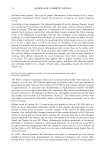
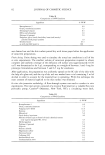
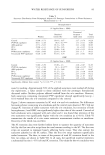
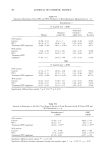
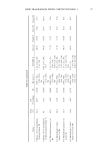
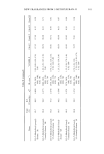
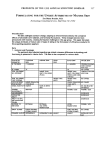
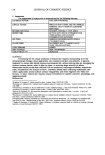
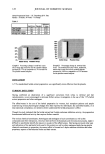
PREPRINTS OF THE 1999 ANNUAL SCIENTIFIC SEMINAR 125 viscosity/Newtonian behavior of the developers tested as well as the higher viscosity/shear-thinning behavior of the colorant and the mixture of the two components. The formulations were prepared with and without conditioning or protective agents, such as Polyquaternium 28 and DLT. The conditioning effects were monitored by combing analysis of the dyed hair. In one series of experiments we examined the conditioning effect of DLT by dyeing hair with a colorant containing DLT (Table 2) and with a colorant devoid of DLT. This was followed by treatment of the tresses in both series with a conditioning formulation (Table 3) that also contained DLT. Immediately after the dyeing procedure (Table 4), hair dyed with the colorant containing DLT (Series 1) was easier to comb than hair subjected to a treatment with the dye that did not contain DLT (Series 2). However, after post-treatment with the conditioning formulation, hair that had been previously treated with DLT (Series 1) was more difficult to comb than hair that was not previously treated with DLT (Series 2). This result suggests that deposition of DLT on the hair surface during dyeing alters its electrostatic nature, to the extent that further adsorption of DLT in the conditioning stage is inhibited Conclusions The study has demonstrated the efficacy of polymeric thickeners (anionic and nonionic ) for gel, cream and lotion-type hair dye formulations. It has also shown that they can be employed in combination with conditioning and protective agents. Hair Dye Developer I (anionicl 95.40% Deionized H20 3.00% H20• 1.50% Anionic PolymericThickener* 0.10% NaEDTA *Acrylates/Steareth-20 Methacrylate Copolymer, Acrylates Copolymer, or Acrylates/Methacrylates/Beheneth-25 Methacrylate Copolymer Hair Dye Developer II (nonionic} 95.30% Deionized H:O 3.00% H•O• 1.50% PEG-150/Stearyl/SMDI Copolymer 0.10% NaEDTA 0.10% Phosphoric Acid Table 1 Hair Dye Colorant Gel 68.60% Deionized H:O 10.00% C14-15 Pareth-10 10.00% C12-15 Pareth-3 4,20% NH4OH 3.60% Ethanolamine 1.40% Dyes 0.35% p-phenylenediamine 0.35% 2-methylresorcinol 0.25% resorcinol 0.25% p-am•nophenol 0.10% 4-amino-2-hydroxytoluene 0.05% I -Naphthol 0.05% N,N-b•s-(2-hydroxyethyl)-p-phenylenedlamine sulfate 1.00% Dimethylpabamidopropyl Lauridimonium Tosylate 0.50% Decyl Glucoside 0.30% Na Bisulfite 0.30% L-Ascorbic Acid 0.10% NaEDTA Table 2 DLT Conditioning Formulation 85.90% Deionized H20 10.00% PEG-150/Stearyl/SMDl Copolymer 2.50% Cetearyl Alcohol 1.00% DLT 0.50% Sodium Laureth Sulfate 0.10% NaEDTA Table 3 Combing Analysis After Dyeing (ColoranO Series I (with DLT) Series 2 (without DLT) 2141 + 527 4683 + 964 After Post-treatment (Conditioning Formulation) series 1 (with DLT) Series 2 (with DLT) 1169 + 191 504 + 84 The data are reported in terms of Combing Work (G-cm). Table 4

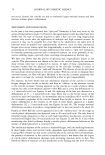
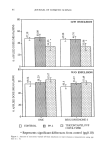
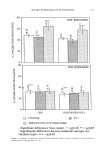
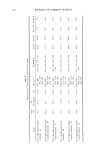
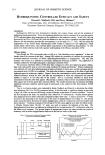
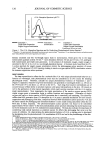
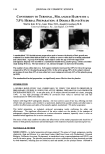
126 JOURNAL OF COSMETIC SCIENCE CONVERSION TO TERMINAL, MELANIZED HAIR WITH A 7.5% HERBAL PREPARATION: A DOUBLE BLIND STUDY Martin Katz D. Sc., Isaac Eliaz, M.D., Joseph Greenberg M.D. Universal Biologics, Inc., San Rafael, CA 94903 •.- - .... a•.. ,,• :•.• • • • • •- •, ..... ß .• ,• .. ß ., ß _ ß . •. •. • ..• ß • • • i • --• '" • ' •" " ' • • - - .4. . • .: • • .. .,...' •,.. B•line 8 Mon• 17 Monks A standardized 7.5% herbal extract preparation used to increase the density of hair growth was evaluated in a double blind clinical trial for its' ability to convert ve!!us hair to terminal, melanized and colored hair. A group of 24 healthy male subjects under the age of 55 with stage Ill-IV androgenetic alopecia were enrolled in a randomized double blind, parallel group, vehicle controlled study lasting 48 weeks. The hair inside a I cm. tattooed triangle was harvested bi-monthly. The number of non-veilus hairs in a 0.43 square centimeter increased by 169% for the active group compared to 33% for the placebo group (p:0.01). In the active group, 90% of the subjects showed an increase of more than 35% in non-ve!!us hair count compared with only 33% of the placebo group (p0.05). The standardized herbal preparation was significantly more effective than the placebo. INTRODUCTION A DOUBLE BLIND STUDY WAS UNDERTAKEN TO VERIFY THE RESULTS OBSERVED IN PRELIMINARY STUDIES IN WHICH THE ACTIVE HERBAL PREPARATION HAD PRODUCED ENCOURAGING RESULTS. In one pilot study, all 18 subjects showed increased hair counts, averaging 119%. A very high percentage (50-100%) of conversion from veilus to terminal hair and hair remelanization (50-100%) were observed. Subjects with Stage Ill-IV androgenetic alopecia -- the most common cause of hair loss, affecting one third of both men and women--were enrolled in a randomized, double-blind, parallel vehicle-controlled study to confirm the effectiveness and safety of the topically applied, standardized 7.5% herbal preparation. This herbal preparation, as evaluated, produced encouraging results confirming the safety and effectiveness. The significant effectiveness of the active cream over the placebo in the treatment of androgenetic alopecia deserves attention as a serious alternative treatment, especially since it relies on botanical herbal ingredients for its active constituents. The results of this study confirm the safety and effectiveness of the herbal preparation arid should be of interest to both general practitioners and dermatologists in the treatment of patients experiencing hair loss. MATERIALS & METHOD MEDICATIONS - An herbal preparation utilizing a patented 7.5% extract of fennel, polygonurn, mentha, chamomile, thuja and hibiscus in a water-based cream (HairPrime Cream with Phydermanol Universal Biologics, California the extract, Phydermanol, is standardized using a spectrophotometer and HPLC) was used by the active group. The chemical constituents and various combinations of these chemicals provided by these botanicals, including (but not limited to) anol and anethol, are the principal factors disclosed in
Purchased for the exclusive use of nofirst nolast (unknown)
From: SCC Media Library & Resource Center (library.scconline.org)