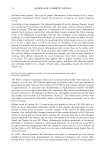
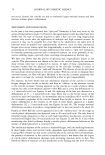
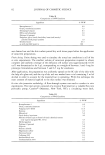
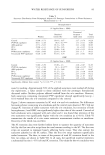
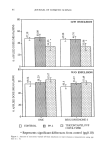
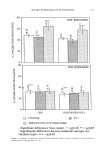
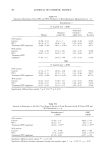
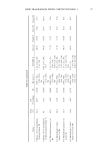
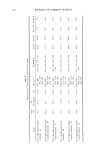
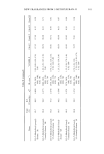
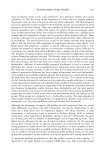
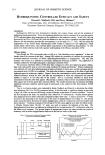
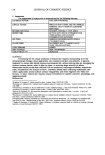
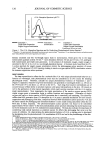
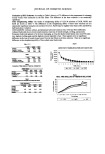
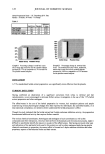
PREPRINTS OF THE 1999 ANNUAL SCIENTIFIC SEMINAR 121 EFFECTS OF ALKALI METAL HYDROXIDES AS STRAIGHTENING AGENTS OF EXCESSIVELY CURLY HAIR Ali N. Syed, Hassan Ayoub and Anna Kuhajda Avlon Industries, Inc., Bedford Park, IL 60638 Introduction In order to achieve the widest variety of hairstyles, excessively curly hair is often straightened temporarily or permanently. In order to straighten hair permanently, chemical relaxers containing alkali metal hydroxides are commonly used as active ingredients •. To date no comparative study has been conducted indicating the effects of alkali metal hydroxides on hair. Therefore, this study investigates the effects of equi-molar solutions of alkali metal hydroxides on the properties of hair. Methods The hair used in this study was blended Oriental hair, obtained fi'om DeMeo Brothers, in New York. All hair samples were cleaned 2, equilibrated at 65 % relative humidity and 21 øC. At least 10 samples were utilized for each study for statistical analysis. Single Fiber Tensile Kinetics: The kinetic testing was carried out on a Dia-Stron Miniature Tensile Tester (MTT). Our method involves imposing a 1% strain on the fiber, measuring the stress, and then removing the strain at 1 minute intervals 3.4. The root portion, the portion immediately downstream, and the portion farthest fi'om the root were randomly utilized to test the 1.325 M LiOH, NaOH, and KOH solutions. Fiber Tensile Testing: Dia-Stron MTT was utilized for testing F 20 index. Hair fibers were randomly divided into three groups. The F20 index ofuntreated fibers was farst determined. Each group of fibers was then treated with 1.325 M LiOH, NaOH, and KOH respectively for 18 minutes. The F20 index of treated fibers was determined and a loss in F20 index due to treatment of alkali metal hydroxides was determined 5 Evaluation of Hair Swelling: The average diameter of dry hair fibers at 65 % R.H. and 21øC was measured prior to treatment using a computer-interfaced laser micrometer which was set up to take the diameter every 5 seconds throughout the experiment. The fiber was immersed in a test solution of either 1.325 M LiOH, NaOH, or KOH for 20 minutes. After 20 minutes of immersion, the solution was replaced with deionized water for 5 minutes to simulate rinsing. The percent swelling was determined 6 and a graph showing the swelling for each solution is given in Figure 2. Determination of Hair Porosity: The porosity of hair was determined utilizing the centrifuge method by Valko and Barnett 7. The sample of previously weighed hair was immersed in water for 30 minutes. This wet sample was then centrifuged for 10 minutes and weighed again immediately. The uptake of water was then determined. The fibers treated with 1.325 M LiOH, NaOH, and KOH were subjected to the same procedure and their porosity for each alkali metal hydroxide was determined. DtJjeerential Scanning Colorimetery: The isotherms of treated hair were compared to untreated hair using a Perkin Elmer Differential Scanning Colorimetery (DSC). The peaks in each of them were compared to determine the amount of loosely bound water. Fiber Straightening Ability: To determine the degree of straightening, three tresses were treated with 1.325 M LiOH, NaOH, and KOH for 18 minutes. The degree of straightening was determined by utilizing Image Analysis System where degree of straightening is calculated by dividing the length of curvature of hair by the length ofhaix fiber after treatment • Results & Discussion Single Fiber Kinetics: Figure I shows a plot of average of 10 fibers each for all test solutions. Visual examination indicates that LiOH solution has a slower rate of reaction than NaOH solution, whereas KOH solution has the fastest rate of reaction. Fiber Tensile Testing: It is clear fi'om Table 1-2-3 that fibers treated with 1.325 LiOH lose 79.22% of their tensile strength whereas fibers treated with 1.325 M NaOH and KOH lose 84.23% and 96.59% of tensile strength respectively. Therefore, LiOH solution leaves the fibers significantly less damaged than NaOH and KOH in terms of F20 index. Evaluation of Hair Swelling: Figure 2 visually indicates that LiOH solution swells hair fibers less than NaOH and KOH respectively. Although NaOH and KOH swell hair nearly equal until 20 minutes, their peaks at the start of rinsing are much different. The KOH peak is much higher than the NaOH peak, which indicates that KOH solution is swelling hair fibers too much and results in greater damage of the fibers. Evaluation of Hair Porosity: Table 8 indicates that the porosity of LiOH treated hair fibers is the lowest i.e. 42.79 %, whereas the porosity of NaOH and KOH treated hair fibers is 46.42 % and 48.06 %, respectively.

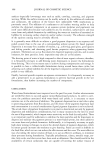
122 JOURNAL OF COSMETIC SCIENCE Evaluation of DSC Isotherms: According to Table 9, there is a 2øC difference in the temperature for releasing loosely bound water molecules in the hair fibers. The difference in the three solutions is not statistically significant. Fiber Straightening Ability: The results of straightening ability of 1.325 M solutions of LiOH, NaOH, and KOH are shown in Table 4. The differences in the straightening ability of these three solutions are not statistically significant using this test method. However, NaOH may be slightly better than LiOH, and KOH in half head salon evaluation. CONCLUSIONS: Lithium, sodium, and potassium hydroxide solutions react with hair fibers differently. Lithium Hydroxide shows slowest tensile kinetics, least loss of tensile strength, swelling, and porosity. Potassium hydroxide appears to be the most damaging, as it has the fastest tensile kinetic rate, most F20 index loss, highest swelling peak, and the highest porosity imparted to hair. There appears to be no significant difference in the loss of loosely bound water from the hair fibers in all three solutions. There is no significant difference in the straightening ability of these alkali metal hydroxides. T•ble I. 2 -3 Figure I UOH NaOH KOH Average 0.92 0.93 0.91 Sl•ndard Deviator 0,01 0.01 0.01 Co-efficient of Variable 0.81 1.29 1.11 UOH NaOH KOH Average 7922 84.23 96.59 KINETIC STUDY OF EQUIMOLAR SOLUTIONS UOH VS. NaOH VS. KOH Standard Deviator 4.36 3.10 1.58 120,00 •- 20.0• ....... Table 0 Comparison of Water Uptake of Treated rs. Untreated Hair Water Uptake Untreated UOH NaOH KOH Average 30.7 42.79 46.42 46.06 Standard Deviator 0.55 0,45 0.09 0,79 Coefficient of Variable 1,79 1.25 0,20 1.53 T•Io 9 Peak Tempe•ltur• of Unb'eated and Treated Hair Fibres Peak T•mlx•ture Untr•ted UOH NaOH KOH Average 88.70 66.65 66.59 66.27 Standard Deviator 1.67 2.46 2.16 2.20 Coefficient of Variable 1.89 2.86 2.50 2.53 0 1 2 3 4 5 6 7 6 9 10 11 12 13 14 15 TIME (mins.) I ---- liOH ß NaOH ß KOH I Figure 2 REAL TIME SWELLING OF FIBERS IN SOLUTIONS 160 • 20 0 1.5 3 4.5 6 7.5 9 11 12 14 15 17 18 20 21 23 24 Time (Minutes) ß UOH ß NaOH --•--KOH
Purchased for the exclusive use of nofirst nolast (unknown)
From: SCC Media Library & Resource Center (library.scconline.org)