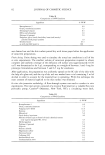
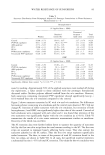
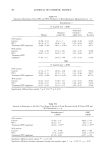
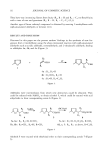
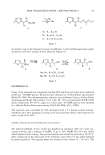
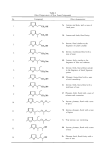
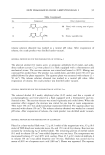
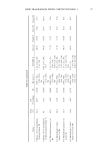
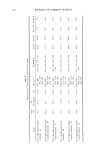
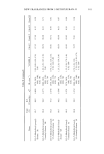
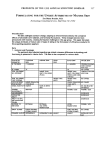
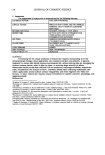
104 JOURNAL OF COSMETIC SCIENCE The reactions were controlled by TLC developed with a 9:1 hexane-acetone mixture. Aidehyde 1 was prepared according to the procedure described in the literature (6), with a yield of 45-66%. GENERAL PROCEDURE FOR PREPARATION OF ACETALS 2 AND 3 The following raw materials were charged to the reactor: aidehyde (0.2 mol), selected glycol (0.22 mol), toluene (100 cm3), and FeSO 4 (0.2 g). The reaction mixture was brought to boiling and the stoichiometric volume of water was collected by means of an azeotropic distillation head. The toluene solution was washed with water to neutral pH and dried over anhydrous MgSO 4. After removing the solvent, crude acetal was distilled under vacuum. Table II shows the properties of the newly synthesized furan acetals. REFERENCES (1) J. Nowicki and J. G6ra, J. Cosmet. Sci. (this issue). (2) L. Cerveny, A. Marchoul, and M. Peskova, Perrum. Kosmet., 77(3), 198 (1996). (3) T. Yoshida (IFF) US Patent 4289700 (1981). (4) J. Kula, B. Bragiel, and J. G6ra, P, erfum. Kosmet., 76(6), 368 (1995). (5) J. Nowicki and J. G6ra, Po//ena TSPK, 39(11), 449 (1995). (6) Y. K. Yuriev and N. S. Zefirov, Zh. Obshch, Khim. 33, 1150 (1960).

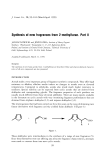
j. Cosmet. sci., 50, 105-109 (March/April 1999) Additives for water-based nail polish MITCHELL SCHLOSSMAN, Kobo Products and Presperse, Inc., West Orange, NJ. Accepted for publication March 31, 1999. Synopsis Water-based nail polish systems are reviewed. These may be described as complex mixed colloidal disper- sions of polymer(s) and pigment in water. These frequently also contain water-soluble polymers. Polymers are used as both binders and additives for water-based coatings. Typical of their role as additives is their use as thickeners and pigment dispersants. The many polymer types used are discussed in a systematic manner since it can be vital to the formulator to have a clear understanding of the main features and essential differences between the various polymer types in use. INTRODUCTION There are four components of organic coatings: binders, solvents, pigments, and addi- tives. Each component serves a different function: Binder: Polymer (resin) and cross-linker both react to form cross-linked networks. Solvent: To provide proper application and alter certain properties. Pigment: To provide color and enhance other properties. Additives: To control application and protective properties. Depending upon the content and binder/solvent make-up, nail polishes are classified into the following three categories: (a) Solvent-borne: Low solids (binder) content high solvent content high volatile organic content. (b) Water-borne: Binder/cross-linker dispersed in water low volatile organic con- tent. (c) Latex: Synthesized polymer particles suspended in water low volatile organic content. DISCUSSION One fundamental difference between a nail polish based on aqueous polymer dispersions and those based on solutions of polymers in non-aqueous solvents lies in the mechanism of the film formation process which occurs as the volatile continuous phase is lost from a freshly coated nail. The particle coalescence process that occurs in an aqueous disper- 105
Purchased for the exclusive use of nofirst nolast (unknown)
From: SCC Media Library & Resource Center (library.scconline.org)