PREPRINTS OF THE 1999 ANNUAL SCIENTIFIC SEMINAR 113 Along with the biochemical differences that take place with age, it is important to emphasize to patients with hair problems that selecting shampoos, conditioners, hair styling products can be just as important. The need to shampoo is based on sebum excretion production, which also slows with age. In females aged 20 - 29, 1.88 mg/sq cm of sebum is produced over a 3 hr period. This amount decreases to 0.88 mg/sq cm by the age of 60 to 69 yrs. There are approximately 400 to 900 sebaceous glands per sq cm on the scalp, representing the largest sebaceous glands on the body. Sebum, which is composed of free fatty acids, neutral fats and waxes, but excess amounts need to be removed by selection of shampoos and hair grooming agents. As we mature, cleansing the scalp is more important than shampooing the hair. The ability of scalp skin scale to desquamate decreases with age also. This effect is seen as well, all over the body, but more pronounced on scalp because hair keeps the scale in place. The combination of scale and sebum allows for more organisms such as pityrosporum ovale to over grow, with subsequent irritation and hence, seborrheic dermatitis. A review of histological, biochemical changes that occur with age will be presented in further detail, along with discussion of shampoo selection, conditioner, hair styling agents and aids, colorants and treatments to offer for both men and women. References: 1. Whiting DA, Howsden FL. Color Atlas of Differential Diagnosis of Hair Loss. Cedar Grove, New Jersey, Canfield Publishing, 1996. 2. Olsen EA. Disorders of Hair Growth: Diagnosis and Treatment. New York, McGraw-Hill, 1994. 3. Billek D. Cosmetics for elderly people. Cosmet Toilet, 111:31-37, 1996. 4. O'Donoghue MN. Hair Cosmetics. Dermatol Clinics 5::619, 1987. 5. Gray J. The World of Hair. Proctor & Gamble Haircare Rsch Ctr, 1997.

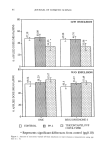
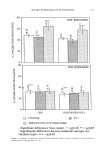
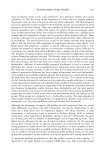
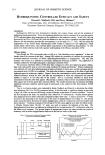
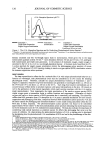
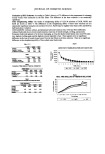
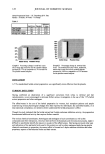
114 JOURNAL OF COSMETIC SCIENCE HYDROQUINONE: CONTROLLED EFFICACY AND SAFETY Howard I. Maibach, M.D. and Terry Oldman* Dept. of Dermatology, Univ. of California, San Francisco, CA 94143, *Eastman Chemical Company, Kingsport, TN 37662-5230 Introduction Hydroquinone (HQ) has been formulated for decades into creams, lotions, and gels for treatment of disfiguring hypcrpigmentation. These skin-lightening products are sold as cosmetics or as over-the-counter (OTC) and prescription drugs depending on the regulations in the respective country. In the USA, HQ was reviewed by the FDA (1978 and 1982) and was found to be the only active ingredient considered safe and effective for skin bleaching provided the concentration is in the range of 1.5 - 2.0%. HQ that meets the requirements of the United States Pharmacopeia (USP Grade) is required for this application, which ensures safety, effectiveness, and consistent purity and potency in skin lightening drug products. In vitro and in vivo studies continue to provide a greater understanding of the efficacy and safety of HQ. Efficacy Studies Even though the FDA monograph refers to HQ as a "skin bleaching active ingredient," it does not literally bleach the melanin in the skirt: Instead, HQ inhibits the production of melanin by reversing the tyrosinase-catalyzed conversion of DOPA (dihydroxyphenylalamne) to dopaquinone. HQ may also compete with tyrosine as a substrate for tyrosinase, limiting the formation of DOPA. The suppression of melanin synthesis by skin lightening agents is discussed in detail by Prota. 2 The tyrosinase inhibition effects of HQ have been compared to other skin lightening agents: arbutin, kojic acid, and ascorbic acid, in an in vitro study conducted by Maeda and Fukuda) Human melanocytes were cultured with each skin lightening agent in multi-well plates for three days, and the tyrosinase activity was assayed using L-DOPA as a substrate. The study also includes a comparison of the effect of each slda lightening agent on melanocyte viability. Figure I shows the concentration at which each agent effectively reduced tyrosinase activity by 40%, aad also the concentration at which the melanocyte cell survival number is equal to or less than that of the control. HQ is a tyrosinase inhibitor at much lower concentrations than the other three agents. HQ also has a cytotoxic effect at lower concentrations than the other agents but all of the agents show cytotoxic effects. The •vindow between the concentration providing significant tyrosinase inhibition aad the onset of cytotoxicity is the widest for HQ, there being a 10-fold difference. Two in vivo human studies were conducted by Burke, Maibach, and Stxauch, to determine the relative skin lightening effect of a 2% HQ commercial cream. In the first study, a significant change in skin color of type 3 & 4 skin was observed follo•ving 9 weeks of therapy on the backs of normal volunteers. n Color of the skin throughout the stud)' was measured with a Photovolt 577 reflectometer. Results showed greater skin depigmentation for darker skin types compazed to lighter skin types. A latency period of 4 - 7 weeks occurred at the beginning of the study prior to the onset of depigmentation (see Figure 2). The second study was performed to determine the relative depigmentary action of a commercial cream on females with facial melasma. s Treatment consisted of 50-100 mg of 2% HQ cream applied twice daily for Fifteen weeks. A Minolta Chroma Meter CR-300, "L" scale, was used to measure the lightness of the skin. The hyperpigmented facial area •vas lightened as evidenced by an average increase of 2.4 reflectance units over the Fifteen-week treatment. The greatest degree of depigmentary action was observed after ten weeks of treatment, with no further depigmentation observed in the last five weeks of the study. • t O.I • O.Ot Figure 1. Concentration of Reduced Tyroslnase Actlvlb/ Compared to Reduced Cell V1ablllb/ HQ Arbut,n Kojlc Acid Ast.•'bJc ACid I • Reduced Tyroslrmse ActMIy by 40% L O Reduced Cell Vlab•51y i Figure 2. Ret'lectance for HQ Treatment Sites Adjusted for Control Graph Presenm Deta I'or Sul•ecm wJttl Trial Mean Reflectance Levels al Baseline of 30 units DR z 30 Unl• • -- 3o Uni• at B• • Trial Week
Purchased for the exclusive use of nofirst nolast (unknown)
From: SCC Media Library & Resource Center (library.scconline.org)