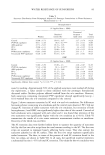
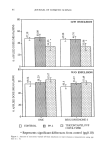
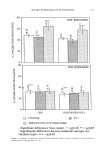
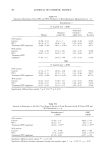
PREPRINTS OF THE 1999 ANNUAL SCIENTIFIC SEMINAR 115 Adverse Dermal Effects Widespread research has been conducted on the usage of HQ, and in some of these studies HQ has been documented as a contact allergen. However, a critical review of HQ patch test studies concluded that none of the studies performed Repeated Open Application Tests (ROATs) and Provocative Use Tests (PUTs) to differentiate between irarant and allergic responses. 6 Therefore, the frequency of HQ allergic contact dermatitis cannot be estimated. In only one of the studies was there an exclusive HQ patch test trial. 7 Bentley-Phillips and Bayles found little or no irritant reaction at concentrations of 1, 2.5, and 3.5% HQ in standard 48-hr closed patch tests. However, at HQ concentrations of 5 and 7%, 83.6% of the patch tests showed positive reactions, which were presumably irritant. Exogenous ochronosis in Blacks is a relatively unknown condition in the USA, but a relatively high incidence has been observed in South Africa. 8 One of the reasons is that prior to 1984, neither the type nor concentration of skin lightening compounds sold in South Africa was regulated. It was not uncommon for skin lightening products to contain 6 - 8% HQ. Also, the combination of high HQ concentrations together with other preparations containing agents such as phenol and resorcinol provided the basis for the high incidence of ochronosis. In Goldemberg's discussion of this problem, he auributed the high incidence of ochronosis to the use of monobenzone (hydroquinone monbenz3'l ether), in addition to high concentrations of HQ) Derreal Absorption Studies and Toxicity Chronic oral exposure of F344 rats to HQ has been reported to cause renal cell adenomas. 9 Studies involving sub-chronic oral exposure of F344 rats have shown nephrotoxicity and renal tubule cell proliferation) ø A more recent stud).' was conducted by R. David, et al, • to determine whether dermat exposure to HQ cream would result in earl), cellular events similar to those observed after oral exposure to HQ. F344 rats, a strain known to be sensitive to HQ, were given topical applications with 0, 2.0, 3.5, or 5.0% HQ in an oil-D-water emulsion cream for 13 weeks (5 days/week). Cell proliferation in the kidneys was evaluated after 3, 6, and 13 weeks of trealxnent. The study showed that dermal exposure to HQ- containing creams does not result in systemic toxicity. No changes indicative of sustained cell proliferation were seen, and the renal lesions noted after oral exposure to HQ were not present after derreal exposure. David, et at, concluded that the systemic toxicity of HQ in F344 rats is limited by its slow dermal absorption rate and rapid excretion rate. HQ dermal absorption rates in rats and humans have been studied extensively, m vitro and in vivo. •2a3 Conclusion It is apparent that the efficacy and safety of HQ has been studied extensively, more so than any other skin lightening agent. HQ is recognized as the most efficacious of the skin lightening agents now under review. At the same time, HQ is being criticized for being cytotoxic, and for cansing exogenous ochronosis and cutaneous Lrritation. 14'15 This brief review has attem!•ed to explain the conditions under which the various negative effects of HQ have been observed and serves to clarify the conditions under which HQ can be used safely. Kidney toxicity that was observed in animals fed HQ by stomach tube was not apparent in derreal studies. Cytotoxicity, which has been observed in vitro, has not been observed in vivo and evidence indicates that adverse skin reactions such as ochronosis and irritation have occurred at HQ concentrations greater than 4%. The maximum concentration of 2% HQ is a responsible use level for OTC drug products as recognized by the FDA while the use of products containing higher concentrations of HQ should be controlled carefully under a physician's supervision. R. Goldemberg, Compounder's Corner, DCI, p 54 (February 1997). G. Prota, Melanins and melanogenesis, Cosmetics & Toiletties, 111, 43 (1996). K. Maeda and M. Fukuda, In vitro effectiveness of several whitening cosmetic components m human melanocytes, J. Soc. Cosmet. Chem., 42, 361 (1991). Burke, H. Maibach, and E. Strauch, Photometric quantification of relative depigmentary activity of hydroquinone on normal skin, submitted to the Y. of Dermatological Treatment (1999). Burke, H. Maibach, and E. Stmuch, Colorimetric quantification of the relative depigmentmg activity of hydroquinone on melasma, submitted to the ,L of Dermatological Treatment (1999). D. Lalloo, S. Makar, and H. Maibach, Hydroquinone as a contact allergen, Dermatosen, 45, 208 (1997). B. Bentley-Phillips and M. Bayles, Cutaneous reactions to topical application of hydroquinone - Results of six year investigation., SouthAft. Med. d. 49, 1391 (1975).

116 JOURNAL OF COSMETIC SCIENCE 8 p. Burke and H. Maibach, Exogenous ochronosis: an overview, ,L of Dermatological Treatment, 8, 21 (1997). 9 National Toxicolog3.' Program, Toxicology and carcinogenesis studies of hydroquinone in F344/N rats and B6C3F• mice, Technical Report No. 366 (1989). •o j. English, L. Perr).,, M. Vlaovic, C. Moyer and J. O'Donoghue, Measurement of cell proliferation in the kidneys of Fisher 344 and Sprague-Dawley rats after gavage administration of hydroquinone, Fundamental andApplied Toxicology, 23, 397 (1994). • R. David. J. English. L. Totman, C. Moyer, and J. O'Donoghue, Lack of nephrotoxicity and renal cell proliferation following subchronic dermal application of a hydroqumone cream, Food and Chemical Toxicology, 36, 609 (1998). •" E. Barber, T. Hill, and D. Schum, The percutaneous absorption of hydroquinone (HQ) through rat and human skin in vitro, Toxicology Letters. 80, 167 (1995). •3 R. Wester, J. Melendres. H. Xiaoying, R. Cox, S. Serranzana, H. Zhai, D. Quan, and H. Maibach, Human in vivo and in vitro hydroquinone topical bioavailability, metabolism, and disposition, d Toxicol. Environ. Health, Part A, 54, 301 (1998). • 4 T. Dooley. Topical skin depigmentation agents: current products and discovery of novel inhibitors of melanogenesis, d. of Dermato logi cal Treatment, 8, 275 (1997). •5 E. Stt A Comparison of Skin Lightening Agents, d. of Cosmetic Science, 49, 208 (1998).
Purchased for the exclusive use of nofirst nolast (unknown)
From: SCC Media Library & Resource Center (library.scconline.org)