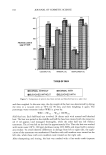
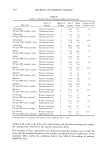
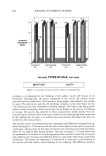
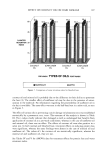
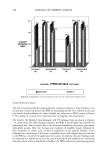
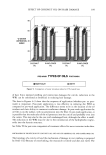
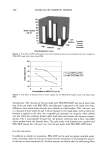
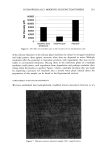
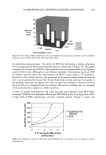
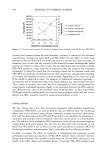
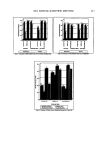
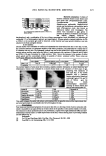
2002 ANNUAL SCIENTIFIC MEETING 219 The effects of a leave-in product (a lotion) on hair ellipisicity were assessed in vitro, using a laser micrometer. The hair was measured, and then treated once with lotion. After drying at 30% RH for twenty-four hours, the major and minor axes were reassessed. A second set of hair was treated for 5 cycles of lotion application before the hair was re-measured. Results show that while the lotion causes the hair to swell, the effects are proportionate for both axes and there was no effect on the ratio. Since body hair is highly elliptical, how do you ensure that you can rapidly and consistently measure one axis in situ? Since the hair shaft usually exits the skin at an angle, with the major axis parallel to the surface, we hypothesized that using a Plexiglas plate to press the hair fiat against the skin would enable consistent photography and measurement of the major axis. This was tested experimentally and proven to be the case. Caucasian women allowed their leg hair to grow (no shaving) for 5 days. It was then photographed using a camera fitted with a non-glare Plexiglas plate to press the hair down and to fix the focal length. The diameter of the hair was then measured from the 35 mm photographs by image analysis. Meanwhile the hair was shaved off, collected and the major and minor axes were determined using a laser fiber micrometer. For fifteen of sixteen samples analyzed, there was no significant difference in the major axis measured by the micrometer and the diameter measured by image analysis. Therefore we concluded that the photographic method described, measures the hairs' major axis. This method has the advantage of simplicity, being able to assess many panelists quickly and easy archiving. References: • Kline Report (2002) Manufacturers' Sales. 2 Robbins C. in "Chemical and Physical Behavior of Human Hair, 4th ed., Pub. Springer-Verlag, New York, Inc., pp 426-428 [2002].

220 JOURNAL OF COSMETIC SCIENCE RETINOIDS AND ACNE...A PERSPECTIVE Braham Shroot, Ph.D. DFB Pharmaceuticals, Inc., San Antonio, Texas Vitamin A is so named because it was the first lipid fraction isolated in the extraction of plasma constituents. In 1926, the observation was made in Vitamin A- deprived mice that their skin was scaly and inflamed, and when the mice were fed Vitamin A, these effects were reversed. This Vitamin A deficiency resulted in an intense episode of nutritional research into the metabolism and biochemistry of the precursor to Vitamin A, beta-carotene and its metabolites containing the beta ionone motif, collectively referred to as retinoids. The first report of treatment for acne with oral Vitamin A, a disease of the pilo- sebaceous unit of unknown etiology, appeared in ! 949 by Straumfjord. In 1969, Kligman reported the successful use of topical Vitamin A for acne. Lack of significant efficacy led the same team to study the more potent metabolite, Vitamin A acid, the active ingredient in the current marketed product family, Retin A©. In parallel to these discoveries in dermatology, retinoids became the focus of research in developmental biology. It was discovered that retinoic acid was found to play a key role in the signaling pathway in embryonic development of skeleto, cardiovascular and neuronal systems. For some years it was thought that retinoic acid was a morphogen and that limb development was controlled by a tissue gradient concentration of retinoic acid and its precursors in a space-temporal relationship. Although the retinoids have been fount to play a key role in limb development, they are no longer considered a morphogens, but these findings do relate to the teratology issues that surround this group of compounds and present a major drawback to a wider pharmaceutical usage of these versatile molecules. In the early 90's, even more attention focused on this family as a result of the identification of nuclear receptors called Retinoic Acid Receptors (RAR's). These receptors are related by homology in their DNA binding region to a super family of ligand activated transcription factors comprising, among others, estrogen, Vitamin D, and steroid hormones. Following this discovery, came the finding that these hormones acted through a common mechanism related to a second receptor, RXR, which formed heterodimers with the receptors (PAR's) recognizing all the other hormones in this super- family. This discovery unified much research at the time and, in turn, led to the identification of another natural retinoid, isomer 9-cis retinoic acid. As research progressed, new transcription dimer partners were discovered, notably the Peroxisome Proliferating Activating Receptors (PPARS). Ligands binding to PPARS are now the focus of research in adult onset diabetes. Further this field has benefited from cancer research, which produced some very encouraging clinical observations with another natural retinoid, 13-cis retinoic acid. Drawing upon this fertile scientific environment, investigators in dermatology were able to study the mode of action ofretinoids in skin-related models. Using these
Purchased for the exclusive use of nofirst nolast (unknown)
From: SCC Media Library & Resource Center (library.scconline.org)