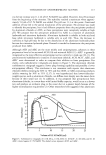
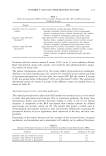
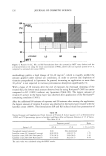
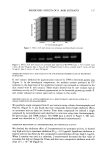
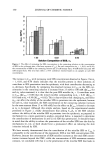
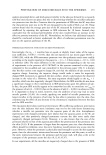
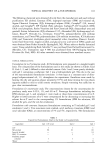
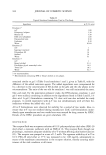
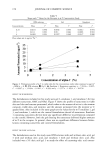
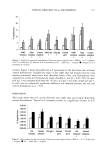
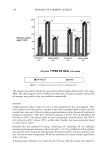
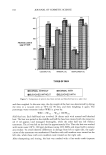
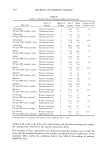
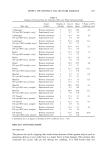
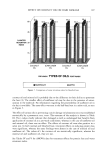
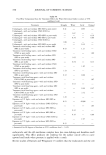
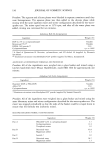
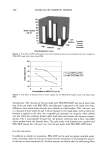
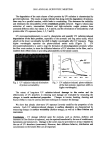
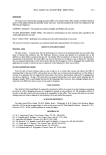
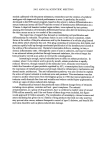
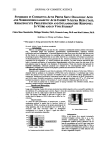
2002 ANNUAL SCIENTIFIC MEETING 223 100 . 80. 40. 20. 0 Control 3ppm •,pprn l•ppm • Fi8.3 :Pro•and• PGE2 synlhes•r'a•in Ine•ne.• of NDGA orA½. Salicylic n•l (3ppm) Bacterial colonization: 5 strains of bacteria commonly found in ncne lesions and ache prone skin (l¾opionefiacterium aches, Coynebacrteriutn tninutissitnutn, $taphylococcus epidermidis, $taphylococcus aureus and Acetinobacter calcoaceticus) and a yeast (Pityrosporum ovale, also known as Malassezia furfur) were investigated. The strains were inoculated in agar gelose in presence or absence of oleanolic acid (15ppm) and NDGA (20ppm) dissolved in butyleneglycol, and a combination of the two at these concentrations levels formulated in a carbomer gel containing 1% of butyleneglycol, glycerin and caprylylglycol. Whereas selective bacterial inhibition by OA or NDGA or the excipient gel could be observed, a total bacterial and yeast growth inhibition was only obtained in the final synergistic mixture. In vivo studies: Clinical studies were undertaken to confirm and substantiate the observations from the in vitro data. At first, the connection between 5-•x-reductase inhibition with sebum production, was established in a clinical test on 9 volunteers with oily skin. The Sebutape© method was used in this double blind vehicle controlled study to measure sebum secretion rates before and after a 6 week treatment with a mixture of Oleanolic acid (9 ppm) and NDGA (12) ppm formulated in a light emulsion. Table I shows the decrease in the number of active sebum glands and the concomitant decrease in quantity of sebum produced (-44%). These values are signifil antly different from the placebo effects. 'Table ! TO T42 Active glands ] Collected Sebum (mm2) Active glands I Collected Sebum (mm2) Mean + s.d. 181+ 23 6.98+1.49 125 + 17 3.+1.25 % variation - -31 -44 The lesional aspects of acne prone skin (comedos, papules, pustules, microcysts, so called retentional and inflammatory lesions) were evaluated in a second clinical study on 20 volunteers of 18-35 years of age, :- .- Table II DO D58 DecreaSe % Microcysts 14.9+2.4 I 0.9+ 1.9 -27% Comedos 7.9+1.8 5.2+1.1 -35% Papules 8: pustules 5.8+1.0 3.9+_0.7 -32% Total lesions 28.6+_3.3 19.9+2.5 -30% Significance P0.05 P0.05 presenting with symptoms of acne type skin. A two month treatment with a Carbomer /butylen glycol/polyol based gel containing 9 ppm of OA and 12 ppm of NDGA gave the following results (dermatological assessment: counting of lesions before and after the trial period (table II). This result compares favorably with retinoic acid treatment [2] the panelists observed the improvement, too, and noted particularly the comfortable skin feel all throughout the day. Conclusion: Four causes and interrelated symptoms of ache prone skin led us to develop a blend of active molecules with which it is possible to act upon all four as we have shown in the specific in vitro and the related in vivo tests. The reduction in sebum production and in cell proliferation, coupled with a light antibacterial effect and anti- inflammatory activity leads to a visible improvement of the skin, without leaving scars or provoking irritation and side effects (fig. 4). References [1] Zu-YUE and Zeg-Hong, Meth. Find Exp. Clin. Pharmacol. 20, 283,1998 [2] Cuncliffe N. et al. Dermatology196, 9-15, 1998

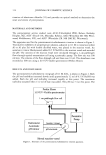
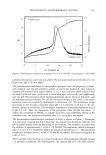
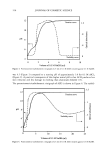
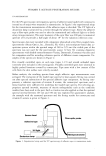
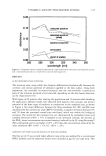
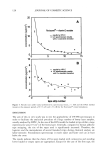
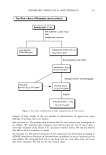
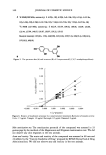
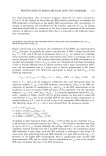
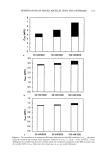
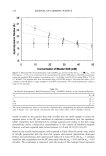
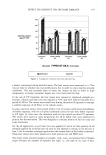
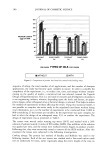
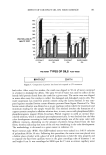
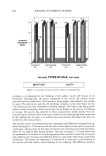
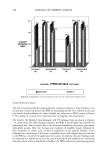
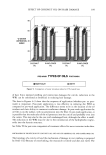
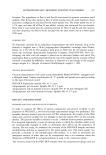
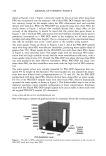
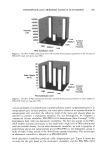
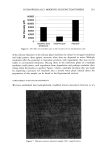
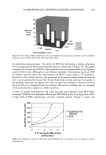
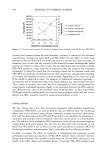
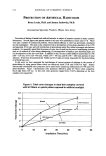
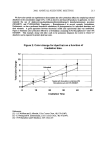
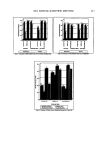
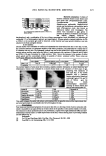
224 JOURNAL OF COSMETIC SCIENCE COSMECEUTICAL PROPERTIES OF FERMENTED SAGE COMPOUND Ven Subbiah, Ph.D. and David Peele, Ph.D. R. J Reynolds Background: Adipose cells in the hypodermis play two important roles in the maintenance of healthy sion (1, 2). The first role of adipose tissue is to protect the skin. Subcutaneous adipose is an energy storage site and insulating layer necessary for healthy skin. The second role of adipose tissue is to nurture the skin. Lipolysis is the process of breaking down stored triacylglycerol in the fat cell to release free fatty acids and glycerol. This occurs by triggering Hormone Sensitive Lipase (HSL) which is under acute hormonal and neural contr61. Catecholamines like adrenaline and nor-adrenaline activate HSL, the rate-limiting enzyme of lipolysis, through cAMP-dependent phosphorylation (3). Cellular communication involves the interaction of neurotransmitter, hormones, and hormonal factors with receptors expressed on the cell surface. Following interaction with receptors particularly those belonging to the metabotrophic super family, hormones are secreted from the pituitary gland and cellular transduction occurs through activation of second messenger pathways including the adenylyl cyclase system and the calcium-phospholipid pathways (3). The modulations of these second messengers result in changes in the phenotype and/or Renotype of the target cell resulting in the biological response. Significance: Fermented sage compound (FSC), a natural product (Molecular weight - 250) is a bicyclic terpenoid, white crystalline compound. FSC is an adenylyl cyclase activator like Forskolin, obtained from the mots of Coleus forskoli (2). cAMP assays indicate (3) that FSC has a similar activity profile and potency as that of forskolin, a well established adenylyl cyclase activator, in interaction with ligand Rated ion channels (Figure 1). It is believed that it may also act as a therapeutic agent by selectively activating secondary messenger pathways. Forskolin is known to promote lean body mass (4). Results: FSC elicits physiological effects consonant with its ability to stimulate adenylate eyclase and increase intracellular cyclic AMP. Other responses which are elicited by FSC and have been associated with increased intracellular cyclic AMP include lipolysis in adipocytes, inhibition of platelet aggregation, and relaxation of smooth muscle and stimulation of steroidogenesis. FSC increases sodium transport in cultured epithelia (Figure 2). The ability of FSC to induce lipolysis/lipogenesis is an integral component of anti-wrinkle, anti-aging, and cellulite creams and lotions. It is believed that FSC and analogs can selectively activate adenylyl eyeIasc system making analogs suitable as selective probes. The activities associated with increased cellular c-AMP include lipolysis in adipocytes and inhibition of platelet aggregation. FSC increases sodium tramport (89%). The exact site of action of FSC still remains unclear, and it is possible that FSC acts directly at the catalytic subunit of adenylate cyclase or at another subunit which has not yet been identified. Other cosmeceutical properties of FSC: FSC has very significant antimicrobial properties in in vitro assays against Propionibacterium acnes indicating that this compound could be very effective to treat ache (5, 6). Another study using FSC (0.1%) showed lipid barrier-enhancing properties by strengthening the natural lipid barrier of the skin as well as other methods of skin treatment that are made possible by the strengthening of the barrier (7). In addition, the report also mentions that FSC reduces the skin's response to irritants and sensitizers and could be used for tanning the skin without exposure to the sun. FSC is known to cure disorders characterized by excessive cell proliferation in patients with benign hyperplasia and psoriasis (8). Safety studies: The safety test show FSC with low irritancy potential (safe as saline) R/PT-no indication of irritation or sensitization at 1.0%. Orally it was non-toxic-acute oral LD50 5g/kg (in rat as per MSDS) no observed adverse effect level-50 mg/kg bw/day for 28 wks (FEMA GRAS no. 3794). Further, RTPCR studies showed no sensitization or irritation. Conclusion: Subcutaneous adipose forms the deepest layer of skin, or hypoderrnis, and is responsible for protecting and nourishing the outer layers. Subcutaneous adipose tissue helps to keep skin soft and supple by insulating it from the elements and providing vital moisture and nuta-ient supply. FSC has potential use in personal care products, primarily anti-wrinkle, "orange peel" and other signs of aging. These compounds work in harmony with the metabolism of adipose cells in that they stimulate lipolysis/lipogenesis, thereby altering the outward appearance of the skin. FSC has been shown to breakdown lipid (triglycerides) barrier which is unique and could have application in the
Purchased for the exclusive use of nofirst nolast (unknown)
From: SCC Media Library & Resource Center (library.scconline.org)