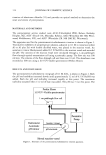
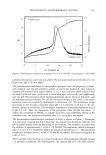
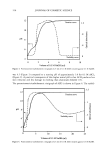
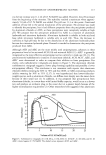
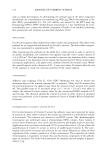
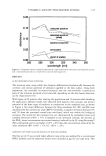
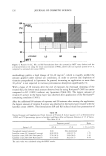
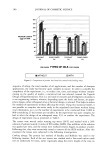
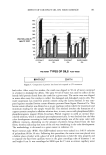
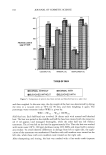
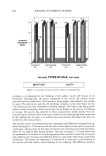
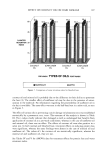
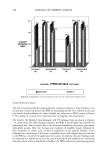
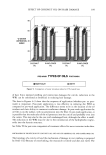
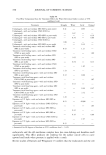
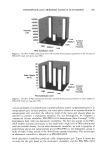
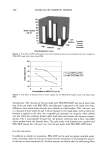
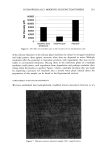
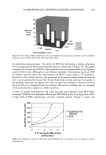
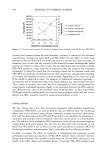
130 JOURNAL OF COSMETIC SCIENCE by an alteration of the plasticity of the horny layer, inducing a strong reservoir capacity and activation of epidermal cells. Additionally, an opening of the potential pathway for a follicular penetration may be part of an increased reservoir capacity (13). According to a hypothetical example, Schaefer and Redelmeier (3) illustrated that dif- fusion through the "shunt" pathway may be relatively more important at an early stage, within a first period of approximately 90 minutes. At a later time, the flux through the stratum corneum is generally more important. Formulations using Rovisome © vesicles may take advantage of both the "shunt" pathway immediately after the application and the conventional pathway during the extended exposure time. CONCLUSIONS For the quantitative spectrometric assay, a classical least-squares evaluation of the spectra between 265 nm and 350 nm based on the constituent spectra was used. It can be concluded that the spectral measurement is extremely fast, and a calibration can be based on a few reference spectra only. Therefore, UV/VIS spectroscopy is an economic ana- lytical method for evaluating large numbers of samples of the horny layer taken by the adhesive tape stripping method. The latter is an established tool for the depth profiling of substances within the stratum corneum. Regarding the irritation test, no cytotoxicity was recorded for the three formulations. However, Roviparts ©- and Rovisome©-formulated creams induced a considerable acti- vation of the upper epidermal cells, possibly contributing to the penetration efficiency of Rovisome©-formulated vitamin E acetate by increasing the reservoir capacity. Rovi- some©-formulated creams were most successful in vitamin E acetate delivery into the horny layer, which can be explained by an alteration in the corneal plasticity and by opening the additional pathway for a follicular penetration. REFERENCES (1) Th. F6rster, W. Pittermann, M. Schmitt, and M. Kietzmann, Skin penetration properties of cosmetic formulations using a perfused bovine udder model, J. Cosmet. Sci., 50, 147-157 (1999). (2) Th. F6rster, B. Jackwerth, W. Pittermann, W. van Rybinski, and M. Schmitt, Properties of emulsions: Structure and skin penetration, Cosmet. Toilerr. 112, 73-82 (1997). (3) H. Schaefer and Th. Redelmeier, "Factors Effecting Percutaneous Absorption," in Ski, Barrier-- Principles of Percutaneous Absorption (Karger, Basel, 1996). (4) G. Blume, W. Pittermann, M. Waldmann-Laue, M. Kietzmann, D. Verma, and C. Johann, "Rovi- some--A Carrier System for Vitamins," in Euro-Cosmetics, 3-2000 (2000), pp. 30-32. (5) L. Cordech, M. Oliva, M. Pons, A. de la Maza, A.M. Manich, andJ. L. Parra, Percutaneous penetration of liposomes using tape stripping technique, Int. J. Pharm., 139, 197-203 (1996). (6) M. Kietzmann, W. L6scher, D. Arens, P. MaaB, and D. Lubach, The isolated perfused bovine udder as an in vitro model of percutaneous drug absorption: Skin viability and percutaneous absorption of dexamethasone, benzoyl peroxide and etofenamate,J. Pharm. Toxicol. Meth., 30, 75-84 (1993). (7) K .R. Beebe, R. J. Pell, and M. B. Seasholtz, Chemometrics: A Practical Guide (Wiley, New York, 1998). (8) L. Kiipper, H. M. Heise, W. Pittermann, and L. N. Butvina, New tool for epidermal and cosmetic formulation studies by attenuated total reflection spectroscopy using a flexible mid-infrared fiber probe, Fresenius J. Anal Chem., 365,753-757 (2001). (9) W. Pittermann, B. Jackwerth, and M. Schmitt, The isolated perfused bovine udder skin model: A new in vitro model for the assessment of skin penetration and irritation, In Vitro Toxicol., 10, 17-21 (1997).

VITAMIN E ACETATE PENETRATION STUDIES 131 (10) W. Biiumer and M. Kietzmann, The isolated perfused bovine udder as a model of dermal eicosanoid releaser, ATLA, 28, 643-649 (2000). (11) V. A. Deleo, M.P. Carvers, J. Hong, K. Fung, B. Kong, and S. Desalva, Arachidonic acid release: An in vitro alternative for dermal irritancy testing, Fd. Chem. Toxic., 34, 167-176 (1996). (12) E. Boelsma, S. Gibbs, C. Failer, and M. Ponec, Characterisation and comparison of reconstructed skin models: Morphological and immunohistological evaluation, Acta Derre. Venereol., 80, 82-88 (2000). (13) A. Rougier and C. Lotte, "Predictive Approaches I: The Stripping Technique," in Topical Drag Bioavai/abi/ity, Bioeqzdva/ence and Penetration, V. P. Shah and H. I. Maibach, Eds. (Plenum, New York, 1993), pp. 163-181.
Purchased for the exclusive use of nofirst nolast (unknown)
From: SCC Media Library & Resource Center (library.scconline.org)