162 JOURNAL OF COSMETIC SCIENCE creams in concentrations of 0.1% or 1%, no marked increase in lipid peroxides was observed during a 96-hour exposure to sunlight (6). The antioxidant activity of c•-to- copherol has been summarized elsewhere (7). Varying concentrations of c•-T have been used in different studies. Beijersbergen van Henegouwen et •/. (8) have used 0.25% of c•-TAc to study its UV protecting activity in vivo in rat. c•-T in low concentrations of 0.05-2% was used as an antioxidant in topical preparations. In higher concentrations (2-10%) c•-T seemed to have benefit in stratum corneum hydration (9,10). Pure c•-T and concentrated c•-T preparations (10-20%) could irritate human skin, and cases of allergic contact dermatitis and other types of immu- nologic hypersensitivity reactions are reported (11). However, there is no systematic study in the literature on the effect of concentration of c•-T on skin permeation. Sunscreens are the second type of photoprotectants that are commonly used along with antioxidants. Very little information, however, is available on the augmentation of the activity of either the sunscreens in the presence of antioxidants or vice versa. Darr et•/. (12) studied the combination of the two antioxidant vitamins, C and E, with commercial UVA sunscreen (oxybenzone) and found greater than additive protection against pho- totoxic damage. These results emphasize the importance of combining antioxidants with common sunscreens to maximize photoprotection. Alberts eta/. (13) reported that in a survey about 62% of sunscreen formulations contained some form of c•-T. They caution, however, that further research has to be performed to study the potential harmful effects of"other ingredients" (like c•-T) that can be added to commercial sunscreens. Alteration of the skin transport of chemicals can be achieved by means of permeation-enhancing agents such as oleic acid and dodecylazacycloheptan-2-one (laurocapram, azone) (14). Bhatia et•/. (15) used a combination of ethanol and 10% oleic acid pretreatment to significantly increase the permeability coefficient of cholecystokinin-8. Kitagawa and Li (16) found that 1% 1-menthol plus 15% ethanol increased the permeability of benzoic acid but decreased that of its higher alkyl substituents. Morgan et•/. (17,18) studied a new class of penetration enhancers, octyl salicylate (OSal) and padimate O (Pad O), which have been used as effective sunscreens, along with oleic acid, to enhance the permeability of the sex hormones testosterone, estradiol, and progesterone. They found OSal to give the highest enhancement in permeability. The effects of padimate O and oleic acid were comparable to each other, albeit better than the control. Previous work done by the authors using the prodrug ester of c•-T, c•-tocopheryl acetate (c•-TAc), demonstrated the metabolism of c•-TAc to c•-T in pig skin (19). Permeation of c•-TAc and its metabolism were found to be a function of the delivery system (20). An emulsion system containing isopropyl myristate (IPM) emerged as the most desirable formulation in terms of skin delivery of c•-TAc. The objective of this work was to (i) formulate different delivery systems for c•-T, (ii) delineate the effect of both biphasic and uniphasic delivery systems on the permeation of c•-T, (iii) study the effect of concentration on c•-T permeation, (iv) characterize the effect of sunscreens on c•-T permeation, and (v) formulate and study c•-T permeation with oleic acid, which is believed to function as a penetration enhancer. MATERIALS AND METHODS CHEMICALS AND INSTRUMENTS D-o•-Tocopherol was obtained as a gift from Archer Daniels Midland Company (IL).

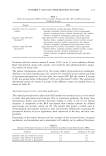
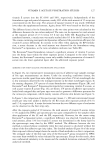
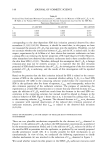
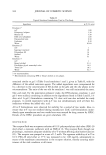
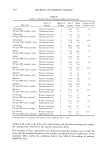
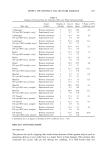
TOPICAL DELIVERY OF o•-TOCOPHEROL 163 The following chemicals were obtained directly from the manufacturer and used without purification: SD alcohol, Eastman (TN) isopropyl myristate (IPM) and mineral oil, Sigma Chemical Company (NJ) diisopropyl adipate (DIA), Ceraphyl © 230, isocetyl alcohol, and Ceraphyl ©, ISP Vandyk (NJ) carbomer, Carbopol ©, B F Goodrich (OH) DEA-cetyl phosphate, Roche Vitamins and Fine Chemicals (NJ) diazazodinyl urea and germall, Sutton Laboratories (NJ) ethomeen C/25, Akzonobel (IL) hydroxypropyl cel- lulose, Klucel ©, Hercules Co., Germany Tween©20, polyoxyethylene (20) sorbitan monolaurate, and Tween©80, polyoxyethylene (20) sorbitan monooleate, ICI Surfactants (DE) and Transcutol, diethylene glycol monoethyl ether, Gattefosse (France). Scintil- lation fluid Scintiverse, reagent alcohol, and glacial acetic acid were of HPLC grade and were obtained from Fisher Scientific (Springfield, NJ). Water refers to freshly deionized water. Tissue solubilizing fluid, Solvable TM, was purchased from Packard Instrument Co. (Meriden, CT). Transparent tape # 800 was purchased from 3M Packaging Systems Division (St. Paul, MN). All other materials were obtained from standard sources. TOPICAL FORMULATIONS Formulations for ot-Tpermeation study. All formulations were prepared on a weight/weight basis. The compositions of the formulations used in this study are shown in Tables I and II. Gels 1, 2, and 3 differed in their alcohol content. Gels 1 and 2 were purely alcoholic, with gel 2 containing a surfactant. Gel 3 was a hydroalcoholic gel. The oils in the case of the macroemulsion formulation (emulsion 1) were kept at a constant ratio of diiso- propyl adipate:mineral oil, 1:1, throughout the experiment. Emulsions were made by heating the oily and aqueous phases separately (55øC) and shear mixing the two phases (aqueous added to oily) to yield creamy emulsions. Simple vortexing was sufficient to give clear microemulsions. Formulations for concentration study. The concentrations chosen for the concentration de- pendency study were 0.25%, 1%, and 4% o•-T. Prototype formulations including the IPM solution, gel 3, and emulsion 1 were made at these three concentrations of o•-T. Higher or lower amounts of o•-T were compensated for by decreasing or increasing the solvent for o•-T used in the corresponding 1% formulations (IPM for solutions, SD alcohol for gels, and the oils for emulsions). Formulations with sunscreens. Sunscreen formulations containing o•-T included gel 3 and emulsions 1 and 3. Two sunscreens were studied, octyl methoxy cinnamate (OMC) and octyl salicylate (OSal), at concentrations of 7% and 5%, respectively. The formulations Table I Topical Gel Formulations Used in the Study: o•-Tocopherol Gels Ingredient Gel 1 (% w/w) Gel 2 Gel 3 tx-T 1 SD alcohol 96 Isocetyl alcohol -- PEG-15 cocamine -- Hydroxy propyl cellulose 3 Water 1 1 91 69 -- 14 5 5 3 3 -- 8
Purchased for the exclusive use of nofirst nolast (unknown)
From: SCC Media Library & Resource Center (library.scconline.org)