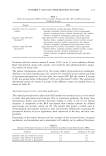
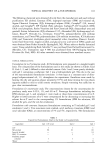
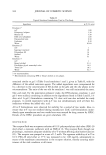
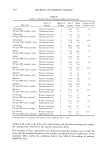
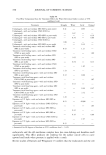
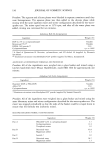
164 JOURNAL OF COSMETIC SCIENCE Table II Topical Emulsion Formulations Used in This Study Ingredient ot-T (% w/w) Emulsion 1 a ot-T 1.00 Diisopropyl adipate 5.38 Mineral oil 5.38 DEA-cetyl phosphate 2.00 Diazazodinyl urea 0.30 Carbomer 0.30 Water 85.64 Emulsion 2 b ot-T 1 Isopropyl myristate 10 Polysorbate 80 16 Sorbitol 30 Water 43 Emulsion 3 c ot-T 1 Benzyl alcohol 21.3 Diethylene glycol monoethyl ether 16.9 Tween 20 18.1 Water 42.7 a o/w macroemulsion. b,c Microemulsion containing IPM or benzyl alcohol as oily phases. remained similar to gel 3 (Table I) and emulsions 1 and 3, given in Table II, with the difference of the added sunscreen agents. The added ingredients were compensated for by a decrease in the concentration of SD alcohol in the gels and the oily phases in the microemulsions. The ratio of the two oils for emulsion 1 was still maintained the same. Oleic acid study. For the penetration enhancer study, the IPM solution, emulsion 1, and gel 3 were studied, containing in addition to the ingredients listed in Table I and II, 1% oleic acid. A gel 3 formulation containing 5% oleic acid was also included for study purposes. A control experiment with ot-T was run simultaneously with all three for- mulations without the added oleic acid. All ot-T formulations were observed for stability for a period of two weeks. Also, to ensure that ot-T was not oxidized during manufacture itself, cold formulations imme- diately upon manufacture and two weeks later were assayed for drug content by HPLC. Details of the HPLC procedure are given elsewhere (19). RECEPTOR FLUID The receptor fluid was an aqueous solution of 0.1% polyoxyethylene oleyl ether (PEG-20 oleyl ether), a nonionic surfactant with an HLB of 16. This receptor fluid, though not physiologic, maintains adequate solubility of ot-T without affecting skin barrier function (21). The receptor was pumped at a rate of 1.5 ml/h. The apparent solubility of ot-T in 0.1% PEG-20 oleyl ether at 37øC was measured to be 1.08 mg/ml, substantially in excess of the maximum concentration in the receptor solution, thereby assuring main- tenance of the sink condition at all times.

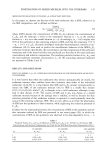
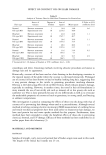
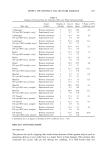
TOPICAL DELIVERY OF o•-TOCOPHEROL 165 TISSUE AND PREPARATION Micro-Yucatan pig skin obtained from Charles River Laboratories (Wilmington, MA) was used as the biological membrane to study in vitro percutaneous absorption. Upon receipt the freshly excised skin was washed gently with 1% (w/w) aqueous detergent, rinsed with deionized water, and patted dry with a paper towel. A 250-300-1am-thick layer of the skin was cut from the surface with a Padgett Electrodermatome TM instru- ment (Padgett Instrument, Kansas City, MO). The skin pieces were then rinsed and dried with paper towels before storage in plastic bags at 4øC. Skin was removed from the refrigerator and kept in isotonic solution to hydrate at room temperature one hour before starting the experiment. The dermatomed skin was cut into 10-mm circular pieces with a brass punch and placed epidermis-side-up in Bronaugh diffusion cells. The skin treated in this fashion from the stage of receipt until use retained its original permeability characteristics for four weeks after dermatoming (22). RADIOLABELING OF o•-T D-alpha-[3H]tocopherol was custom synthesized by Amersham Pharmacia Biotech, En- gland. This was received as a toluene:ethanol (9:1) solution with a specific activity of 19 Ci/mmol (molecular weight 432, at this specific activity). o•-T formulations were spiked with the radiolabeled o•-T such that each finite dose of 5-1al formulation applied on the skin contained approximately 300,000 dpm (disintegrations per minute). Gels were spiked before adding the gelling agent. Biphasic o/w formulations were spiked before addition of the aqueous phase. Analyses for the radiolabeled o•-T throughout this ex- periment were carried out with a liquid scintillation counter (LSC, Beckman Instru- ments). STATISTICAL DESIGN OF THE EXPERIMENT The application of formulations on the pig skin was carried out using a statistically approved model. A randomized complete block design was chosen as the design for the experiment. The statistical model appeared as shown in Table III. For the other studies, the application of each formulation was completely randomized over the number of cells and days of the study. DOSING Finite dosing was used to simulate the actual use conditions in all the in vitro permeation and metabolism experiments. The smallest volume of the formulation required, to obtain complete and uniform coverage of the diffusion cell surface area (0.636 cm2), was determined to be 5 lal, corresponding to a weight of about 4 mg for each formulation. After application, the preparation was uniformly spread on the stratum corneum (SC) side of the skin with the help of a glass rod, and the tip of the rod was washed into a vial containing 1.5 ml of ethanol in order to account for the material lost on spreading. With this technique, the exact amount of material applied to the skin surface was determined. To estimate the amount of o•-T in the original formulation, 5 lal of the
Purchased for the exclusive use of nofirst nolast (unknown)
From: SCC Media Library & Resource Center (library.scconline.org)