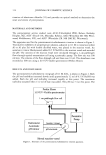
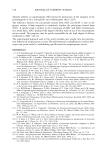
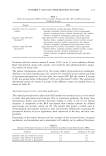
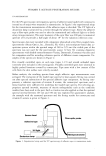
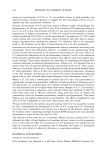
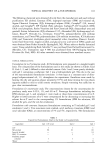
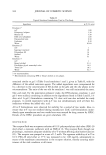
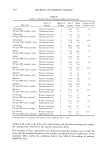
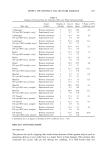
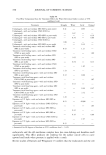
166 JOURNAL OF COSMETIC SCIENCE Table III Statistical Randomized Complete Block Design for the Application of Formulations Formulation Day s 1 Day 2 IPM solution W1 b Y1 d X1 c Z1 e Gel 1 W2 Y2 X2 Z2 Gel 2 W3 Y3 X3 Z3 Gel 3 W4 Y4 X4 Z4 Emulsion 1 W5 Y5 X5 Z5 Emulsion 2 W6 Y6 X6 Z6 Emulsion 3 W7 Y7 X7 Z7 Two consecutive days, 1 and 2. b,c Replicates on day 1 for IPM solution. d,e Replicates on day 2 for IPM solution. formulation was counted for its radioactive counts after equilibration of each formulation for a period of 24 hours. IN VITRO SKIN PERMEATION/METABOLISM METHODOLOGY A flow-through system was used for conducting in vitro permeation experiments. The total system consisted of a receptor fluid reservoir a variable flow rate peristaltic pump, Cassette © (Manostat, New York) a circulating water bath, Lauda © (Brickman Instru- ment, Westbury, NY) and a two-cell-holding heating block, 14 Teflon © flow-through diffusion cells, and a Retriever IV fraction collector (ISCO Inc., Lincoln, NE) to collect effluent fractions over the adjusted time period. Each diffusion cell had an inner diameter of 9 mm and a surface area of 0.636 cm 2 exposed to the receptor fluid. The receptor fluid was pumped at a flow rate of 1.5 ml/h from the reservoir to the diffusion cells placed in the holding blocks. The skin surface temperature was maintained at 32øC by adjusting the circulating water bath temperature to 39øC (23). The effluent from the diffusion cells was collected directly into glass scintillation vials every four hours for a period of 24 hours. SKIN TREATMENT The liquid scintillation counting technique was used to analyze all the in vitro perme- ation samples. In each experiment a minimum of four replicates were used. At the conclusion of the experiment, scintillation fluid was added to the effluent samples collected directly into the vials and the amount of ot-T penetrated was estimated from the counts of radioactivity present in the samples. Counts were obtained as dpm, which were then converted into micrograms of active by taking into account the spiking ratio for each formulation and specific activity of the active.

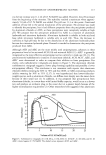
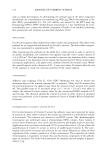
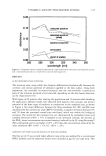
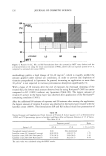
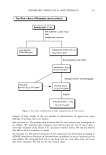
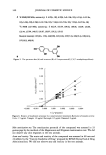
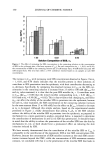
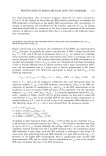
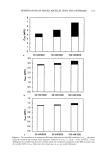
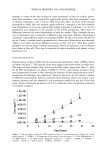
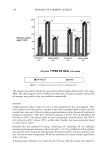
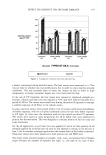
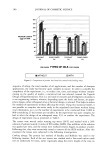
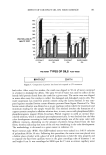
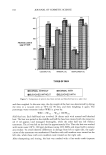
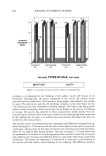
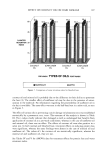
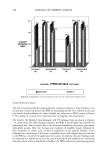
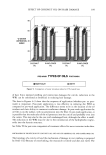
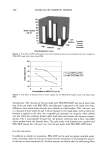
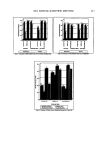
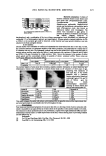
TOPICAL DELIVERY OF ot-TOCOPHEROL 167 After 24 hours the donor compartment was washed three times with 1 ml of acetonitrile. Washes were collected and analyzed for the amount of ot-T remaining on the skin surface. Washed skin samples were removed from the cells. The tape-stripping technique was used to separate the SC from the rest of the epidermis to get an estimate of material remaining in the barrier layer of the skin. In this technique, seventeen strips of the active-treated side of the skin, using a 3M Scotch TM tape, were taken as two + fifteen strips. The first two strips represented the active superficially adhering to the surface (and so were included in the wash) and the next 15 strips represented the active recovered from the SC. Scintillation fluid was added to the vials containing the tape strips and allowed to stand at room temperature for at least 24 hours to enable extraction of ot-T in order to perform scintillation counting on the samples. The remainder of the skin was digested in 3 ml of tissue solubilizer at 50øC for 24 hours in an oven. This was done to get an estimate of material in the viable tissues of the skin. After skin digestion, the samples were neutralized with glacial acetic acid, and scintillation fluid was added for counting. Receptor solution was collected in glass scintillation vials every four hours. Scintillation fluid was added to the vials and they were counted 24 hours later. Thus, the amount of ot-T was estimated in the following four locations in the in vitro permeation experiment: (a) receptor fluid, (b) washes, (c) stratum corneum, and (d) viable tissues of the skin. STATISTICAL ANALYSIS Statistical differences between the formulations and all the other formulations with the simple solution were estimated using a Student's t-test. In the oleic acid study, the results with the oleic acid were compared to the control formulations, which did not contain any oleic acid. The design of these studies enabled us to compare ot-T permeation with ot-tocopheryl acetate (ot-TAc) permeation in a study that was published earlier (19). RESULTS COMPARISON OF VEHICLES Figure 1 shows the permeation of ot-T in terms of the amount of active in the stratum corneum, the viable skin, and the total amount permeated, which is inclusive of the amount of ot-T in the SC, viable skin, and receptor. IPM solution yielded significantly higher amounts of ot-T (or = 0.05) in the SC than gels 1 and 2 and emulsion 1. The other formulations did not differ from each other in terms of this parameter. In the viable skin, emulsion 2 had higher permeation, which differed significantly from that of emulsion 3 (or = 0.05). IPM solution had a higher amount of total ot-T permeation than emulsion 3 and gel 1. However, this amount was significantly lower than the amount permeated with emulsion 2. Emulsion 2 had the highest permeation compared to all the other formulations. It was significantly higher than for the other emulsion formulations, IPM solution, and gel 1. Gel 3 also had significantly higher total permeation compared to gel 1 in this study. In terms of the amount of o•-T in the receptor at 24 hours, gel 3 fared the best, having significantly higher permeation compared to the other gels.
Purchased for the exclusive use of nofirst nolast (unknown)
From: SCC Media Library & Resource Center (library.scconline.org)