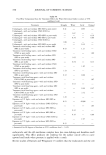
192 JOURNAL OF COSMETIC SCIENCE (2) S.S. Sandhu and C. Robbins, A simple and sensitive technique, based on protein loss measurement, to assess surface damage to human hair, J. Soc. Cosmet. Chem., 44, 163-175 (1993). (3) A. Rele, Effect of coconut oil on prevention of hair damage. Part I,J. Cosmet. Sci., 50, 327-339 (1999). (4) S. B. Ruetsch, Y. K. Kamath, A. S. Rele, and R. B. Mohile. Secondary ion mass spectrometric inves- tigation of penetration of coconut and mineral oils into human hair fibers: Relevance to hair damage, J. Cosmet. Sd., 52, 169-184 (2001). (5) J. A. Swift and A. C. Brown, The critical determination of fine changes in the surface architecture of human hair due to cosmetic treatments, J. Soc. Cosmet. Chon., 23, 695-702 (1972). (6) J. A. Swift, Int. J. Cosmet. Sci,, 13, 143 (1991). (7) S. B. Ruetsch and H. D. Weigmann, J, Soc. Cosmet. Chem., 47, 13-26 (1996).

j. Cosmet. Sci., 54, 193-205 (March/April 2003) Beyond rheology modification: Hydrophilically modified silicone elastomers provide new benefits MICHAEL S. STARCH, JEAN E. FIORI, and ZUCHEN LIN, Dow Corning Corporation, P.O. Box 994, Mid/and, MI 48686-0994. Accepted for publication July 24, 2002. Presented at the Annual Scientific Meeting of the Society of Cosmetic Chemist•3 New York, December 7-8, 2000. Synopsis The development of silicone elastomers with hydrophilic functionality in the form of PEG substituents provides benefits beyond the rheology modification (thickening) that can be achieved with silicone elas- tomers that lack functional substituents. We have shown that PEG-modified dimethicone crosspolymer (PEG-DCP) is an effective emulsifier for water-in-silicone (w/s) emulsions where the continuous phase is cyclopentasiloxane. The utility of PEG-DCP for producing simple antiperspirant gels and also multiple emulsions (w/s/w) was demonstrated. Additional benefits for PEG-DCP such as improved compatibility with polar organic oils and reduced syneresis in anhydrous antiperspirants were also shown to be associated with the addition of hydrophilic groups to the silicone elastomer. The performance and physical properties of a series of PEG-DCP samples from a two-level factoffal design were evaluated. The variables studied were the level of PEG substitution, the length of the PEG chains, and crosslink density. All of the PEG-DCP samples were synthesized and tested in the form of dispersions in cyclopentasiloxane. Variations in the composition of PEG-DCP such as the level of PEG substitution and the length of the PEG chain were shown to have a significant effect on the viscosity of the PEG-DCP and its emulsification performance in a simple w/s emulsion. Variation of a process parameter that affects the crosslink density of the elastomer also changed the emulsification properties of the PEG-DCP. INTRODUCTION The introduction of silicone elastomers to the personal care industry has provided formulators with new tools for modifying the rheology and aesthetic properties of silicone-based formulations. These silicone elastomers are based on crosslinked dimethi- cone and are typically supplied in the form of swollen gels that contain various silicone oils. Cyclopentasiloxane in particular is the silicone fluid most often used as the swelling solvent, although other silicone fluids such as dimethicone are also used. One such elastomer with the INCI name dimethicone crosspolymer (DCP) has been shown to be useful for thickening various types of formulations, particularly anhydrous antiperspi- rant formulations, where cyclopentasiloxane is the vehicle (1). This silicone elastomer 193
Purchased for the exclusive use of nofirst nolast (unknown)
From: SCC Media Library & Resource Center (library.scconline.org)