194 JOURNAL OF COSMETIC SCIENCE also provides novel sensory properties that are unlike anything attainable with silicone fluids. The unique properties of the DCP/cyclopentasiloxane blend have been attributed to the extended structure of the elastomer that has the ability to absorb large amounts of silicone fluid. When the elastomer is synthesized in cyclopentasiloxane, the elastomer and cyclopentasiloxane form what is essentially one large gel in the reaction vessel. This gel is then sheared to produce gel particles that thicken silicone oils in much the same way that carbomer gel particles thicken aqueous formulations. These soft gel particles are what provide the unique aesthetic properties in many formulations. The addition of hydrophilic polyethylene glycol (PEG) functional groups to DCP affects both the chemical and rheological properties of the silicone elastomer. This new class of materials, hereinafter referred to as PEG-modified DCP (PEG-DCP), encompasses a wide variety of different materials that range from liquids to elastomeric solids. The PEG-DCPs have very different properties from the unmodified silicone elastomer. The hydrophilic PEG substituents change the wetting properties of the elastomer and dra- matically improve compatibility with polar ingredients (2). The PEG-DCPs are a new class of polymeric emulsifiers that are useful for preparing water-in-silicone (w/s) emul- sions where the continuous phase consists primarily of low-viscosity silicone oils such as cyclopentasiloxane. We have also shown that PEG-DCP can be used to prepare multiple emulsions. SILICONE ELASTOMER CHEMISTRY All of the silicone elastomers that are made for use as ingredients in personal care formulations are based on the hydrosilylation reaction. This reaction is used to form the crosslinks between the silicone polymer chains and also to attach functional substituents such as PEG. The hydrosilylation reaction involves the addition of a vinyl group (CH2--CH-R) to a silicon hydride (Sill), using a platinum catalyst. This reaction pro- ceeds very rapidly and produces a chemically stable linkage between the silicone and the organic group. Since the silicon hydride in effect adds across the vinyl group, there are no by-products. To make a silicone precursor polymer for the hydrosilylation reaction, the silicon hydride groups are introduced randomly along the silicone chain, typically by copolymerization of methylhydrogen siloxane and dimethyl siloxane units. These pre- cursor polymers can then be crosslinked with an o•,to-diene or a vinyl-terminated silicone polymer (e.g. vinyldimethicone). The PEG substituents are incorporated in the form of allyloxy-terminated PEGs that are added to the precursor polymer using the same hydrosilylation reaction. To prepare PEG-DCP, the silicone precursor polymer is reacted with allyloxy- terminated PEG and crosslinker (o•,to-diene) in a solvent. For our work, the solvent was cyclopentasiloxane and the samples we evaluated were dispersions of PEG-DCP in this solvent. After completion of the hydrosilylation reaction, the elastomer dispersions were subjected to high shear mixing. When the viscosity of the elastomer dispersion is low (e.g., when the crosslink density is low), the high shear mixing has little effect, but when the hydrosilylation produces a thick elastomer dispersion (gel), the shearing step con- verts the material to a paste composed of small gel particles. All of the work we are reporting here was done with PEG-DCP made from the same

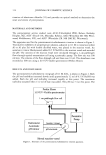
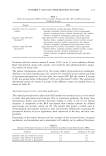
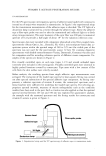
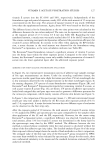
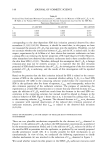
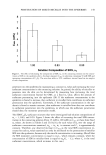
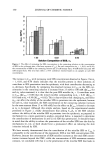
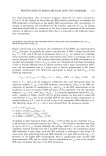
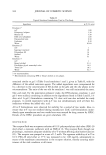
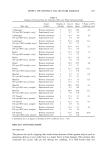
HYDROPHILICALLY MODIFIED SILICONE ELASTOMERS 195 precursor polymer so that the number of reactive silicon hydride sites was constant for all of the elastomer samples that were made. In this situation, a trade-off exists between the degree of PEG substitution and the crosslink density since the crosslinker and the allyloxy-terminated PEG both consume the silicon hydride groups on the precursor polymer. So, for a given level of PEG substitution, there is a maximum crosslink density that can be achieved for that PEG-DCP. In practice, however, we have found that various processing parameters affect the extent of the crosslinking reaction so that crosslink density can be varied somewhat independently for a particular level of PEG substitution. The level of PEG substitution is obviously an important factor for determining the properties of a particular PEG-DCP since it will determine the overall hydrophilicity of the elastomer. However, we have found that the crosslink density is also quite important. When the crosslink density is low, the PEG-DCP has a more extended configuration and behaves more like a liquid. When the crosslink density is high, the PEG-DCP has more elastomeric character and behaves more like the unmodified DCP elastomer. EXPERIMENTAL METHODS WATER-UPTAKE TEST The sample of PEG-DCP was diluted with cyclopentasiloxane to produce a dispersion of 9% elastomer in cyclopentasiloxane (emulsions of selected samples were also made with more dilute dispersions). Water was slowly added with a pipette, a drop at a time, to the elastomer dispersion, while mixing at about 300-400 rpm until the emulsion would no longer accept additional drops of water. The endpoint was determined by carefully observing whether or not the drop was incorporated into the emulsion. If there was some doubt, the mixer was stopped and the emulsion was examined to determine if there were droplets of free water in the emulsion. If free water was not observed immediately, then the emulsion was checked again after 24 hours for water separation. If there was water separation, the test was repeated using a fresh sample, and the water addition was stopped short of the previous endpoint and the sample was observed again for water separation. By repeating the test several times, the precise endpoint can be determined. Mixing was accomplished by stirring with a combination of two mixing blades spaced approximately 1.5 inches apart on the same shaft. The mixer was a Lightnin model L1U08. The lower mixing blade was a 1.5-inch-diameter high-shear radial-flow impeller (Lightnin R-100), and the upper blade was a four-lobe pitched impeller (Lightnin A-200). The repeatability of this test was determined to be +/-1%, based on repeated testing of blinded duplicate samples. ANTIPERSPIRANT GEL FORMULA AND PROCEDURE Ingredient Weight (%) Silicone phase Aqueous phase PEG-DCP (15 % dispersed in cyclopentasiloxane) 6.7' Cyclopentasiloxane 10.3 ACH-303** 62.5 Deionized water 8.9 Propylene glycol 11.6 * Equivalent to 1% PEG-DCP on a 100% solids basis. When dimethicone copolyol was used, 1% of this emulsifier was used and the amount of cyclopentasiloxane was adjusted to keep the amount of silicone phase the same as for the formulas with PEG-DCP. ** 50% aqueous solution of aluminum chlorohydrate (supplied by Summit Research).
Purchased for the exclusive use of nofirst nolast (unknown)
From: SCC Media Library & Resource Center (library.scconline.org)