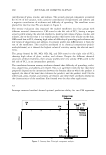
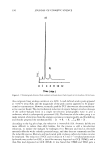
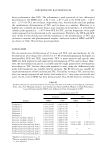
J. Cosmet. Sci., 56, 183-192 (May/June 2005) Simultaneous determination of chlorinated bacteriostats in cosmetic and pharmaceutical products LAI-HAO WANG, MEY TSO, and CHUN-YU CHIN, Department of Applied Chemistry, Chia Nan University of Pharmacy and Science, Tainan, Taiwan, 71743, R.O.C. Accepted for publication April 4, 2005. Synopsis A high-performance liquid chromatography method has been developed for simultaneous determination of triclosan (2,4,4' -trichloro-2' -hydroxydiphenyl ether) and triclocarban (3,4,4' -trichlorocarbanilide) in cos- metic and pharmaceutical products. The two compounds could be separated on a Nucleosil C 18 column and eluted with acetonitrile and water (70:30, v/v) as the mobile phase and detected with a differential refractive index detector. The retention times of triclosan and triclocarban were 5.81 and 2.99 min, respectively. The results obtained were in good agreement with those obtained by a differential pulse voltammetric method. INTRODUCTION Triclosan (Irgasan DP 300 2,4,4' -trichloro-2 '-hydroxydiphenyl ether) exhibits broad- spectrum antimicrobial activity and inhibits growth of microbial populations respon- sible for sweat degradation and malodor generation. The majority of deodorants (aero- sols, sticks, roll-ons, creams, and soaps) currently marketed incorporate triclosan as an active ingredient (1). There have been a number of recent reports of the antiplaque efficacy of toothpastes (2-4) and mouth rinses (5-7) containing 0.2% (w/w) triclosan. Triclocarban (TCC, 3,4,4'-trichlorocarbanilide) is a bacteriostat, widely used in deodor- ant bar soaps (8-10). Currently medicated "deodorant" soap and healthcare personal hand-wash products available to consumers contain TCC and/or triclosan (11, 12) (see Figure 1). It was reported that triclosan was detected in commercial textile products with a higher frequency than other agents and was easily chlorinated by sodium hypochlorite, a domestic bleaching agent, to give 2' ,3,4,4' -tetrachloro-2-hydroxydiphenyl ether, 2' ,4,4' ,5-tetrachloro-2-hydroxydiphenyl, and 2' ,3,4,4,5-pentachloro 2-hydroxydiphe- nyl ether (13 ). Furthermore, the triclosan and the three chlorinated derivatives were readily converted into various polychlorinated dibenzo-p-dioxins by heating and UV Address all correspondence to Lai-Hao Wang. 183

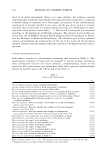
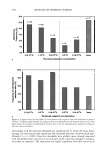
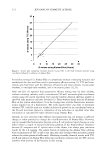
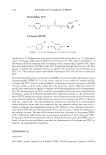
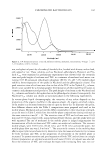
184 JOURNAL OF COSMETIC SCIENCE Triclocarban, TCC - II - Cl 0 �I Cl-o- �-C-�-\ ;1 Triclosan, DP-300 Figure 1. Structural formulae of triclocarban and triclosan. irradiation (14). Pregnant rats were given triclosan feed during days 7 to 17 of gestation and its teratogenic effect was examined in the fetuses (15). TCC and its metabolites in the biological fluids of human subjects bathing with commercially available TCC soaps have been monitored by GC/MS, as the TCC is absorbed through the skin (16-18). The agency evaluated the validation reports to support the long-term use of triclosan and TCC (19). The Chinese cosmetic law allows a maximum limit of 0.3% for triclosan and TCC. Gas chromatography/mass spectrometry (GC/MS) (20,21) and high-performance liquid chromatography (HPLC) (23-27) are widely applied to the analysis of samples for the triclosan and TCC levels. It is fairly difficult to determine traces of triclosan by GC/MS directly, owing to their peak tailing and low sensitivity. These difficulties must be avoided by converting the analyte to methyl esters after methylation with diazomethane. The GC determination of TCC could be accomplished after preparing trimethylsilyl derivatives, using N-methyl-N-trimethyl-silyl trifluoroacetamide as the derivatizing agent. HPLC procedures require a gradient elution system or tertiary solvent system and a two-channel ultraviolet-visible absorbance detector for triclosan and TCC at 280 and 260 nm, respectively. The electrochemical oxidation of triclosan at a screen-printed carbon electrode shows that this compound has the phenolic moiety and was used to analyze toothpaste and mouthrinse products (28). However, other chlorinated bacterio- stats such as TCC have no phenolic group and it was not easy to determine oxidation at the carbon electrode. The aim of the present study was, therefore, to investigate HPLC with a differential refractometer for simultaneous determination of triclosan and TCC. Comparison of the electrochemical redox of chlorinated bacteriostats and HPLC proce- dures is based on the published principles for determination of triclosan and TCC in cosmetic and pharmaceutical products. EXPERIMENTAL APPARATUS The HPLC system consisted of a Model CCPM (Tosoh Corporation, Japan), a Model
Purchased for the exclusive use of nofirst nolast (unknown)
From: SCC Media Library & Resource Center (library.scconline.org)