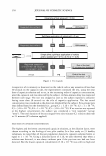
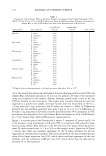
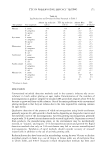
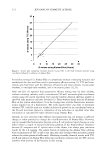
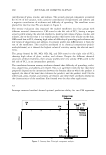
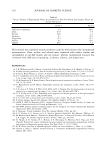
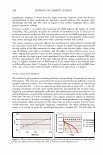
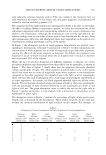
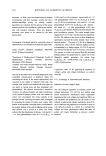
DETECTION THRESHOLDS OF CAPSAICIN 157 TEST STIMULI Six different solutions were used: five test solutions with different concentrations of capsaicin (Cl = 3.16 x 10- 5 % C2 = 1 x 10- 4 % C3 = 3.16 x 10⁻⁴% C4 = 1 x 10- 3 % CS = 3 .16 x 10- 3 % w/w) and the vehicle as control. The vehicle consisted of a 10% ethanol/90% water (w/w) solution prepared using distilled water and absolute ethanol (99.85%, Merck Eurolab®, Briare le Canal, France). Capsaicin is soluble in ethanol, but not in water. Ethanol in high concentrations can induce skin reactivity by itself (13). Hence, formulation experiments regarding capsaicin's stability in hydroalcoholic solu- tions were previously conducted at the highest capsaicin concentration (CS = 3.16 x 10- 3 %) in order to use the lowest amount of ethanol in the vehicle. In these conditions, capsaicin was stable at ambient temperature for two months. The 3.16 x 10- 3 % cap- saicin solution was prepared from pure-grade capsaicin powder (8-methyl-n-vanillyl-6- nonenamide, 2:98.0%, Fluka®, Buchs, Switzerland). The 3.16 x 10- 3 % solution (CS) was diluted using a dilution factor of -VW (=3.16) in a stepwise procedure in order to obtain the four other test solutions. The solutions were used at ambient temperature. They were applied by an experimenter employing a single-use cotton tipped applicator (Societe Industrielle du Bois®, Saint-Sauveur, France) plunged in the solution, and then rubbed twice on the nasolabial folds. The tubes containing the solutions were custom- ized to control the applied volume and for safety reasons to avoid projections of excess capsaicin solution to the ocular areas. For that purpose, an absorbent sponge was attached to the inside of the tube's neck. Thus, every time the cotton-tipped applicator was removed from the tube, the sponge soaked up any excess solution. In this way, the volume impregnating the applicator was, to a certain extent, standardized. Weighing impregnated applicators before and after application to the face showed that average applied volume was 0.02 ml (+/-10%). TEST APPLICATIONS The major steps of the testing procedure are illustrated in Figure 1. First, the test areas (nasolabial folds) were cleansed using facial cleansing wipes provided by the sponsor. The wipes were impregnated with the vehicle solution and used five times over both test areas. Subjects were excluded from the study if they reported any sensation of discomfort at this stage of the test. Simultaneous split-face application of the vehicle solution over the nasolabial folds followed three minutes after cleansing. The aim of this first step was to familiarize the subject with the humid, cool, and wiping sensations induced by the application and to exclude subjects who felt any discomfort sensation at this step. If no discomfort sensation was reported, the test could continue. Three minutes after the first step, the experimenter performed a single-blind simultaneous split-face application of the vehicle and of the more diluted capsaicin solution (C 1 = 3 .16 x 10- 5 % ) over the nasolabial folds. The sides of application of the capsaicin and control solutions were randomized. Subjects were asked to report, during the three minutes following the application, any new sensation or any difference between the test areas, stating precisely the side, the nature (stinging, burning, tingling, itching, other) and the intensity using the following scale: 1 = doubtful, barely perceptible 2 = slightly perceptible 3 = moderately perceptible 4 = strongly perceptible 5 = painful. The experimenter stopped the test at this point if the reported sensation concerned the capsaicin side and lasted more than 30 seconds. In the absence of any sensation or in the case of any sensation

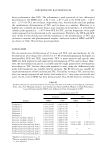
158 JOURNAL OF COSMETIC SCIENCE Reported discomfort : Reported discomfort - Cleansing of test areas at t = 0 mn l l ml Im -1 Withdrawal l Split-face application of vehicle at t = 3 mn l m l Simple blind, split-face application of vehicle and Ci solution at t = (i+1) x 3 mn (i = 1 to 5) Reported sensation .l.. l End of the test of more than 30 seconds on capsaicin side i=1to4 IMill - - Ci as detection threshold I = s End of the test � Detection threshold : CS Figure 1. Test diagram. (irrespective of its intensity or duration) on the vehicle side or any sensation of less than 30 seconds on the capsaicin side, the experimenter continued the rest, using the next dose of capsaicin solution and so on, in the increasing order of capsaicin concentration, until the capsaicin side was detected by the subject. A three-minute delay was respected between each stage. The rest was stopped as soon as the subject reported a sensation lasting more than 30 seconds on the side of capsaicin application. The last tested concentration was considered as the detection threshold for the subject. Five groups were thus defined based on the threshold (i.e., group Cl = 3.16 x 10- 5 % C2 = 1 x 10⁻⁴% C3 = 3.16 x 10⁻⁴% C4 = 1 x 10- 3 % CS= 3.16 x 10- 3 %). If no reaction was reported at the highest concentration, the subject was considered a "non responder" (group "none"). The total duration of the test ranged from nine minutes (Cl solution detected) to 21 minutes (CS solution applied). SELECTION OF CAPSAICIN CONCENTRATION The highest and the lowest concentrated capsaicin solutions, as the dilution factor, were chosen according to the findings of two pilot studies. In a first study on 21 healthy volunteers, we noted that all the rest population detected a capsaicin solution below or equal to 1 x 10- 2 %. Using a dilution factor of 3.16, we also observed that when a solution was detected, it was always without pain if the previous one had not been detected. But the lowest capsaicin concentration (3.16 x 10⁻⁴%) was still too high and
Purchased for the exclusive use of nofirst nolast (unknown)
From: SCC Media Library & Resource Center (library.scconline.org)