]. Cosmet. Sci.) 56, 205-206 (May/June 2005) Abstracts Journal of the Society of Cosmetic Chemists Japan Vol. 39, No. 1, 2005* Technology in Emulsified Particle Size Control by New Mixing Method Yasuko Nagai, Takeshi Asa, Keishiro Ishizu Emulsification and Dispersion Technology Laboratory, Tokushu Kika Kogyo Co., Ltd. The best pulverization of emulsions that can be achieved using conventional mixing blades is in the micrometer realm. Now, with our new "thin-film spin system" high-speed mixer, it is possible to attain pulverization in the nanometer realm. The particle size distribution can now be controlled to achieve an almost single distribution state. Particles can be pulverized without being severed, preventing secondary agglomeration after processing. This new mixing system also solves many of the problems common to conventional pulverization processes. Market and Technical Trend of Cleansing Oils Hiroko Tsuda Skin Care Products Research Laboratories, Kao Corporation Consumers' makeup behavior has changed greatly in past several years. Lipsticks and foundation were mainly used before, but recently mascara is becoming widely used to emphasize their eyes. Following this change, the market for makeup remover also changed. That is, the market for cleansing oil, which has superior eye makeup removing ability, expanded quickly. The cleansing oils contain oils and surfactants. The latter emulsify the oils and help them to be washed away. Multi-chain nonionic surfactants are usually used for their high emulsifying ability and for their low safety risk. However, conventional cleansing oils cannot be used with wet hands, because oils are emulsified and makeup removing ability obviously declines. Recently, a new cleansing oil that can be used with wet hands was developed. As it can solubilize a lot of water in itself, it retains its makeup removing ability in spite of the water contamination. To realize the high water solubilizing ability, it is important to use a surfactant that has a lipophobic group like the hydroxyl group as well as to control the HLB of the entire system. Evaluation of Glossy Appearance of Facial Make-up Using CG Images Koji Minami*, Tomomichi Kaneko*, Hirohide Nabeshima**, Hiroshi Iwamoto*, Nobutoshi Ojima*, Noboru Nagatani*, Kimihiko Hori* Skin Care Products Research Laboratories*, Processing Development Research Laboratories**, Kao Corporation A new method for optimizing the glossy appearance of facial make-up is proposed. Reflections from skin make-up comprise 2 components, specular and diffuse. Glossiness of the skin can be optimized by controlling the magnitude of the specular component in applied cosmetic foundation. To determine optimal appearance of glossiness, a series of images of a woman's face with make-up varying in the magnitude of specular reflection * These abstracts appear as they were originally published. They have not been edited by the Journal of Cosmetic Science. 205

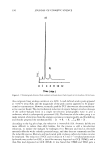
206 JOURNAL OF COSMETIC SCIENCE were synthesized using computer-graphics techniques, and 15 female volunteers selected the most beautiful skin from among those simulated faces. For calculating the specular component of the facial images, 6 bidirectional reflectance distribution functions ( BRDFs ) were generated from the goniophotometric spectra of two foundation membranes that differed in reflectivity from each other. Results of the image evaluations on dark, normal or bright skin are shown. In addition, evaluation of images in which the specular component was shifted to blue caused by blue pearl pigments is shown. Determination of2-Aminoethanol in 2,2' ,2' '-Nitrilotriethanol by Reversed-Phase HPLC-UV Using o-Phthalaldehyde as a Pre-Column Derivatizing Reagent Kazuki Kageshima, Kenji Okada, Hiroshi Saito, Toshiyuki Shimizu Hachiohji Laboratory, Utena Co., Ltd. A measurement method for determination of 2-aminoethanol in 2,2 ' ,2 ' ' -nitrilotriethanol by reversed-phase high-performance liquid chromatography (HPLC) with an ultraviolet detector has been developed using o-phthalaldehyde as a pre-column derivatizing reagent. As a result, the calibration curve of 2-aminoethanol standard solutions was linear over the range of l.0xl0-5-5.0xl0-3 mol/L with a correlation coefficient of 0.996 and the detection limit, defined as SIN= 3, was 7.5xl0-7 mol/L. The relative standard deviation at 5.0xl0-5 mol/L of 2-aminoethanol standard solution was 6.0% (n = 6) . This measurement method was applied to the determination of 2-aminoethanol in several commercial 2,2' ,2' '-nitrilotriethanol samples and it was found that both the calibration curve method and the standard addition method based on the peak height are available for the determination of 2-aminoethanol. These results suggest that the method reported here will be useful for determination of 2-aminoethanol in 2,2' ,2' '-nitrilotriethanol. Key words:2-aminoethanol, 2,2' ,2' '-nitrilotriethanol, HPLC, determination, o-phthalaldehyde, spectrophotometric detection, pre-column derivatizing reagent, cosmetic ingredients, monoethanolamine, triethanolamine
Purchased for the exclusive use of nofirst nolast (unknown)
From: SCC Media Library & Resource Center (library.scconline.org)