J. Cosmet. Sci. J 56, 193-204 (May/June 2005) Spatial and angular distribution of light incident on coatings using Mie-scattering Monte Carlo simulations MASAKO YAMADA, MATTHEW D. BUTTS, and KAREN K. KALLA, General Electric Global Research CenterJ 1 Research Circle, Niskayuna} NY 12309 (M. Y., M.D.B.), and Procter and Gamble, 11810 East Miami River Road, Cincinnati, Ohio 45252 (K.K.K.). Accepted for publication March 14, 2005. Synopsis We show the results of Mie-scattering Monte Carlo models developed to simulate the optical properties of light incident on particle-containing coatings. The model accommodates mixtures of particles with different sizes and complex refractive indices, enabling the simulation of formulations, including pigments. The simulation tracks trajectories of photons as they propagate through the turbid medium, calculating both angular and spatial light intensity distributions. Scalar quantities such as total transmission and reflection, and haze and diffuse reflectance, are also calculated. INTRODUCTION This paper describes the optical properties of hypothetical formulations using Mie- scattering Monte Carlo simulations. Radiative transport of light through a turbid film can be calculated using methods such as Kubelka-Munk (1), discrete ordinates (2), and adding-doubling (3), leading to the ability to predict parameters such as transmission, reflection, and angular intensity distribution. However, the Monte Carlo method has the advantage of allowing trajectories of individual photons to be tracked as they propagate through the film, enabling a more thorough analysis of both angular and spatial dis- tributions of the photons. Volumetric scattering properties of photons within a material are considered crucial in achieving a realistic look in turbid media such as marble, milk, and skin (4). The Henyey-Greenstein phase function (or the even simpler anisotropic phase function) is often used in Monte Carlo simulations to approximate the angular scattering distri- bution of light incident on a single sphere (5 ). Although this simplification is effective in many scenarios, it disregards subtleties in the phase function that may contribute to differences in appearance. We have developed a simulation that calculates the exact Mie phase function of light incident on a sphere based on its complex refractive index (RI) and size parameter (6-8) Address all correspondence to Matthew D. Butts. 193

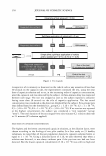
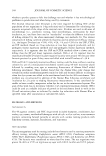
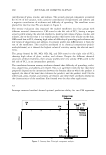
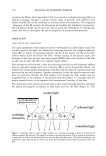
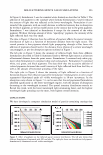
194 JOURNAL OF COSMETIC SCIENCE as well as the Monte Carlo algorithm (9,10) to account for multiple-scattering effects as photons propagate through a coating. Several types of particles with different sizes and/or complex Rls can be combined to simulate realistic formulations. The imaginary component of the RI accounts for absorption and enables the simulation of pigments. The simulation model can be used not only to guide the formulation of existing ma- terials, but also to investigate the optical properties of potential new materials. SIMULATION INPUT AND OUTPUT PARAMETERS The input parameters of the simulation are the wavelength of incident light in vacuoJ the incident angle of the light, the diameter of scattering particles, the complex refractive index (RI) or indices of scattering particles, the RI of the matrix, the RI of the half- infinite media above and below the film, volume loading of the particle types, the thickness of the film, and the root mean square (RMS) slope of the surface of the film to take into account the effect of a random rough surface. One assumption of the model is that the scattering particles are well-dispersed spheres that are separated enough such that clustering effects can be disregarded. Hence, the model most closely models formulations with relatively low particle concentrations and particles that are well dispersed. Another assumption is that the particle material itself does not penetrate through the film surface, even though the film surface may be roughened due to the topology of the particles near the surface it is assumed that the matrix material serves at the topmost (and bottommost) boundary of the film. The trajectories of the photons are monitored as they scatter through the film, including the spatial and angular coordinates as they enter and exit the film (Figure 1). This record em angle and distance from source scattering / absorption incident light I\!!\! 1 reflected light transmitted light Fi gu re 1. Schematic (not to scale) of light incident on a coating containing a mixture of particles of different complex Rls and sizes. The angle of incidence is specified by the user. The exit angle of each photon is monitored, as well as the horizontal distance traveled from the light source. The reflected light has two components: light reflected directly off the top of the film and light scattered back by particles within the film.
Purchased for the exclusive use of nofirst nolast (unknown)
From: SCC Media Library & Resource Center (library.scconline.org)