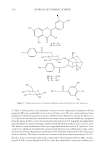
JOURNAL OF COSMETIC SCIENCE 352 oxygen species, and subsequent oxidative stress-mediated melanocytotoxic effect. Hence, just like kojic acid in tyrosinase inhibitors, hydroquinone is an excellent standard in evaluating depigmenting agents. However, because of the melanocytotoxic effect, hydro- quinone is hazardous in long-term treatments, and the use of hydroquinone in cosmetics has been limited (17). According to the above description, comparing both the melano- genesis inhibitory activity and the melanocytotoxic effect of pentagalloyl-β-D-glucose (VI) with the activities of hydroquinone in the future would provide clearer evidence for its application in skin-whitening cosmetics. REFERENCES (1) S. Y. Seo, V. K. Sharma, and N. Sharma, Mushroom tyrosinase: Recent prospects, J. Agric. Food Chem., 51, 2837–2853 (2003). (2) S. Briganti, E. Camera, and M. Picardo, Chemical and instrumental approaches to treat hyperpigmenta- tion, Pig. Cell Res., 16, 101–110 (2003). (3) Y. Masamoto, H. Ando, Y. Murata, Y. Shimoishi, M. Tada, and K. Takahata, Mushroom tyrosinase in- hibitory activity of Esculetin isolated from seeds of Euphorbia lathyris L., Biosci. Biotechnol. Biochem., 67, 631–634 (2003). (4) T. S. Chang, H. Y. Ding, and H. C. Lin, Identifying 6,7,4′-trihydroxyisofl avone as a potent tyrosinase inhibitor, Biosci. Biotechnol. Biochem., 69, 1999–2001 (2005). (5) S. Arichi, M. Kubo, H. Matsuda, T. Tani, K. Tsunaga, M. Yoshikawa, and I. Kitagawa, Studies on mou- tan cortex (III). On anti-infl ammatory activities (Part 1), Shoyakugaku Zasshi, 33, 178–184 (1979). (In Japanese) (6) C. Chen, Research and Development of the Cosmetic Health Products of Traditional Chinese Medicine (Chinese Medica Technological Publishing Co., Beijing, 1998), pp. 453–456 (in Chinese). (7) M. Yoshikawa, E. Uchida, A. Kawaguchi, I. Kitagawa, and J. Yamahara, Galloyl-oxypaeonifl orin, suf- fruticosides A, B, C, and D, fi ve new antioxidative glycosides, and suffruticoside E, a paeonol glycoside, from Chinese moutan cortex, Chem. Pharm. Bull., 40, 2248–2250 (1992). (8) M. Yoshikawa, E. Uchida, A. Kawaguchi, J. Yamahara, N. Murakami, and I. Kitagawa, Absolute stereostructures of paeoniffrone and paeonisuffral, two new labile monoterpenes, from Chinese moutan cortex, Chem. Pharm. Bull., 41, 630–632 (1993). (9) H. C. Lin, H. Y. Ding, T. S. Wu, and P. L. Wu, Monoterpene glycosides from Paeonia suffrutticosa, Phytochem., 41, 237–242 (1996). (10) H. C. Lin, H. Y. Ding, and Y. C. Wu, Two novel compounds from Paeonia suffrutticosa, J. Nat. Prod., 61, 343–346 (1998). (11) H. Y. Ding, Y. C. Wu, H. C. Lin, Y. Y. Chan, P. L. Wu, and T. S. Wu, Glycosides from Paeonia suffrut- ticosa, Chem. Pharm. Bull., 47, 652–655 (1999). (12) H. Y. Ding, H. C. Lin, C. M. Teng, and Y. C. Wu, Phytochemical and Pharmacological studies on Chi- nese Paeonia species, J. Chin. Chem. Soc., 47, 381–388 (2000). (13) I. Kubo, I. Kinst-Hori, S. K. Chaudhuri, Y. Kubo, Y. Sanchez, and T. Ogura, Flavonols from Heterotheca inuloides: Tyrosinase inhibitory activity and structural criteria, Bioorg. Med. Chem., 8, 1749–1755 (2000). (14) H. Matsuda, M. Higashino, W. Chen, H. Tosa, M. Iinuma, and M. Kubo, Studies of cuticle drugs from natural sources. III. Inhibitory effect of Myrica rubra on melanin biosynthesis, Biol. Pharm. Bull., 18, 1148–1150 (1995). (15) C. H. Jeong and K. H. Shim, Tyrosinase inhibitor isolated from the leaves of Zanthoxylum piperitum, Biosci. Biotechnol. Biochem., 68, 1984–1987 (2004). (16) I. Kubo and I. Kinst-Hori, Flavonols from saffron fl ower: Tyrosinase inhibitory activity and inhibition mechanism, J. Agric. Food Chem., 47, 4121–4125 (1999). (17) A. P. De Caprio, The toxicology of hydroquinone-relevance to occupational and environmental expo- sure, Crit. Rev. Toxicol., 29, 283–330 (1999). (18) J. S. Chen, C. Wei, R. S. Rolle, W. S. Otwell, M. O. Balaban, and M. R. Marshall, Inhibitory effect of kojic acid on some plant and crustacean polyphenol oxidases, J. Agric. Food Chem., 39, 1396–1401 (1991).

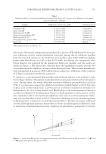
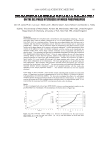
J. Cosmet. Sci., 60, 353–357 (May/June 2009) 353 8-Hydroxydaidzein is unstable in alkaline solutions TE-SHENG CHANG, Department of Biological Science and Technology, National University of Tainan, 33 sec. 2, Shu-Lin St., Tainan, Taiwan. Accepted for publication December 29, 2008. Synopsis 8-Hydroxydaidzein is a suicide substrate of mushroom tyrosinase with potent irreversible inhibitory activity. Despite its high potential in the cosmetics industry, it was found that 8-hydroxydaidzein was unstable in a formulated cream. In this technical note, the stability of 8-hydroxydaidzein in various solutions is investi- gated. The compound was dissolved in a series of solvents, and the residual 8-hydroxydaidzeins in the pre- pared solutions were sequentially determined during storage by HPLC. As a result, the loss in time of 8-hydroxydaidzein in both pH 6.8 phosphate buffer and DMSO showed typical fi rst-order kinetics, and the loss rate constant of the compound in pH 6.8 phosphate buffer (4.48 × 10⁻³ hour−1) was 18-fold higher than that in DMSO (2.5 × 10⁻⁴ hour−1). The stabilities of the compound in different buffers with pH values rang- ing from pH 5 to pH 9 were determined in advance. The results showed that the compound was completely degraded in one day in the pH 8 and pH 9 buffers. In contrast, 8-hydroxydaidzein remained stable above 85% after 20 days’ storage in the pH 5 and pH 6 buffers. In addition to the residual 8-hydroxydaidzein analysis, the residual bioactivities, including tyrosinase inhibitory activity and DPPH-radical scavenging activity of the 8-hydroxydaidzein solutions after 20 days’ storage in different pH values, were also deter- mined, and the results correlated well with those of the stability experiments. All the results demonstrated that 8-hydroxydaidzein is unstable in alkaline solutions. According to the data in the present report, it is recommended that 8-hydroxydaidzein be formulated in an acid solution for its applications. INTRODUCTION 8-Hydroxydaidzein is a biotransformed metabolite of soy isofl avone daidzein by the fungi Aspergillus saitoi or A. oryzae (1–2). The compound has been proven to be a potent mushroom tyrosinase inhibitor (3). The reaction mechanism of the inhibitor was demonstrated to be an irreversible mode and belonged to a suicide substrate type of tyrosinase (4). Because rare potent irreversible inhibitors were found, the compound has great potential in the whitening cosmetics industry. However, when the compound was applied to cosmetics products, it was found that 8-hydroxydaidzein was unstable in a formulated cream at longer storage times (unpublished data). The instability property of this compound is very critical for its applications. In order to resolve the instability problem of 8-hydroxydaidzein, the stability of 8-hydroxydaidzein in various solutions was investigated. MATERIALS AND METHODS At fi rst, both a phosphate buffer and dimethyl sulfoxide (DMSO) were used to dissolve 8-hydroxydaidzein, and the residues of the compound in the prepared solutions were
Purchased for the exclusive use of nofirst nolast (unknown)
From: SCC Media Library & Resource Center (library.scconline.org)