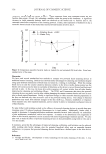
JOURNAL OF COSMETIC SCIENCE 284 Cash et al. (5) conducted an experiment in which American college students were pho- tographed while wearing their typical facial cosmetics and again following the removal of their makeup. Participants rated the physical attractiveness of the women. Male judg- ments were found to be more favorable when the women were photographed with cos- metics than when they were cosmetics-free, whereas female judgments were not affected by the presence of makeup. In a recent study, Nash et al. (6) presented four women’s facial photographs either with or without cosmetics. Women with cosmetics were found to be perceived as healthier and more confi dent than when they were pre- sented without cosmetics. Participants also awarded women who were wearing makeup greater earning potential and more prestigious jobs than the same women without cosmetics. It seems that different levels of cosmetics use are associated with different perceptions. Mulhern et al. (7) asked male and female participants to view a set of fi ve photographs of women volunteers and to rank each set from the most to the least attractive. Volunteers were made up by a beautician in fi ve different ways: no makeup, foundation only, eye makeup only, lip makeup only, and full facial makeup (foundation, eyes, and lips). Fully made up faces were judged more attractive than the same faces makeup-free. They also found that eye makeup alone yielded higher levels of mean attractiveness ratings than foundation makeup alone, and the latter yielded higher levels of mean attractiveness rat- ings than only lip makeup. Altogether, these studies show that cosmetics enhance the perception of physical at- tractiveness and other feminine traits of women. The intent of the present study was to explore the effect of makeup on individual behavior, as contrasted with previous re- search in which impression formation of facial attractiveness was evaluated in a labora- tory with the help of photographs. In particular, tipping behavior was used to evaluate the impact of cosmetics on behavior. Previous research found that facial or hair adorn- ment was associated with a greater level of tipping behavior. Stillman and Hensley (8) found that diners left larger tips for waitresses who wore a fl ower in their hair than they left for the same waitresses without a fl ower. Tidd and Lockard (9) found that a waitress exhibiting a broad smile reaped larger tips than those exhibiting a minimal smile and more from men than from women patrons. These later studies show that patrons are affected by facial or head adornment of waitresses. Thus, in such a setting, facial makeup would probably infl uence a patron’s behavior and evaluations. Based on previous liter- ature, we hypothesized that a waitress’s makeup would increase tipping behavior, espe- cially with men patrons. It was secondly hypothesized that this effect would be mediated by the variation in the perception of her physical attractiveness. METHOD PARTICIPANTS One hundred and seventy-four restaurant customers (112 males and 62 females), who acted as participants, were randomly assigned to two groups. All of them were seated alone at a table in a restaurant of a medium-size city (more than 70,000 inhabitants) in a very attractive spot. The city selected was Vannes, located in the west of France on the Breton Atlantic Coast.

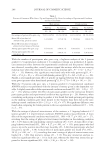
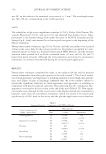
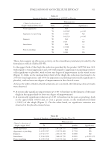
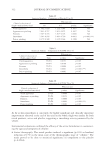
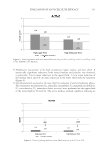
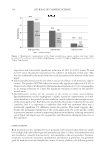
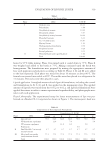
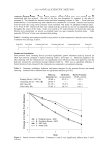
MAKEUP AND TIPPING 285 PROCEDURE A waitress (22 years old, three years of restaurant practice), regularly employed, was used to help us. She was not informed of the goals of our experiment and she did not receive any information about previous studies on the effect of cosmetics on people’s perception or behavior. Precaution was taken to select a waitress who usually wore makeup herself, to help us. The experiment was conducted each day for six weeks (excluding Saturdays and Sundays) during the lunch hour, because there was a suffi cient amount of patrons who were alone at this time in the restaurant in which the experiment was carried out. Thirty observation periods were obtained (fi ve days a week for six weeks). The two experimental conditions used were 16 lunches with makeup and 15 lunches without makeup. Another volunteer was a young female beautician, who “made up” the waitress for the duration of the exper- iment. In the makeup-free condition, the beautician cleaned and moisturized the face of the waitress. In the makeup condition, the beautician applied makeup to her eyes, cheeks, and lips in a way that enhanced the attractiveness of the waitress. The confederate was instructed to act as usual. She acted in the same way in both condi- tions when she returned to the patron’s table with a drink and the bill. Once the patron had left, the waitress returned to the table to clear it. She reported in a notebook how the client had behaved, namely, whether he/she had left a tip or not, and how much he/she had given her. A 20-year old male, who was standing in a separate room, observed the restaurant room with the help of a video security system that previously existed in the restaurant. He was instructed to leave the restaurant through a separate exit until he saw that the patron, who was alone, stood up to leave the restaurant. The observer waited until the patron was out- side and approached him/her and said, “Excuse me sir/madam, I am a student in social sciences and I am conducting a study on the judgment of individual appearance, such as physical attractiveness, apparel, and so on. Would you be willing to respond to one question about the physical appearance of somebody you have met very recently?” Once the par- ticipant agreed, which all of them did, the interviewer asked the participant to rate the physical attractiveness of the waitress with whom he had interacted in the restaurant. The evaluation was performed with a scale from 0 = low physical attractiveness to 9 = high physical attractiveness. The interviewer noted the rating of the participant, thanked him/ her, and then reentered the restaurant to wait for the waitress in the kitchen, where it was not possible for the patrons to see him. When the waitress arrived, he described the partic- ipant to the waitress in order to obtain data about his/her tipping behavior. In each case, the waitress was informed about the interaction between the interviewer and the participant. RESULTS In France, giving a waiter or a waitress a tip is an unusual practice as French legislation mandates that a 12% service charge is to be included in the cost of the item on the menu. Thus, in this experiment, the number of patrons who left a tip was the fi rst dependent variable and the amount left by the patron who gave a tip was the second dependent vari- able. The rating of the waitress’s physical attractiveness was the third variable. Data are presented in Table I.
Purchased for the exclusive use of nofirst nolast (unknown)
From: SCC Media Library & Resource Center (library.scconline.org)