JOURNAL OF COSMETIC SCIENCE 254 (7) G. Andreatta, Insertion et organisation de nanoparticules à l’intérieur de bicouches de tensioactifs déposées sur substrats solides. Available at http://tel.archives-ouvertes.fr/docs/00/36/33/31/PDF/Manuscrit-light- GAndreatta.pdf (2008) (accessed September 2010). (8) J. P. Kientz, Les tensioactifs. Available at http://www.acstrasbourg.fr/sections/enseignements/secondaire/pedagoge/ les_disciplines/maths-sciences_en_lp/pedagogie/cours_a_l_usage_du_p/chimie/chimie/downloadFile/ attachedFile_1/Les_tensioactifs.doc?nocache=1212670711.21 (2010) (accessed September 2010). (9) K. D. Danov, S. D. Kralchevska, P. A. Kralchevsky, K. P. Ananthapadmanabhan, and A. Lips, Mixed solutions of anionic and zwitterionic surfactant (betaine): Surface tension isotherms. Adsorption and relaxation kinetics. Available at http://www.lcpe.uni-sofi a.bg/publications/2004/pdf/pdf/2004-05-KD-SK- PK.pdf (2004) (assessed September 2010). (10) S. Casellas and G. Clere, Surfaces très hydrophobes ou très hydrophiles: Préparation et application. Avail- able at http://mqm-nice.ibelgique.com/cours/Biblio07/PDF/SURFACES_TRES_HYDROPHOBES_Casellas_ Clere.pdf (2007) (accessed September 2010). (11) Adhésion le minimum à savoir. Available at http://www.art-pjm.com/collage-technique/technique-collage- adhesion.html (2010) (accessed September 2010). (12) Verre et innovation. Available at http://www.idverre.net/veille/dostec/pate-de-verre-analyse-defauts/pate-de-verre- analyse-defauts.pdf (2005) (accessed September 2010). (13) K. Nawroth, TEGO® BETAIN F50. Concentrated Cocamidopropyl Betain. EVONIK Industries (2008). (l4) Patent FR07-08972. (15) J. Lademann, A. Rudolph, U. Jacobi, H. J. Weigmann, H. Schaefer, and W. Sterry, Infl uence of nonho- mogenous distribution of topically applied UV fi lters on sun protection factors, J. Biomed. Optics, 9(6), 1358–1362 (2004).

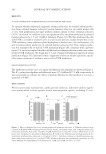
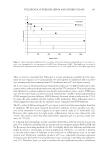
J. Cosmet. Sci., 63, 255–258 ( July/August 2012) 255 Sand resistance of sunscreens MICHAEL CASWELL, CARYL WOOD, and ALEXA MARTINEZ, Consumer Product Testing Company, Inc., 70 New Dutch Lane, Fairfi eld, NJ 07004. Accepted for publication November 30, 2011. A portion of this data was presented at the 2011 Sunscreen Symposium, Orlando, Florida, September 15-18, 2011. Synopsis Like water resistance in sunscreens, sand resistance in sunscreens is the ability of the sunscreen to retain its effectiveness while undergoing sand treatment. The infl uence of the type of sand on the sand resistance of sunscreens has not been described. The sand resistance of a control standard sunscreen, P2, and data on three grades of Quickrete® commercial grade sand, #1961, #1962, and #1152, are described. These sands represent a fi ne sand, a medium sand, and an all-purpose sand. Using the methodology described in the 2007 proposed amendment of the Final Monograph (1) with one exception, we obtained an SPF of 16.5 (1.6) for the control standard, compared to the expected SPF of 16.3 (3.4). After a fi ve-minute treatment of sand #1961, #1962, or #1151, the SPF of the control standard was 18.3 (1.6), 18.4 (2.0), and 17.5 (2.2), respectively. Thus, all three sands exhibited a similar sand-resistance response. Thus, there was no signifi cant difference in the average SPF with and without sand. The medium grade sand, Quickrete® commercial grade #1962, was preferred for sand- resistance testing because the fi ne sand was diffi cult to remove from the subject’s backs and the coarse sand was unpleasant to the subjects. INTRODUCTION Typical sunscreen formulations leave on the skin a fi lm that is frequently tacky. As sunscreens are frequently used on sandy beaches, the sand may be held to the skin, causing an unpleasant experience by the consumer. The consumer may brush off the sand with unknown consequences to the effi cacy of the sunscreen. Water-resistance SPF testing according to the Final Monograph (1) is a method to deter- mine the SPF of a sunscreen drug product after a defi ned period of water exposure. Simi- larly, sand-resistance SPF testing is a method to determine the SPF of a sunscreen drug product after a defi ned period of sand exposure. This clinical trial was designed to determine if the grade of the sand that is poured onto the sunscreen-treated skin and brushed off has a statistically signifi cant effect on the SPF of a control standard sunscreen. Address all correspondence to Michael Caswell at mcaswell@cptclabs.com.
Purchased for the exclusive use of nofirst nolast (unknown)
From: SCC Media Library & Resource Center (library.scconline.org)