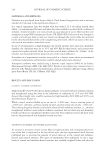
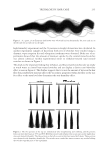
JOURNAL OF COSMETIC SCIENCE 256 MATERIALS AND METHODS Multi-port 300-watt xenon arc solar simulators equipped with WG320 and UG11 fi lters were used as the source of full-spectrum UV radiation (Solar Light Company, Philadelphia, PA). These instruments provide a spectral output in both the UVB range (290 nm–320 nm) and the UVA range (320 nm–400 nm) that is similar to that of sunlight (2). The solar simulators provided an appropriate warm-up period of approximately 30 minutes after which their output was measured with a UV intensity meter (Model PMA2100, Solar Light Company). Measurement of output was also measured at the end of the day to ensure that there were no fl uctuations in radiation emission. To ensure that the solar simulators deliver the appropriate spectrum of UV radiation, their spectral output is mea- sured semi-annually with an accurately calibrated spectroradiometer. Three different grades of Quickrete® commercial sand was obtained from Quickrete®, Flanders, NJ. Grade #1961 is a fi ne sand with a US sieve number of 30–70 (0.2–0.6 mm), grade #1962 is a medium sand with a US sieve number of 20–50 (0.5–0.3 mm), and grade #1152 is a coarse sand that meets ASTM C33 specifi cations. The exact US sieve number is unknown. Each grade of sand was dried for approximately 24 hours in a 90°C oven and then allowed to cool to room temperature prior to use. A control standard sunscreen (lot #CLI740901) was obtained from Cosmetech Laboratories, Inc. (Fairfi eld, NJ). The actives were padimate O (7.0%) and oxybenzone (3.0%). The trial was conducted between February 4 and November 10, 2010, according to the World Medical Association Declaration of Helsinki. Potential subjects were recruited from the database at Consumer Product Testing Company, Inc., which currently contains information on more than 60,000 potential subjects. Potential subjects had the benefi ts and risks of the clinical trial described to them and they were allowed an opportunity to ask any questions. Once they signed the informed consent and became subjects, they were evaluated for qualifi cation into the trial. The inclusion criteria included Fitzpatrick skin phototypes I, II or III, the previous reliability of the subject, and an age of 18 to 65 years (inclusive). The exclusion criteria included ill health, medications that would interfere with the trial, recent overexposure to UV, a history of adverse reactions to cosmetics or OTC drugs, and pregnancy or nursing. All 20 subjects completed the trial without any adverse event. All procedures were conducted in ambient conditions (18°–26°C) while the subject was in the prone position. Each subject had fi ve 50-cm2 test sites outlined with a surgical marking pen on the subject’s back between the scapulae and the beltline, lateral to the midline. One site was for determining the unprotected MED, one site was for determin- ing the protected MED, and the other three sites were for determining the protected MED after treatment with one of the three grades of sand. The control standard sunscreen was applied and spread evenly over each of four test sites with a fi nger wearing a fi ngercot to provide a fi lm of approximately 2.0 mg/cm2. Approximately fi ve minutes after completion of the control standard application, approx- imately 30 ml of one grade of sand was poured from a height of approximately four inches over a time period of approximately 15 seconds. The sand remained on the sunscreen fi lm for fi ve minutes before being gently brushed off with a one-inch paintbrush. The brush- ing was conducted in a manner similar to that used when painting.

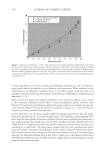
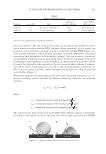
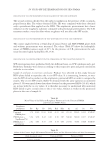
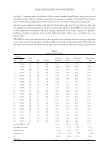
SAND RESISTANCE OF SUNSCREENS 257 At least 15 minutes after completion of the control standard application, each test site was divided into fi ve subsites, which were used for a progressive sequence of timed UV exposures, each of which was graduated incrementally by 15% over that of the previous exposure. All sites were evaluated between 22 and 24 hours after exposure by an evaluator who did not apply the control standard or sand or irradiate the subsites. The MED for each test site is that quantity of erythema effective energy, expressed in seconds, required to produce mild but defi nite erythema with clearly defi ned borders. Data were recorded onto case report forms. The SPF for each protected test site is that quantity of erythema effective energy, expressed in seconds, required to produce mild but defi nite erythema with clearly defi ned borders for the protected test site divided by that quantity of erythema effective energy, expressed in Table I Individual SPF Values Subject Skin type Age Gender Control standard Fine sand Medium sand All-purpose sand No. ID 1 51970 II 57 M 14.2 12.4 14.2 14.2 2 11701 II 32 M 18.8 18.8 18.8 18.8 3 47003 III 34 M 18.8 18.8 18.8 18.8 4 15423 II 26 M 18.8 18.8 18.8 18.8 5 60245 III 44 F 18.8 21.6 18.8 18.8 6 66522 II 50 M 18.4 18.4 18.4 16.0 7 66400 III 45 M 16.0 21.2 21.2 21.2 8 47964 II 30 M 13.9 21.2 21.2 21.2 9 36939 II 29 F 16.0 16.0 21.2 18.4 10 57810 II 41 M 16.0 18.4 18.4 18.4 11 58977 III 39 M 16.0 18.4 18.4 18.4 12 67597 II 43 M 16.0 18.4 18.4 16.0 13 65072 III 33 F 16.0 16.0 16.0 16.0 14 64564 II 21 M 16.0 18.4 18.4 16.0 15 63032 III 36 F 16.0 16.0 16.0 16.0 16 64637 III 18 M 16.0 16.0 16.0 16.0 17 11735 II 49 M 18.4 21.2 21.2 21.2 18 7329 II 34 M 13.9 18.4 16.0 13.9 19 38010 II 29 M 16.0 18.4 18.4 16.0 20 65721 II 25 M 16.0 18.4 18.4 16.0 Average SPF (n = 20) 16.5 18.3 18.4 17.5 Standard deviation 1.62 2.21 1.96 2.20 Standard error 0.36 0.49 0.44 0.49 t (one-tail) 1.729 1.729 1.729 1.729 A 0.63 0.85 0.76 0.85 SPF label 15 17 17 16
Purchased for the exclusive use of nofirst nolast (unknown)
From: SCC Media Library & Resource Center (library.scconline.org)