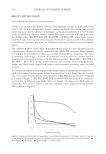
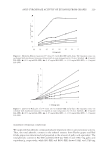
JOURNAL OF COSMETIC SCIENCE 264 and fullerenol on acne vulgaris in order to improve our understanding of their molecular mechanism. CONCLUSION Our present data and existing fi ndings suggest that fullerenol suppresses acne by inhibi- tion of sebum production, by inhibition of P. acnes lipase activity, and by antimicrobial effect against P. acnes (possibly attributable to their antioxidant activity). We consider that both fullerene and fullerenol are suitable as cosmetic and/or “quasi-drug” active in- gredients for acne sufferers following demonstration of their in vivo effi cacy. ACKNOWLEDGMENTS This work was funded by the Vitamin C60 BioResearch Corporation, Tokyo. We thank Miss Aki Nishiyama at the Department of Regenerative Dermatology, Osaka Univer- sity School of Medicine, for her excellent technical assistance. REFERENCES (1) P. Y. Basak, F. Gultekin, and I. Kilinc, The role of the antioxidative defense system in papulopus- tular acne, J. Dermatol., 28, 123–127 (2001). (2) G. Sarici, S. Cinar, F. Armutcu, C. Altinyazar, R. Koca, and N. S. Tekin, Oxidative stress in acne vulgaris, J. Eur. Acad. Dermatol. Venereol., 24, 763–767 (2009). (3) E. B. Kurutas, O. Arican, and S. Sasmaz, Superoxide dismutase and myeloperoxidase activities in polymor- phonuclear leukocytes in acne vulgaris, Acta Dermatovenerol. Alp. Panonica Adriat., 14(2), 39–42 (2005). (4) H. Akamatsu, T. Horio, and K. Hattori, Increased hydrogen peroxide generation by neutrophils from patients with acne infl ammation, Int. J. Dermatol., 42(5), 366–369 (2003). (5) O. Arican, E. B. Kurutas, and S. Sasmaz, Oxidative stress in patients with acne vulgaris, Mediators Infl amm., 6, 380–384 (2005). (6) N. S. Abdel Fattah, M. A. Shahee, A. A. Ebrahim, and E. S. El Okda, Tissue and blood superoxide dismutase activities and malondialdehyde levels in different clinical severities of acne vulgaris, Br. J. Dermatol., 159(5), 1086–1091 (2008). (7) G. Webster and J. Q. Del Rosso, Anti-infl ammatory activity of tetracyclines, Dermatol. Clin., 25(2), 133–135 (2007). (8) A. Jain, L. Sangal, E. Basel, G. P. Kaushal, and S. K. Agarwal, Anti-infl ammatory effects of erythro- mycin and tetracycline on Propionibacterium acnes induced production of chemotactic factors and reactive oxygen species by human neutrophils, Dermatol. Online J., 8(2), 2 (2002). (9) S. Nacht, D. Young, J. N. Beasley, Jr., M. D. Anjo, and H. I. Maibach, Benzoyl peroxide: Percutane- ous absorption and metabolic disposition, J. Am. Acad. Dermatol., 4, 31–37 (1981). (10) L. Hegemann, S. M. Toso, K. Kitay, and G. F. Webster, Anti-infl ammatory actions of benzoyl peroxide: Effects on the generation of reactive oxygen species by leucocytes and the activity of protein kinase C and calmodulin, Br. J. Dermatol., 130, 569–575 (1994). (11) P. J. Krusic, E. Wasserman, P. N. Keizer, J. R. Morton, and K. F. Preston, Radical reactions of C60, Science, 254, 1183–1185 (1991). (12) L. L. Dugan, E. G. Lovett, K. L. Quick, J. Lotharius, T. T. Lin, and K. L. O’Malley, Fullerene- based antioxidants and neurodegenerative disorders, Parkinsonism Relat. Disord., 7, 243–246 (2001). (13) K. Yudoh, R. Karasawa, K. Masuko, and T. Kato, Water-soluble fullerene (C60) inhibits the osteoclast differentiation and bone destruction in arthritis, Int. J. Nanomedicine, 4, 233–239 (2009). (14) K. Yudoh, R. Karasawa, K. Masuko, and T. Kato, Water-soluble fullerene (C60) inhibits the develop- ment of arthritis in the rat model of arthritis, Int. J. Nanomedicine, 4, 217–225 (2009). (15) K. Yudoh, K. Shishido, H. Murayama, M. Yano, K. Matsubayashi, H. Takada, H. Nakamura, K. Masuko, T. Kato, and K. Nishioka, Water-soluble C60 fullerene prevents degeneration of articular cartilage in

FULLERENOL SUPPRESSES SEBUM AND INHIBITS LIPASE 265 osteoarthritis via down-regulation of chondrocyte catabolic activity and inhibition of cartilage degen- eration during disease development, Arthritis Rheum., 56, 3307–3318 (2007). (16) N. Gharbi, M. Pressac, M. Hadchouel, H. Szwarc, S. R. Wilson, and F. Moussa, [60]fullerene is a pow- erful antioxidant in vivo with no acute or subacute toxicity, Nano Lett., 5, 2578–2585 (2005). (17) L. Xiao, H. Takada, K. Maeda, M. Haramoto, and N. Miwa, Antioxidant effects of water-soluble fullerene derivatives against ultraviolet ray or peroxylipid through their action of scavenging the reactive oxygen species in human skin keratinocytes, Biomed. Pharmacother., 59, 351–358 (2005). (18) J. G. Rouse, J. Yang, J. P. Ryman-Rasmussen, A. R. Barron, and N. A. Monteiro-Riviere, Effects of mechanical fl exion on the penetration of fullerene amino acid-derivatized peptide nanoparticles through skin, Nano Lett., 7, 155–160 (2007). (19) A. Huczko, H. Lange, and E. Calko, Fullerenes: Experimental evidence for a null risk of skin irritation and allergy, Fullerene Sci. Technol., 7, 935–939 (1999). (20) H. Aoshima, Y. Saitoh, S. Ito, S. Yamana, and N. Miwa, Safety evaluation of highly purifi ed fullerenes (HPFs): Based on screening of eye and skin damage, J. Toxicol. Sci., 34, 555–562 (2009). (21) M. Taglietti, C. N. Hawkins, and J. Rao, Novel topical drug delivery systems and their potential use in acne vulgaris, Skin Therapy Lett., 13, 6–8 (2008). (22) S. Inui, H. Aoshima, A. Nishiyama, and S. Itami, Improvement of acne vulgaris by topical fullerene application: Unique impact on skin care, Nanomedicine, 7, 238–241 (2011). (23) K. Kokubo, K. Matsubayashi, H. Tategaki, H. Takada, and T. Oshima, Facile synthesis of highly water-soluble fullerenes more than half-covered by hydroxyl groups, ACS Nano, 2, 327–333 (2008). (24) K. Kokubo, S. Shirakawa, N. Kobayashi, H. Aoshima, and T. Oshima, Facile and scalable synthesis of highly hydroxylated water-soluble fullerenol as a single nanoparticle, Nano Res., 4(2), 204–215 (2011). (25) H. Aoshima, K. Kokubo, S. Shirakawa, M. Ito, S. Yamana, and T. Oshima, Antimicrobial activity of fullerenes and their hydroxylated derivatives, Biocontrol Sci., 14, 69–72 (2009). (26) S. Kato, H. Aoshima, Y. Saitoh, and N. Miwa, Highly-hydroxylated or γ-cyclodextrin-bicapped water- soluble derivative of fullerene: The antioxidant ability assessed by electron spin resonance method and β-carotene bleaching assay, Bioorg. Med. Chem. Lett., 19, 5293–5296 (2009). (27) Y. Saitoh, A. Miyanishi, H. Mizuno, S. Kato, H. Aoshima, K. Kokubo, and N. Miwa, Super- highly hydroxylated fullerene derivative protects human keratinocytes from UV-induced cell injuries to- gether with the decreases in intracellular ROS generation and DNA damages, J. Photochem. Photobiol. B, 102, 69–76 (2011). (28) Y. Saitoh, L. Xiao, H. Mizuno, S. Kato, H. Aoshima, H. Taira, K. Kokubo, and N. Miwa, Novel polyhy- droxylated fullerene suppresses intracellular oxidative stress together with repression of intracellular lipid accumulation during the differentiation of OP9 preadipocytes into adipocytes, Free Rad. Res., 44, 1072– 1081 (2010). (29) T. L. Monpezat, B. Jeso, J-. L. Butour, L. Chavant, and M. Sancholle, A fl uorimetric method for measur- ing lipase activity based on umbellipheryl ester, Lipids, 25, 661–664 (1990). (30) A. Ito, T. Sakiguch, K. Kitamura, H. Akamatsu, and T. Horio, Establishment of a tissue culture system for hamster sebaceous gland cells, Dermatol., 197(3), 238–244 (1998). (31) T. Sato, N. Imai, N. Akimoto, T. Sakiguchi, K. Kitamura, and A. Ito, Epidermal growth factor and 1-α, 25-dihydroxyvitamin D3 suppress lipogenesis in hamster sebaceous gland cells in vitro, J. Invest. Dermatol., 117(4), 965–970 (2001). (32) R. H. Lesnik, L. H. Kligman, and A. M. Kligman, Agents that cause enlargement of sebaceous glands in hairless mice. II. Ultraviolet radiation, Arch. Dermatol. Res., 284(2), 106–108 (1992). (33) U. Dachs and G. Plewig, Effecte des UV-Lichtes auf Hautadnexe am Beispiel des Syrischen Hamsters, Hautartzt, 28 (Suppl. 2), 237–238 (l977). (34) Y. Akitomo, H. Akamatsu, Y. Okano, H. Masaki, and T. Horio, Effects of UV irradiation on the seba- ceous gland and sebum secretion in hamsters, J. Dermatol. Sci., 31, 151–159 (2003). (35) M. Kawashima, S. Harada, C. Loesche, and Y. Miyachi, Adapalene gel 0.1% is effective and safe for Japanese patients with acne vulgaris: A randomized, multicenter, investigator-blinded, controlled study, J. Dermatol. Sci., 49, 241–248 (2008). (36) H. Akamatsu and T. Horio, The possible role of reactive oxygen species generated by neutrophils in mediating acne infl ammation, Dermatol., 196, 82–85 (1998). (37) M. Schaller, M. Loewenstein, C. Borelli, K. Jacob, M. Vogeser, W. H. Burgdorf, and G. Plewig, Induc- tion of a chemoattractive proinfl ammatory cytokine response after stimulation of keratinocytes with Propionibacterium acnes and coproporphyrin III, Br. J. Dermatol., 153, 66–71 (2005).
Purchased for the exclusive use of nofirst nolast (unknown)
From: SCC Media Library & Resource Center (library.scconline.org)